

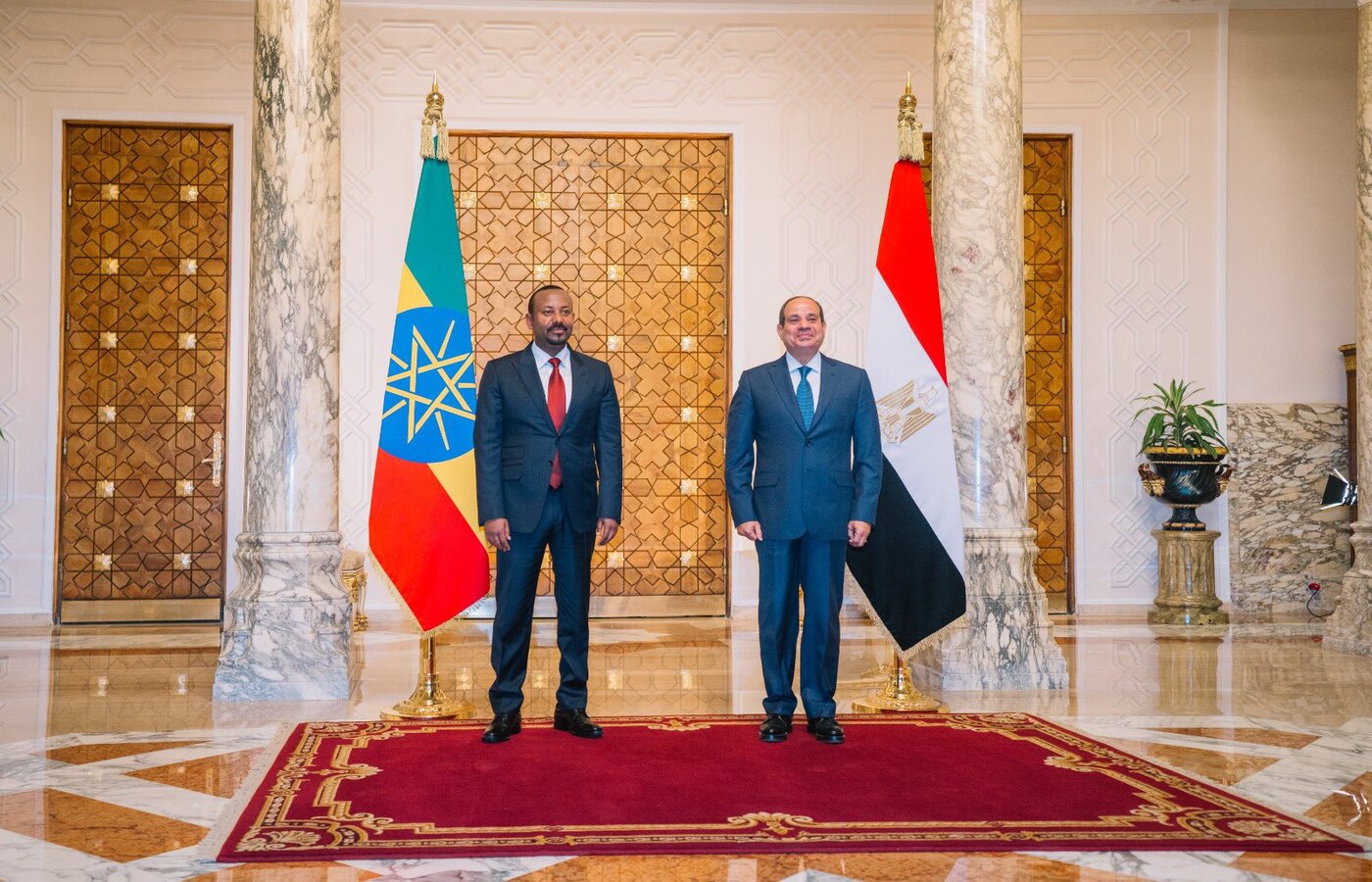
- Overcoming Nationalist Rhetoric to Find an Equitable Solution on Shared River Resources
By Zelalem Tamir
The relationship between Egypt and Ethiopia has historically been fraught due to competing water interests in the Nile River. The construction of the Grand Ethiopian Renaissance Dam by Ethiopia threatens Egypt's crucial water supply, exacerbating long-standing tensions. Recent military developments in the Horn of Africa have further escalated tensions between the two countries, raising concerns about a potential conflict. This analysis will explore the key issues fueling tensions, including the GERD dispute and Egypt's new cooperation with Somalia. It will then assess the risks of escalation and threats to regional stability posed by the deteriorating situation. Finally, recommendations will be provided on steps all parties could take to de-escalate tensions and find a peaceful resolution through dialogue and cooperation.
At the heart of tensions lies the Grand Ethiopian Renaissance Dam (GERD), a $5 billion hydroelectric dam project being constructed by Ethiopia on the Blue Nile River. For Ethiopia, the GERD represents a vital opportunity for economic development through reliable and renewable electricity generation. It aims to produce over 6,000 megawatts of power upon completion, making it Africa's largest hydropower plant. However, Egypt sees the GERD as an existential threat due to its reliance on the Nile for over 90% of its freshwater needs.
Originally scheduled to be completed in 2017, construction of the GERD is still ongoing due to technical and financial challenges. The project's gigantic scale and strategic location means it has the potential to dramatically alter hydrology along the Nile. With a total capacity of 74 billion cubic meters, the GERD reservoir is large enough to regulate the Abbay River (the Ethiopian name for the Blue Nile) for months. This concerns Egypt which relies on consistent flows from Ethiopia and fears reduced water availability and electricity generating capacity at its High Aswan Dam.
For nearly a decade, Egypt, Ethiopia and Sudan have engaged in negotiations over how the GERD will be filled and operated. However, they have so far failed to reach a binding agreement on key issues including the speed of reservoir filling, minimum water release requirements during dry periods, and dispute resolution mechanisms. Egypt especially wants guarantees it will not be harmed during drought years. But Ethiopia argues the dam is critical for its development and refuses any veto power to outside parties over its use.
Recent years have seen negotiation deadlocks and rising nationalist rhetoric on both sides. In 2021, Egypt approached the UN Security Council after negotiations stalled, seeking international mediation. This angered Ethiopia and pushed negotiations into deeper crisis. Both countries have also increased their defense spending and conducted military exercises amidst the growing tensions. With the GERD approaching completion, time is running short to reach a compromise before Ethiopia commences first filling without a legally binding deal. Failure to do so risks catastrophic escalation between the two rival powers.
Another major sticking point has been Egypt's new security partnership with Somalia. In August 2024, Egypt became the first Arab country to openly deploy troops to Somalia since the 1991 overthrow of dictator Siad Barre plunged the country into chaos. Under a military cooperation agreement, Egyptian special forces are advising the Somali National Army and participating in US-backed African Union peacekeeping operations against militant group al-Shabab.
For Egypt, enhancing its strategic position in the Horn of Africa seemingly aims to challenge Ethiopia's dominance over regional security affairs. As the leading troop contributor to the African Union Mission in Somalia (AMISOM), Ethiopia views Somalia as within its sphere of influence. Egypt's military presence therefore represents a direct incursion into Addis Ababa's backyard that inflames existing frustrations over the Nile dispute.
Ethiopia was swift and blunt in condemning the Egypt-Somalia pact. Officials accused Mogadishu of siding with "external enemies" like Cairo and threatened countermeasures to protect national security. Some experts argue Ethiopia may now seek to arm Somali militant groups or even conduct direct attacks to undermine Egyptian forces. At minimum, the cooperation strains already weak ties between Horn of Africa powers competing for influence in a strategic neighbor. At worst, it risks drawing the two Nile Basin rivals into a dangerous proxy confrontation within Somalia's borders.
The combination of unresolved GERD tensions and new security entanglements in Somalia have markedly increased the probability of direct conflict between Egypt and Ethiopia. Both sides are investing more heavily in their militaries and appear committed to risky nationalist posturing that narrows room for compromise. A single miscalculation could trigger accidental clashes that spiral into a wider conflagration. Even without direct war, the strife threatens to tear apart the Horn of Africa through indirect means.
Should violence erupt, Ethiopia's internal fragilities like ethnic unrest risk spilling over international borders as refugees flee. Neighboring countries like Sudan and South Sudan, already beset by humanitarian crises, would struggle to absorb new displaced populations. Trade corridors vital to landlocked Ethiopia's economy could become targets, dealing further economic damage. Piracy may also resurge off Somalia's coast if security deteriorates amid superpower proxy tensions. The humanitarian toll of conflict would likely number in the millions across one of the world's most impoverished regions.
Internationally, major powers are taking sides that complicate mediation. China and Gulf states like the UAE back Ethiopia as strategic partners while traditional allies like the US and EU lean toward Egypt. Turkey and Russia gain leverage through competing involvement in Somalia and weapons sales. Such geopolitical polarization hardens positions and incentivizes risk-taking, increasing the chance tensions boil over. Even if direct war is avoided, a drawn-out diplomatic crisis and security vacuum could engulf the Horn of Africa in destabilization for years to come. Clearly, de-escalation should be an urgent international priority before catastrophe results.
Reversing the downward spiral requires good faith efforts from all parties as well as proactive third party mediation. Top priorities are resolving the GERD dispute, reducing regional brinkmanship and addressing each nation's legitimate security concerns through diplomacy rather than force.
Egypt and Ethiopia should return unconditionally to African Union-led negotiations over the GERD's filling and operation on the basis of international water law and comparative projects. Technical committees may evaluate compromise proposals.
The UN Security Council and major powers should appoint high-level envoys to support the AU process through shuttling mediation and confidence building measures between Cairo and Addis Ababa.
Egypt should suspend unilateral unilateral action or sanctions at the UN to rebuild trust for dialogue. Ethiopia must similarly refrain from linking the dam to other conflicts.
All foreign military activities in Somalia by Egypt, Turkey or others should also pause to relieve regional tensions. Partners should support an enhanced UN-AU peacekeeping operation and political transition instead.
Ethiopia and Egypt could establish a joint developing mechanism and potentially link power grids to recognize mutual economic interdependence and incentivize cooperation over maximizing unilateral gain.
Regional institutions like IGAD could host summits for leaders to directly discuss problems and compromise face-to-face with international facilitation and oversight.
With good faith and compromise, a balanced solution respecting all sides' rights and interests can be achieved. But doing so requires moving beyond brinkmanship to serious diplomacy. The alternative risks destabilizing a fragile region for generations and damaging global stability. International unity in supporting peaceful resolution remains vital to help avoid worst-case outcomes between Egypt and Ethiopia.




