

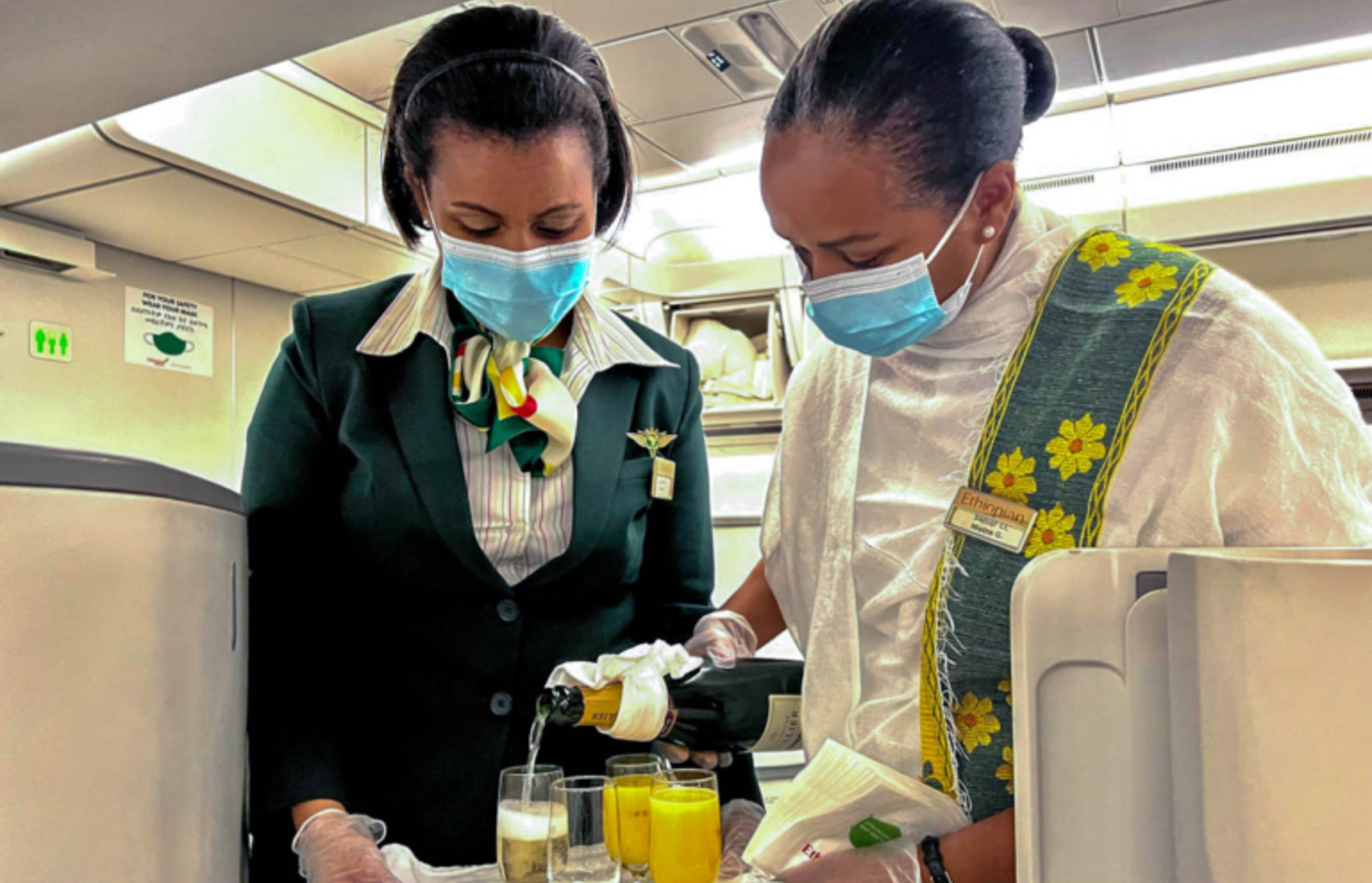
Ethiopian Airlines officially unveiled its updated in-flight meal menu for the 2027 fiscal year on Monday, October 5, 2026, at a launch event held at the Skylight Hotel in Addis Ababa.
The announcement follows years of passenger complaints over foodborne illnesses, hygiene lapses, and unreliable special meal service.
The airline is seeking to rebuild passenger confidence in its catering operations, which have faced mounting scrutiny after multiple reports of serious food poisoning, foreign objects found in meals, and forgotten special meal orders on international flights.
Ethiopian Airlines Group CEO Mesfin Tasew underscored the airline's continued commitment to ensuring its in-flight meals meet international standards and reflect customer preferences.
He noted that over the past four years, the airline has recruited foreign experts alongside Ethiopian professionals to deliver customer-focused in-flight dining.
The airline has also expanded its catering production facility and completed other improvements to its catering infrastructure.
Mesfin reaffirmed the airline's commitment to sourcing ingredients locally, with a goal of replacing 80–90 percent of imported food ingredients with local produce.
He also expressed gratitude to customers, emphasizing that the constructive feedback regularly provided by those who choose to fly with Ethiopian Airlines has been vital to the airline's growth.
The event showcased a variety of carefully prepared dishes for viewing and tasting, designed to further enrich the in-flight dining experience.
According to Ethiopian Airlines' Inflight Catering Director, the 2027 menu introduces new additions such as ice cream service for business class passengers, Mediterranean-inspired dishes, and additional seafood options, all developed in response to customer feedback gathered over the year.
The airline rotates its meal offerings in cycles, refreshing the business class menu every two months and the economy class menu every three months.
The initiative reflects Ethiopian Airlines' dedication to service excellence and innovation, as well as its ongoing efforts to address past shortcomings and rebuild passenger confidence in its catering operations.
Ethiopian Airlines is Ethiopia's flag carrier and ranks among Africa's largest and most profitable airlines.
The carrier operates an extensive network spanning more than 130 destinations across Africa, Europe, the Middle East, Asia, and the Americas.
It is widely regarded as a leader in African aviation and has earned numerous international awards for service quality, including recognition for "Best Business Class Onboard Catering in Africa" at the Skytrax World Airline Awards.
In recent years, the airline has invested substantially in enhancing its passenger experience, from cabin interiors and entertainment systems to in-flight catering.
These efforts form part of a broader strategy to position Ethiopian Airlines as a world-class carrier capable of competing with leading global airlines.
Its catering operation has expanded dramatically, with daily meal production climbing from approximately 20,000–25,000 meals five years ago to 60,000 meals per day.
The airline has set a target of reaching 150,000 meals daily within six months.
Despite these investments, the airline has faced significant challenges involving in-flight catering and food safety.
Several passengers have reported serious foodborne illnesses after consuming meals served on board.
In one reported case in May 2026, a passenger was hospitalized for two days in Cape Town with a confirmed Shigella infection after eating a special lactose-free chicken meal on Ethiopian Airlines flights ET713 and ET845, according to the passenger's account.
The passenger's travel companion, who did not eat the same meal, showed no symptoms.
Another passenger reported falling ill after being served a cold chicken meal on a March 2026 flight.
Medical investigations revealed significantly elevated inflammatory markers consistent with a Salmonella infection.
At least two other passengers on the same flight reportedly experienced similar symptoms.
Frequent flyers have also voiced concerns about hygiene.
One British passenger who flew almost exclusively with Ethiopian Airlines for three years said they stopped eating anything served on board except crackers due to repeated illnesses after meals, describing hygiene as a persistent issue.
In a separate incident in November 2025, a passenger found pieces of plastic in a chicken and rice meal on flight ET452 from Addis Ababa to Cairo.
Service reliability has likewise posed problems.
Some passengers have reported that special meals ordered in advance were forgotten entirely, leaving them without food during their flights.
For more coverage on aviation policy, transport infrastructure, and commercial sector updates, read our full report on Ethiopian Airlines Unveils 2027 In-Flight Menu, and review passenger service guidelines directly on the Ethiopian Airlines Official Portal.




