

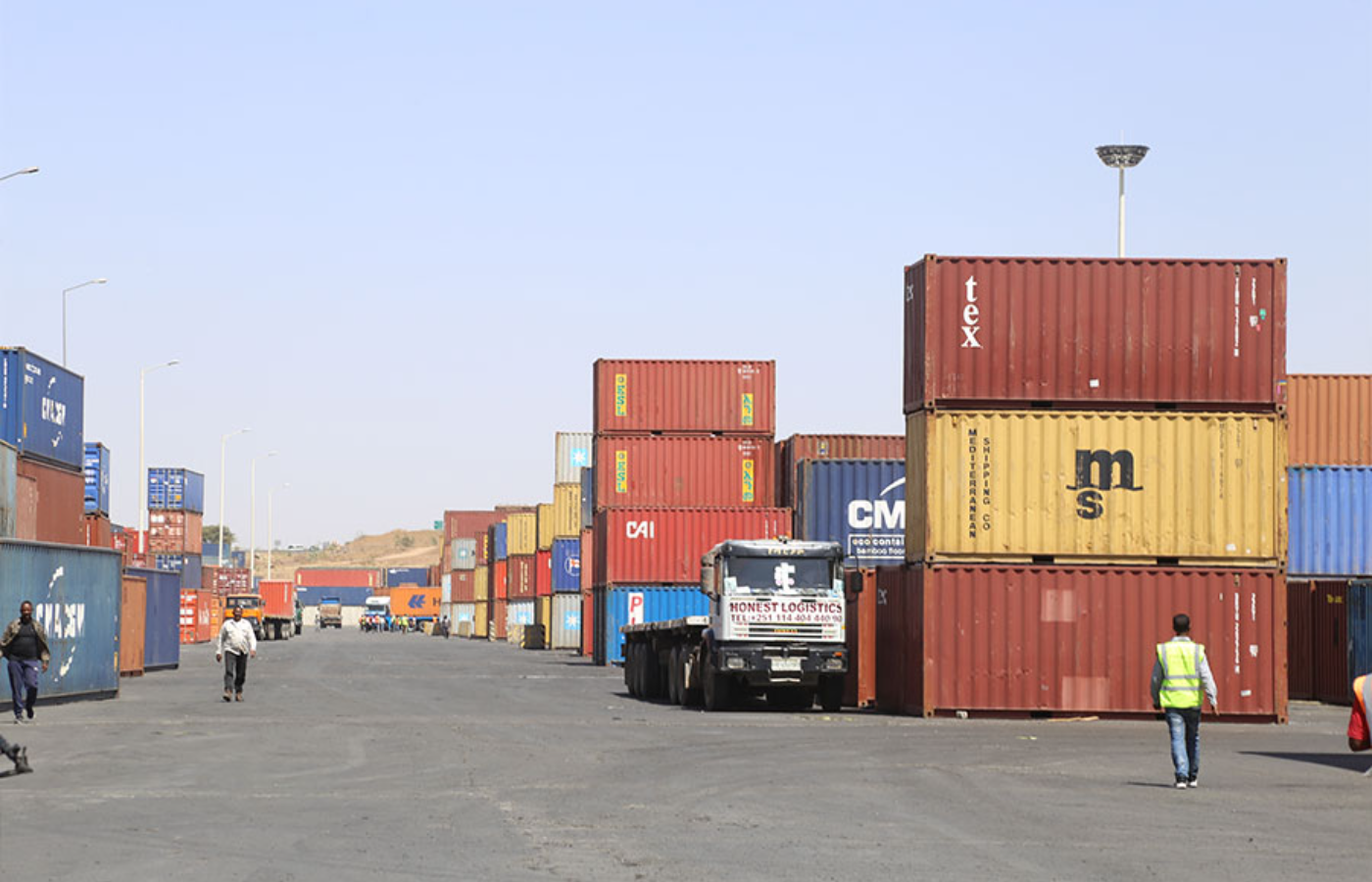
The Ethiopian Maritime Authority (EMA) has called on the Ethiopian Customs Commission and logistics stakeholders to accelerate the clearance of empty containers, warning that security disruptions in the Middle East threaten the country’s coffee export schedule.
In a letter dated March 30, 2026, the EMA said instability in the Middle East has disrupted maritime transport, with several shipping lines encountering security challenges at the Port of Djibouti.
The letter, also shared with the Ethiopian Coffee and Tea Authority and Ethiopian Shipping and Logistics (ESL), stresses the need for inter-agency collaboration.
The container deficit comes at a crucial point for Ethiopia’s economy, as coffee production peaks, tough supply has begun to recover. The EMA cautioned that delays could result in missed contracts and lost foreign exchange earnings. Domestic dry ports currently hold a backlog of containers that could be repurposed for exports. According to EMA data, there are 2,005 units of 20-foot containers and 2,471 units of 40-foot containers available within the country.
Global coffee output is rising, with major producers such as Brazil and Vietnam increasing harvests, creating a potential surplus. This growing supply is putting downward pressure on benchmark prices, even as demand for specialty and single-origin beans continues to expand. For Ethiopia, timely exports are essential to secure revenue and maintain market share.
The authority has called on the Customs Commission to prioritise processing and returning containers to the logistics cycle. It also reminded stakeholders of a May 2025 Ministry of Transport directive that prohibits shipping agents from returning 20-foot containers to Djibouti empty if they were imported, requiring them instead to support domestic export operations.
Authorities and logistics operators are urged to prioritise the “empty-to-export” pipeline to ensure Ethiopia’s coffee reaches international markets despite volatile maritime conditions in the Red Sea region.




