

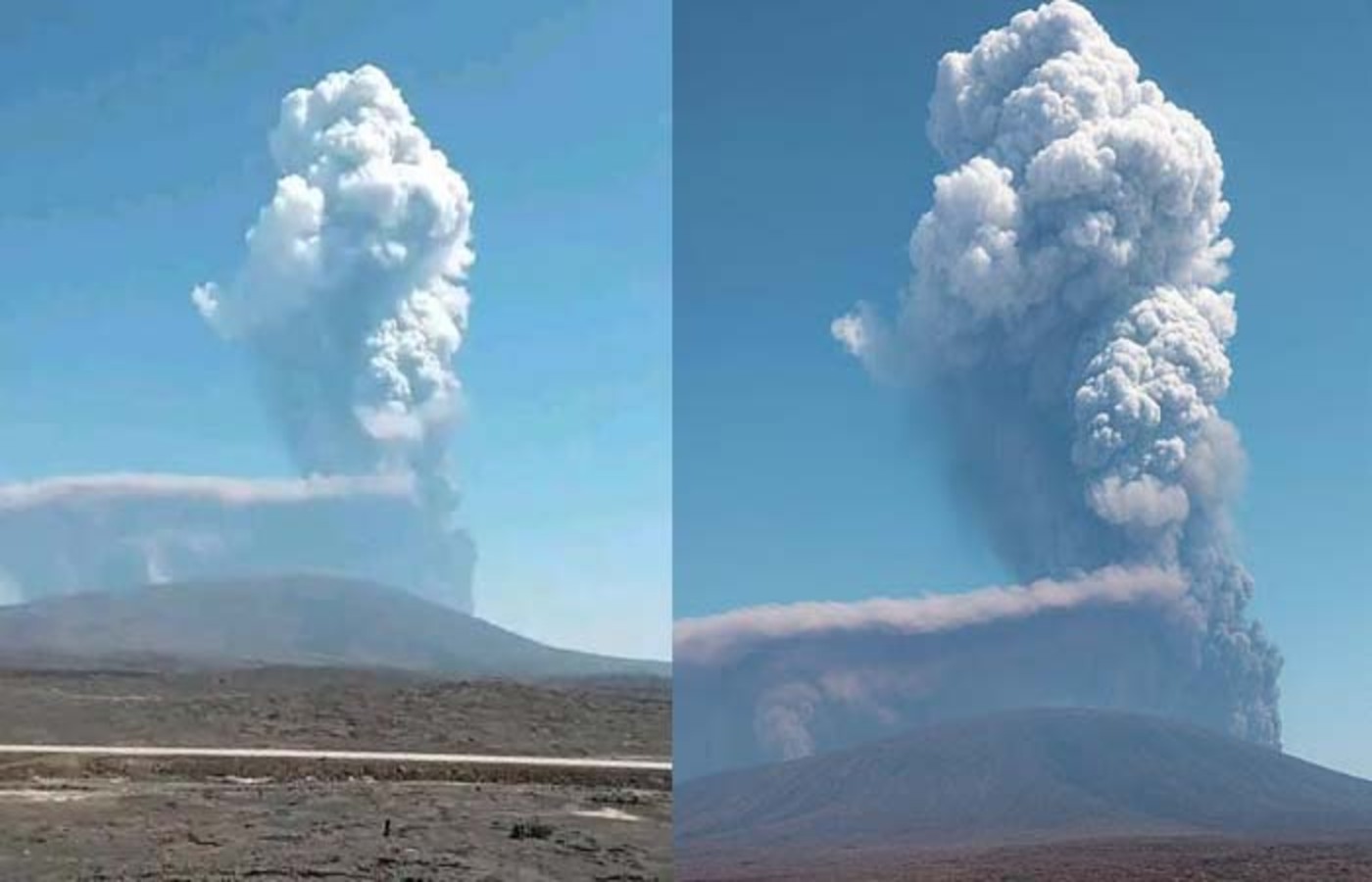
Ash from Ethiopia’s Hayli Gubbi volcano, which erupted on Sunday in what scientists describe as its first recorded eruption, has drifted across several countries and prompted Indian carriers to suspend flights for safety checks, Reuters reported.
The eruption in the Afar region produced ash columns rising up to fourteen kilometres, according to satellite assessments from the Toulouse Volcanic Ash Advisory Centre. Scientists described the event as the volcano’s first known eruption in recorded history, marking a rare geological occurrence in the Erta Ale volcanic range. The ash plume carried significant sulphur dioxide and drifted eastward, passing over the Red Sea, Yemen, Oman, and eventually northern India and parts of Pakistan.
By Tuesday, aviation monitors observed the ash extending into northern India and parts of Pakistan. India’s meteorological agency said the conditions over its territory were expected to improve by 2:00pm GMT. Data from Flightradar24 showed the plume’s progression across multiple air corridors used by commercial airlines.
Air India said it cancelled eleven flights on Monday and Tuesday to allow detailed inspections of aircraft that had operated near the affected airspace. The decision followed guidance from India’s aviation regulator. Akasa Air also halted services to Jeddah, Kuwait and Abu Dhabi over the same period.
In Ethiopia, residents near Afdera reported heavy ash fall following the eruption. Local authorities have been monitoring conditions after ash covered grazing areas used by pastoral communities. Geological agencies noted that Hayli Gubbi, located in the Erta Ale volcanic region, had no known Holocene-era eruption until this event.
Volcanologists characterise the eruption as sub-Plinian, with satellite measurements estimating more than 58,000 tonnes of sulphur dioxide released into the atmosphere. After the initial high-altitude plume weakened, lower-level ash continued drifting at heights of five to six kilometres.
Aviation agencies in the region remain on alert as monitoring centres continue to track the movement of residual ash across affected routes.




