


Can SOEs Cross the Financing Chasm?
With the state on a commercial-borrowing fast, can its lumbering enterprises slim down—or will the country’s growth go hungry?
For nearly two decades Ethiopia was the poster-child for African growth. Roads, railways, dams, and sugar mills sprouted from farmland; GDP galloped at more than 10 percent a year between 2004 and 2018. The government’s model—state-led, debt-fuelled—relied on sprawling state-owned enterprises (SOEs) and foreign loans.
It worked, until it didn’t. By the late 2010s, external debt had surged to 28.9 billion US dollars, the country faced chronic foreign currency shortages, double-digit inflation, and a roster of SOEs burdened with inefficiency and political patronage. Ethiopian Electric Power (EEP), Ethiopian Railways Corporation, and Ethiopian Sugar Corporation alone owed some 15 billion US dollars in non-performing loans (NPLs) at the state-owned Commercial Bank of Ethiopia (CBE).
Prime Minister Abiy Ahmed (PhD), who became the head of government in 2018, promised a course correction. His Homegrown Economic Reform (HGER) Agenda, launched in 2019, sought to open swathes of the economy to private and foreign investors, trim subsidies, modernize taxes, and partly privatize some of the state’s behemoths. A second phase, launched in 2024, pledged to curb inflation, restore debt sustainability, and woo private capital—all while steering Ethiopia towards its 2030 vision of prosperity.
A cornerstone of this new orthodoxy has been a near-total ban on non-concessional commercial borrowing—introduced in 2017 but rigorously enforced only in recent years. The Ministry of Finance and the National Bank of Ethiopia (NBE) have effectively imposed a “zero ceiling” on such loans, instead focusing on concessional funding, bilateral aid, and debt restructuring. The policy responds to the rising external debt, which analysts describe as a “high stress level,” and follows Ethiopia’s missed 33 million US dollars Eurobond interest payment in December 2023, which triggered an IMF “debt distress” label.
“Most commercial loans have been directed to state-owned enterprises,” says Getachew Teklemariam, development economist. “This policy makes it more challenging for them to launch and expand projects, maintain existing assets, and fully utilize ongoing initiatives.” Mikiyas Mulugeta (PhD), financial consultant, adds that while operations may pause in the short term, the move could strengthen Ethiopia’s long-term financial performance.
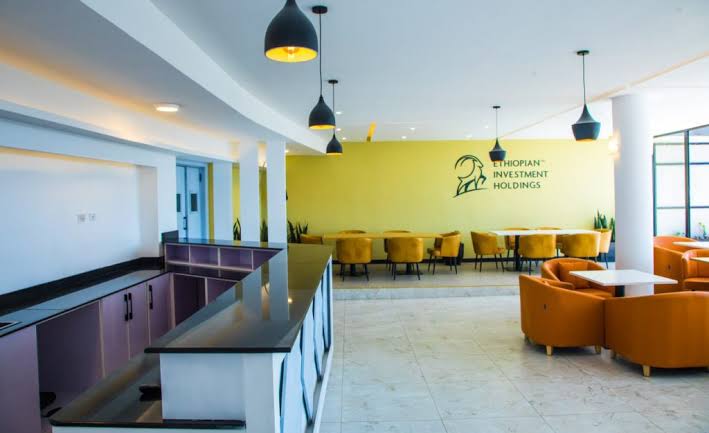
Even so, the borrowing freeze is proving a famine for decades of easy-credit SOEs. Ethiopian Investment Holdings (EIH), created in 2021, now manages 27 firms across energy, logistics, manufacturing, and finance, aiming to professionalize management and improve efficiency. Meanwhile, the Liability and Asset Management Corporation (LAMC) has absorbed more than 500 billion birr of dud loans accumulated during the EPRDF era, converting much into equity. EIH now oversees “high-risk” SOEs after the dissolution of the old holding agency in early 2025.
Many of Ethiopia’s SOEs are struggling to sustain or expand operations in this new financing environment. Ethio Telecom is finding it difficult to secure funding for its over $1 billion network expansion, while Ethiopian Shipping Lines faces similar hurdles for vessel purchases. Infrastructure projects managed by the Ethiopian Roads Authority have been suspended, particularly expressway construction, as external financiers—including China—have scaled back lending, citing concerns over Ethiopia’s repayment capacity.
China, historically Ethiopia’s largest bilateral creditor, lent over 14 billion US dollars between 2006 and 2022 for major projects such as the Addis Ababa–Djibouti Railway, industrial parks, and the Ethio-Djibouti Railway. Its recent scale-back under the Belt and Road Initiative (BRI), driven by domestic economic slowdown and risk concerns, has left Ethiopia facing a severe financing gap. While the 3.5 billion US dollars debt restructuring deal with official creditors co-chaired by France and China was a win in terms of fiscal breathing space, it has tarnished Ethiopia’s credit image, signaling to investors that the country has a mixed repayment record and making new loans harder to secure.
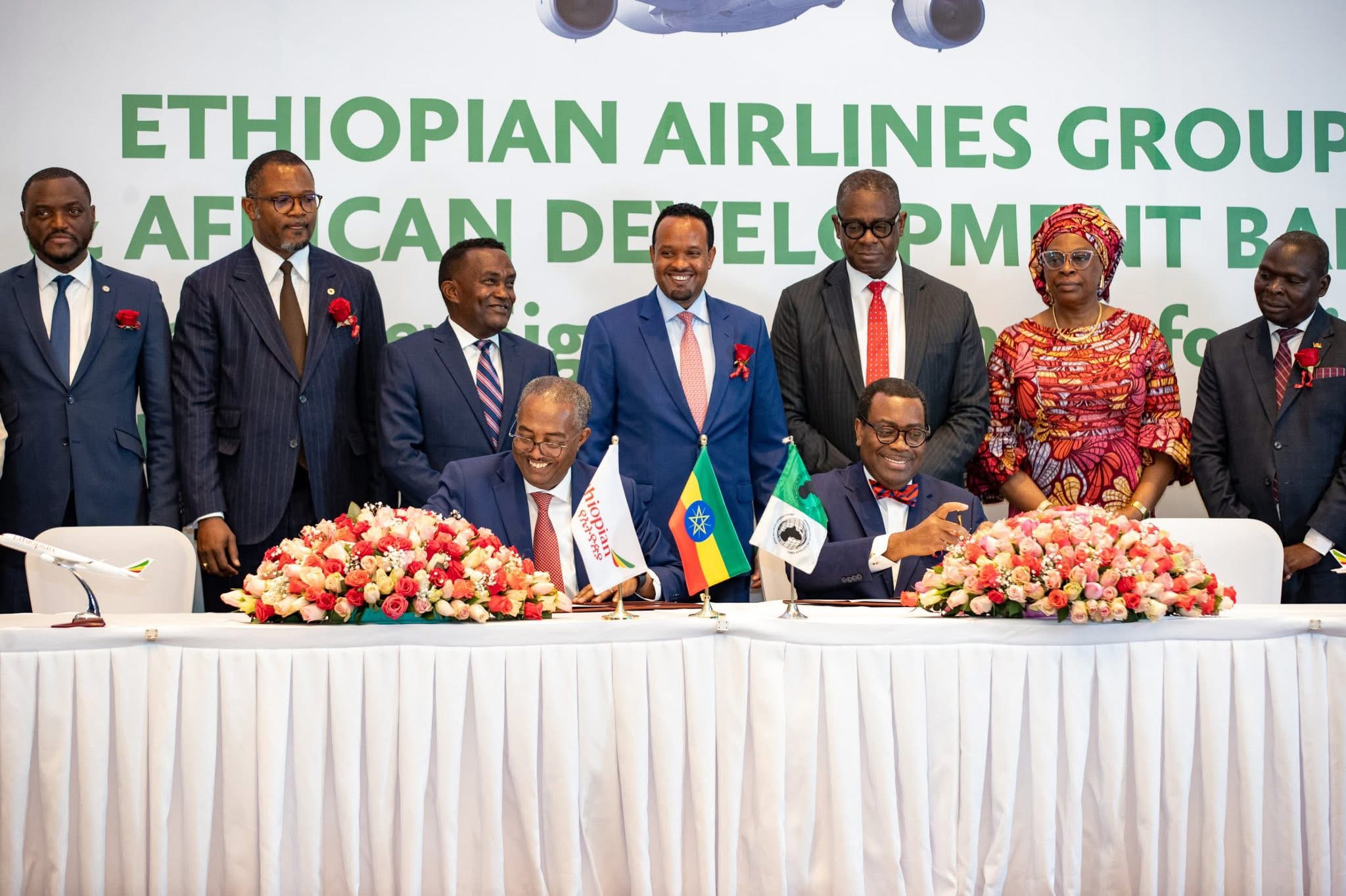
One high-profile test case is Ethiopian Airlines, which plans a 10 billion US dollars airport at Bishoftu, 45 km southeast of Addis Ababa. Nearly eight billion US dollars will come from external financing, led by the African Development Bank (AfDB) in coordination with Finance Minister Ahmed Shide. “The airline operates autonomously,” says CEO Mesfin Tasew. “We finance aircraft and infrastructure with loans that do not rely on government guarantees. Borrowing for this project will remain off the government’s books.”
Analysts warn that even with operational autonomy, the project could indirectly affect government finances. Getachew notes, “Foreign currency earnings will be directed toward the project, potentially creating a burden on the economy. Investment in fleet expansion and other initiatives could also be delayed.” Mikiyas adds that channeling AfDB financing is a strategic move amid the suspension of commercial loans. Groundworks are expected later this year, with the first phase complete by 2029, aiming to cement Ethiopia’s position as Africa’s aviation hub.
By June 2024, Ethiopia’s total public and publicly guaranteed (PPG) debt had fallen to 34.4 percent of GDP, down from 48.9 percent in 2021/22, thanks to slower external disbursements and robust GDP growth. SOEs now account for 16 percent of total PPG debt, with their external debt ratio declining for the sixth consecutive year. The government has repaid 92 billion birr this year alone. Yet, as the IMF’s 2025 Article IV Consultation warns, the country remains in debt distress. Nigel Clarke, Deputy Managing Director and IMF Board Chairman, stresses that continued avoidance of non-concessional borrowing and careful evaluation of new concessional loans are essential to limit vulnerabilities.
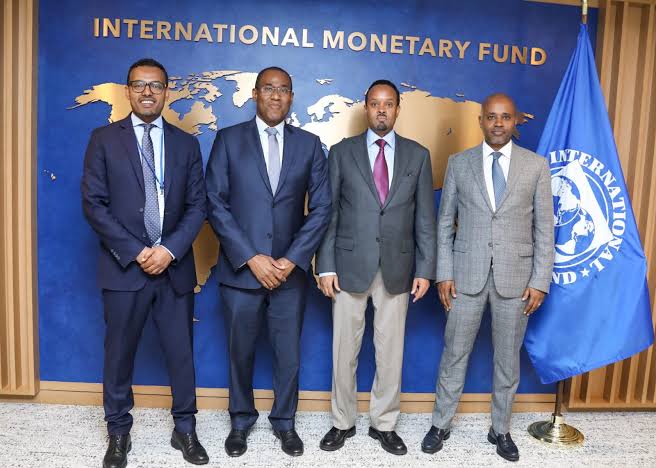
Credit-rating agencies are cautiously impressed by the borrowing freeze, though Moody’s still rates Ethiopia Caa3, and Fitch’s CCC+ rating—upgraded after the 2025 restructuring deal—signals ongoing distress. Bonds trade near four-year highs but yields above 10 percent show investors remain wary. The IMF forecasts growth of 6.6 percent in 2025, with inflation easing to roughly 21 percent, though foreign aid is falling—America’s contribution dropped by over a billion US dollar last year.
If Ethiopia can leverage this period of enforced abstinence to fix its SOEs, attract private investors, and maintain reform discipline, the payoff could be lasting stability. If not, the debt diet risks leaving the economy lighter in all the wrong places.




