


When Ethiopia launched fully fledged Islamic banks, officials heralded them as proof of a modern, more inclusive financial order. Years later, the promise remains largely rhetorical: the institutions created to widen access find themselves boxed in by the very system they were meant to transform.
The government still insists that the advent of interest-free banking marks a decisive step toward financial inclusion. Supporters argue that the push for inclusion during Ethiopia’s years of political and economic transition spurred the formation of banks offering entirely interest-free services—evidence, they say, of political will to expand access.
Yet critics within the industry are less sanguine. Despite the grand rhetoric, they argue, the financial system falls far short of the inclusive ideal the government touts. Their complaints are varied but consistent: the regulatory framework remains ill-suited to Islamic finance, the market architecture favours conventional banks, and policymakers have not fully grasped the structural needs of interest-free institutions.
These tensions sharpened during the drafting of the revised Banking Proclamation. The legislation, long overdue after sixteen years without revision, drew fierce debate as it passed through parliament. MPs claimed the bill mishandled the treatment of Islamic banks. But many objections were set aside in the name of modernisation—particularly the government’s ambition to open the sector to foreign banks.
That ambition partly drove the amendment process. Officials argued that the existing Act no longer matched the pace of financial-sector reforms or the country’s institutional evolution. But for several MPs, the bill’s provisions relating to Islamic banking were muddled at best. Their criticisms were dismissed by Mamo Mihretu, then governor of the National Bank of Ethiopia (NBE), who insisted the revised law threatened neither Islamic banks nor broader inclusion. On the contrary, he argued, the amendments strengthened the foundations of an inclusive system.
Industry observers remain unconvinced. Compare, they say, the proclamation’s inclusive claims with the lived reality of the four Islamic banks, eight microfinance institutions and niche insurers offering Sharia-compliant services. The recurring challenges they flag—structural constraints, regulatory blind spots, and operational disadvantages—suggest that the gaps are not merely technical but systemic.
The NBE maintains that it is working to address these issues. In September 2025, Deputy Governor Solomon Desta reminded an audience of bankers and development partners that the sector had expanded rapidly since the first directive for interest-free windows in 2019. By June 2025, he noted, Ethiopia had nine fully fledged interest-free institutions—four banks and five microfinance institutions—alongside 48 window-based providers across 25 banks, 15 MFIs and eight insurers.
Deposits under interest-free services, he said, had reached 379.1 billion birr, while takaful windows had written 299.8 million birr in premiums. “Over the past seven years,” Solomon declared, “Ethiopia has taken decisive steps to open space for interest-free finance as part of a more inclusive and resilient financial system.”
Yet numbers alone do not soothe the sector’s frustrations. Islamic banks still hold less than ten percent of total industry assets—far below what the legal reforms seemed designed to unlock.
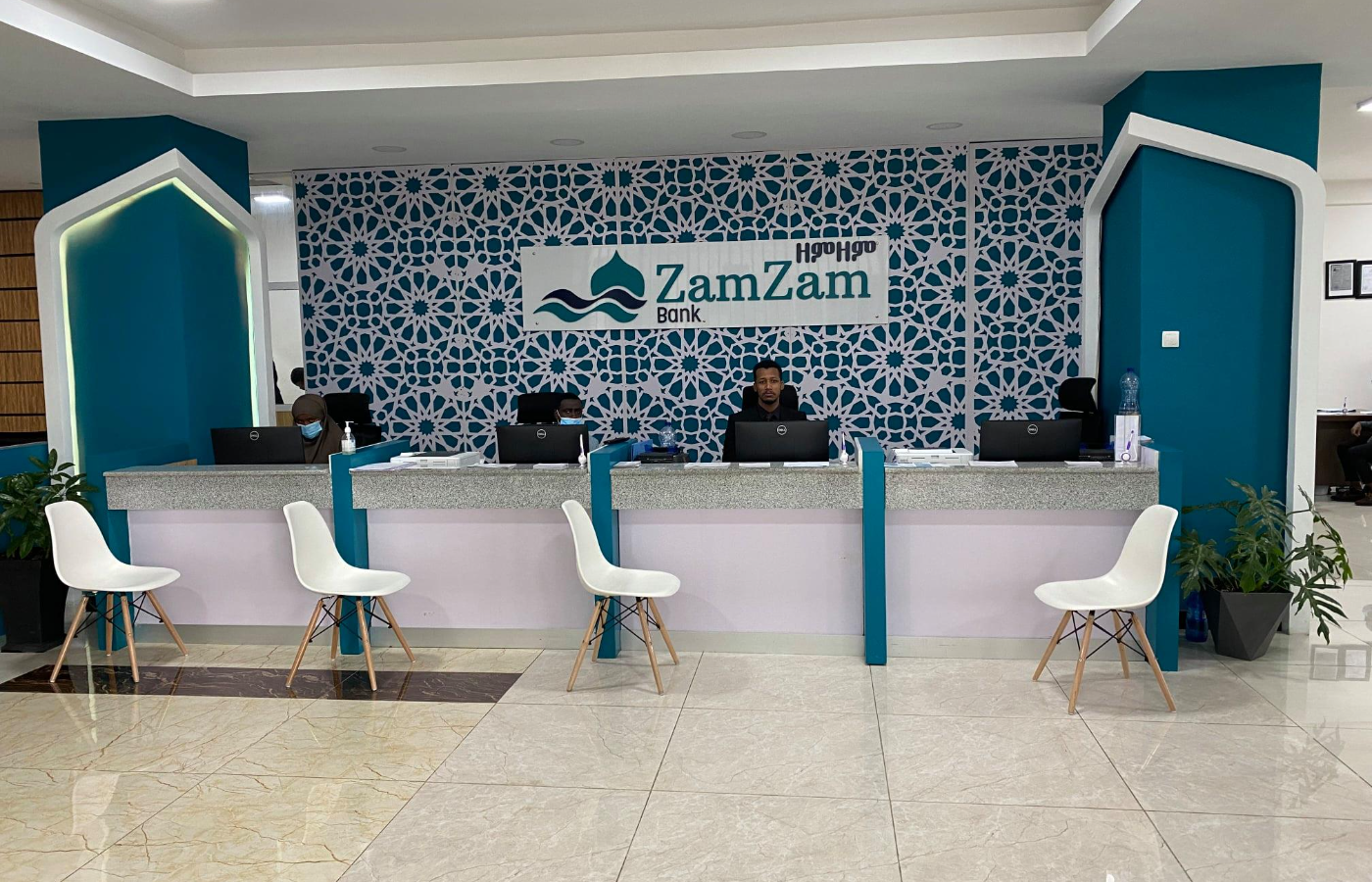
These constraints also limit their reach. Interest-free banks struggle to serve the communities they were designed for, prompting some to look abroad—particularly to the Middle East—where Ethiopian migrants familiar with Islamic finance reside. Their growing reliance on diaspora capital reflects the absence of a supportive domestic market.
Ethiopia also lacks a dual-banking framework that recognises the operational distinctions between conventional and Sharia-compliant institutions. Treasury bills sold via the Ethiopian Securities Exchange, for instance, are accessible only to interest-based lenders; no equivalent instrument exists for Islamic banks.
As Ethiopia prepares to admit foreign banks—a centrepiece of its reform agenda—the picture grows more complex. Kenyan banks have expressed interest. But global Islamic banks, many with experience operating across jurisdictions, have shown none. Executives attribute this reluctance to Ethiopia’s incomplete legal framework for interest-free finance.
One Islamic-bank official, requesting anonymity, argues that Ethiopian institutions must be allowed to form mergers or partnerships with established Sharia-compliant banks abroad—opportunities available to conventional banks but not extended to Islamic ones. Hijra Bank echoes this concern. Hassan Mohammed, its vice-president, warns that the government’s merger push largely overlooks Islamic institutions. Their operational model cannot be folded into conventional banking structures.
Regulatory innovations add further complications. A new interbank money market, intended to ease liquidity pressures, is interest-based—making it unusable for Islamic banks. Without a Sharia-compliant alternative, these institutions have no mechanism to approach the NBE during liquidity shortages. This, Hassan argues, exemplifies policymakers’ limited understanding of the sector.
The NBE insists it is not sitting idle. Solomon points to the updated 2025 licensing directive, which aims to ensure “stronger institutions, higher capitalisation and more sustainable growth.” He highlights new initiatives—Murabaha products, micro-takaful schemes, expanded consumer protection, and a national Agri-Finance Roadmap prioritising Sharia-compliant tools for farmers. Ethiopia’s second National Financial Inclusion Strategy, he says, has guided efforts to scale access points and expand transactional accounts.
He also emphasises Ethiopia’s growing international recognition, recalling that Prime Minister Abiy Ahmed won the 2022 Global Islamic Finance Award for reforms in the sector. And he praises partners such as FSD Ethiopia for supporting the development of the country’s first National Interest-Free Finance Strategy—“a shared commitment to turning inclusion into measurable results,” he said.
Yet even Solomon concedes that “access remains uneven, awareness gaps persist, and institutional capacity needs to be deepened.”
Meanwhile, a more immediate concern looms: capital requirements. All “small” banks must raise paid-up capital to five billion birr by June 30th 2026. Some institutions have been preparing since the directive was issued in April 2021. But Hijra Bank argues the deadline is unfair, as it was established after the directive came into force.
To many in the sector, such tensions reveal a deeper problem: policymakers are crafting rules for a system whose operational principles they do not fully understand.
Legal reforms continue, but executives insist that the NBE’s response is insufficient. Directives overlap, old problems linger, and reforms remain reactive rather than systemic. “Our work has been affected,” says one senior official—a sentiment widely shared across Ethiopia’s still-young, still-struggling interest-free banking sector.
The government may speak of inclusion. But for now, Islamic banks find themselves operating in a system that recognises their existence in theory while constraining it in practice—a paradox at the heart of Ethiopia’s uneven financial transformation.




