

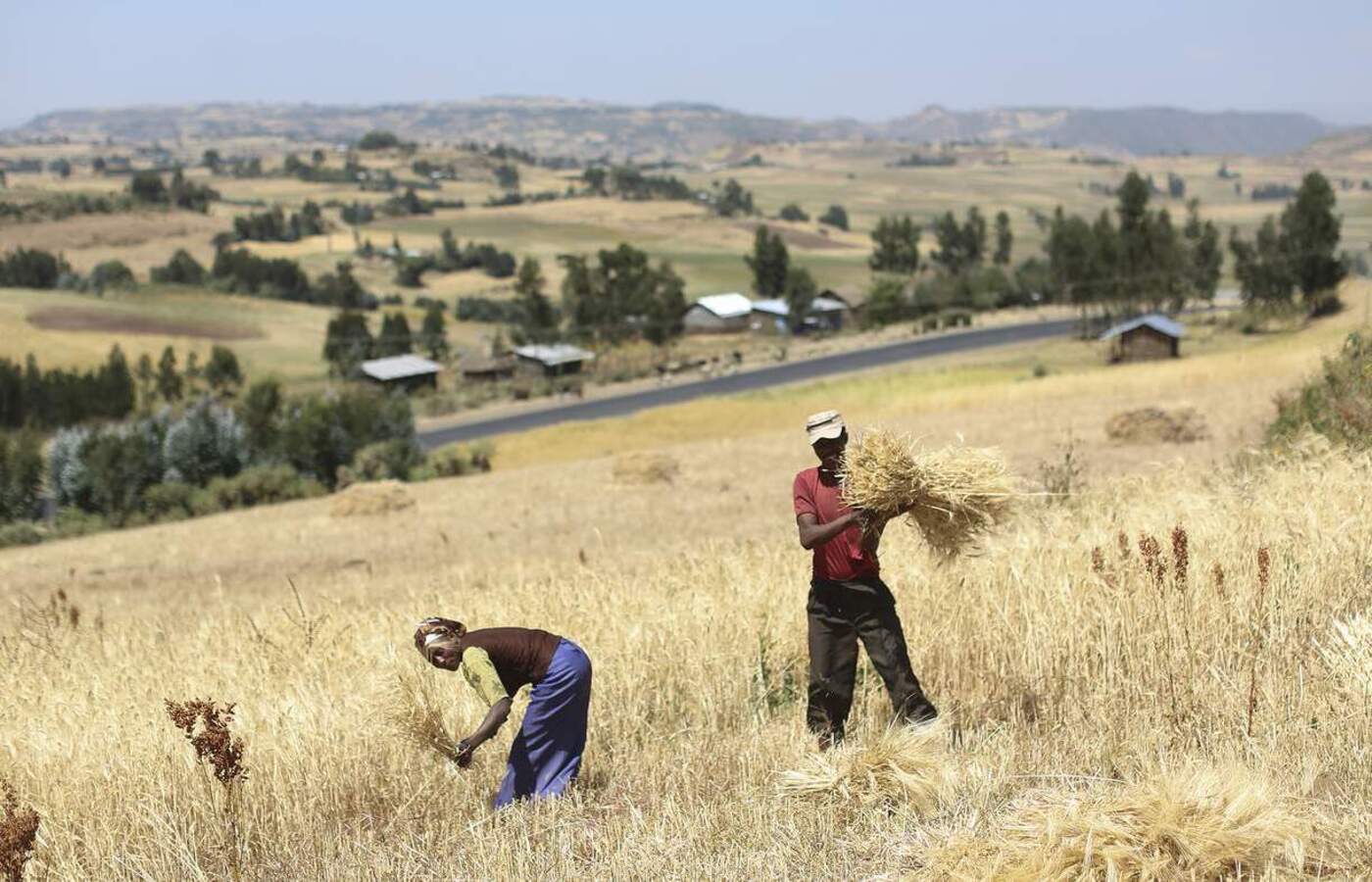
Ethiopia’s land policy has become a central obstacle to agricultural financing, cutting off farmers from credit, keeping banks out of rural markets and limiting investment in a sector that remains central to the economy.
The challenge is rooted in Ethiopia’s land tenure system, shaped by the 1975 land reform and reinforced by the 1995 Constitution, which vests ownership of land in the state while granting farmers perpetual use rights. While designed to ensure equitable access, the system has long limited farmers’ ability to use land as collateral, discouraging long-term investment and keeping formal finance out of rural areas.
A study by Land for Life Ethiopia argues that these structural constraints have been compounded by gaps in the country’s revised rural land law. The report identifies two core weaknesses: the absence of an independent national institution responsible for land governance, and the placement of land administration under a ministry without a clear land mandate.
Presenting the findings, researcher Melese Damtie (PhD) said a breakdown of trust between financial institutions and the agricultural sector lies at the heart of the financing crisis.
“The confinement of capital to urban centres has constrained the expansion of rural economies,” Melese said, adding that recent legal revisions have failed to address the underlying problems.
Banks have traditionally viewed agricultural lending as high-risk due to weather shocks, price volatility and weak collateral mechanisms. As a result, formal finance has met only a small fraction of agricultural demand, with farmers relying largely on informal lending or small microfinance loans that are insufficient for mechanisation, irrigation or commercial expansion.
In response, the government has rolled out a series of reforms over the past two decades, including land certification programmes and legal changes allowing land use rights, crops and livestock to be used as collateral. Large-scale initiatives such as second-level land certification have expanded tenure documentation, while the 2019 movable property security law shows early signs of supporting new agricultural loan products.
More recently, Ethiopia launched its first dedicated national framework to scale agricultural finance, the National Agri-Finance Implementation Roadmap (NAFIR) 2025–2030, jointly developed by the National Bank of Ethiopia and the Ministry of Agriculture. The roadmap aims to increase annual agricultural credit significantly by expanding risk-sharing mechanisms, streamlining loan processes and strengthening coordination across the value chain.
However, analysts say financing reforms are unlikely to deliver their full impact without parallel fixes in land governance. According to the Land for Life Ethiopia study, persistent challenges—such as weak land valuation systems, fragmented landholdings, politicisation of land administration and poor rural infrastructure—continue to undermine lenders’ confidence.
The latest Federal Rural Lands Administration and Use Proclamation, enacted in August 2024, introduces stronger protections for women, children and older people, and recognises customary land rights.
Critics argue the law largely overlooks the economic role of land. Administration remains under the Ministry of Agriculture, and the framework lacks a coherent national land policy and credible mechanisms to support investment or commercial farming.
Regulatory provisions also discourage lending. Banks that accept land-related collateral are often required to hold assets that are difficult to liquidate in the event of default, reinforcing risk aversion despite broader financial sector reforms.




