

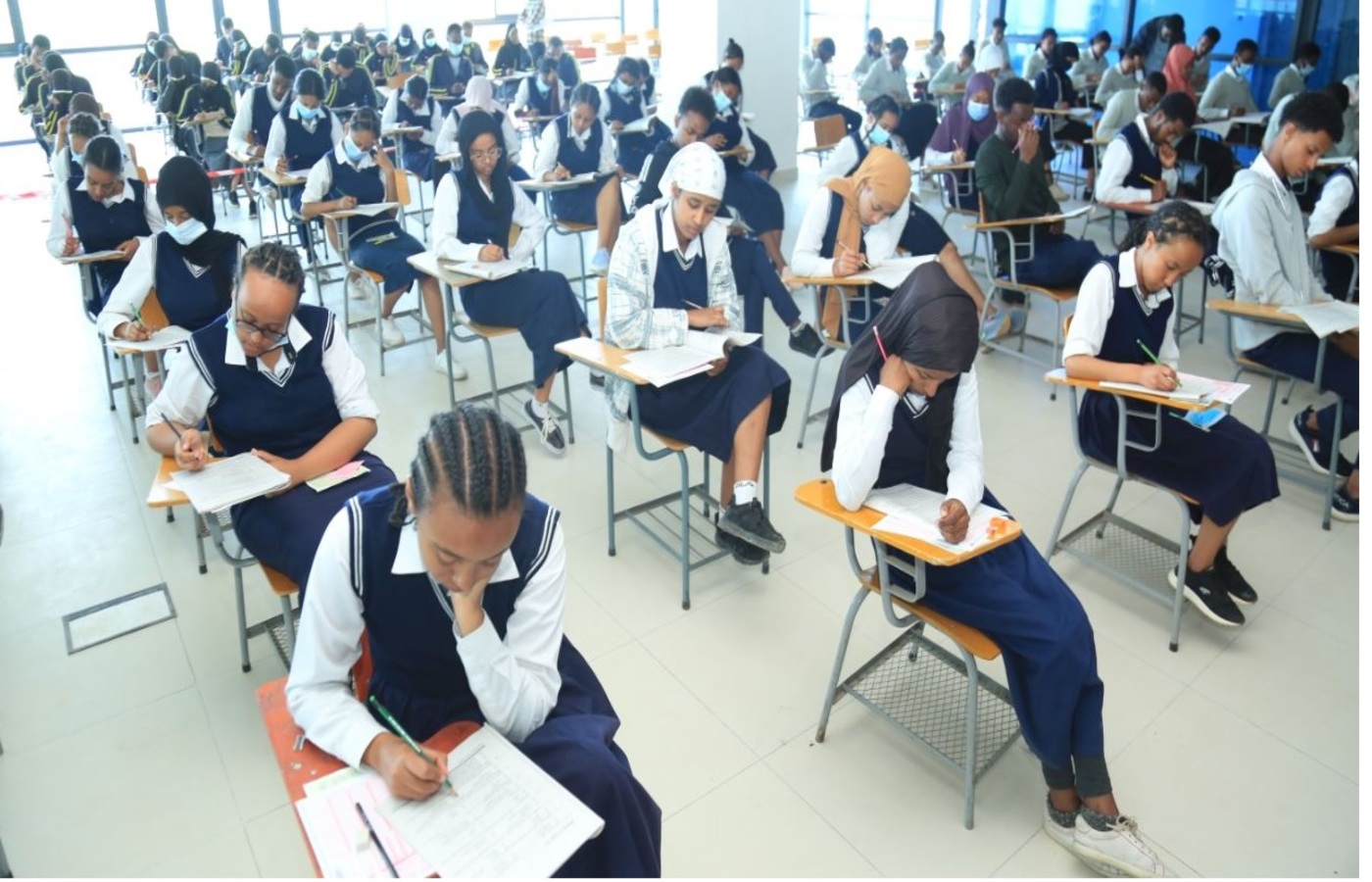
- Over 2.2 Million Students Fail National Exams Over the Last Three Years
The red dirt paths winding through the Enkual Fabrica neighborhood, an area some call Rwanda Sefer, a slum, tell the story of thousands trapped in limbo. Shelters made from mud and rusted sheet metal are home to families barely scraping by. It's here that 24-year-old Ermias lives with his mother and sister, eking out a meager existence years after failing Ethiopia's high school exit exam.
"I try not to think about the past too much, but it's always there in the back of my mind," Ermias says softly, gazing at the hardscrabble surroundings. His dreams of university died three years ago when results showed he hadn't attained the minimum 50 percent pass mark on the grueling national Grade 12 tests. Like so many others, Ermias was left stranded with no clear path forward for his education or career.
"Seeing that number crushed me," he recalls.
New government figures show the magnitude of this crisis facing Ethiopia's youth. In the 2022/23 academic year, a shocking 96.8 percent of students who sat the exit exams failed to meet the cutoff, amounting to over 500,000 adolescents left in the lurch. While reforms aimed to improve standards, implementation flaws have shattered countless hopes and stalled human potential on a massive scale.
Through interviews with students directly impacted and teachers witnessing the fallout, this story explores the roots of this education emergency and its profound socioeconomic repercussions. It reveals a system in dire need of reforms to rescue those languishing in limbo and help Ethiopia realize its development goals. For now, Ermias and many others can only struggle day-to-day, left with scant options by nationwide exam failures.
At first glance, Ermias appears stoic discussing his circumstances. But beneath lies a well of hurt from dashed aspirations. "I always loved school and dreamed of being the first in my family to finish university," he recalls, eyes misting over. "Studying gave me purpose and joy."
Ermias grew up poor in the Enkual Fabrica neighborhood in Addis Ababa but excelled in class, ranking near the top of his cohort until high school. There, the intense pressure of final exams started weighing on him. "I began losing sleep, couldn't focus," he says. "The stress was overwhelming."
On fateful exam days in 2022/23, Ermias struggled through grueling tests spanning mathematics, physics, chemistry, and more. Weeks later, results confirmed his worst fears—a final score of just 47 percent, missing the cutoff by a narrow margin. "Seeing that number crushed me," he says. "All those years of hard work felt pointless. I couldn't believe my dream was over because of three percentage points."
"Many called it a 'learning crisis' and cited 'alarmingly low achievement levels,'" experts noted.
Ermias wasn't alone. According to figures from Ethiopia's National Education Assessment and Examination Agency, around 94-96 percent of students have failed the Grade 12 exams annually from 2014 to the present. Many called it a "learning crisis" and cited "alarmingly low achievement levels."
Experts point to multiple factors, including a lack of qualified teachers, poor infrastructure, plus curriculum and assessment issues ill-suited to students. But for those directly impacted, the consequences are profoundly personal.
Beyenech Tessema, a mother of a daughter who has not passed the exam, shares Ermias's anguish. A top student in math and sciences, her daughter planned to become a doctor but scored just 30 percent on the 2022/23 exam. "It was soul-crushing after working so hard," she laments.
Such experiences echo the trauma of millions who similarly saw academic dreams dashed. But as the scale of failure grows each year, impacts radiate outwards, destabilizing communities and stunting Ethiopia's human capital potential. Failure on such a mass scale points to systemic flaws, according to educators. Since Ethiopia transitioned to competency-based assessments, passing rates plunged annually, yet little support was given to students to adapt.
In Mikiyas's view, high-pressure national tests are too far removed from classroom lessons. "The material covered does not align between teaching and exams," he explains. "Students aren't properly prepared for that level of difficulty."
Curricula designed for university-bound cohorts also disadvantage non-academic pupils. "Not everyone is cut out for university, yet there are no alternatives," notes Mistir Surafel, another high school teacher at Medhanialem Secondary School in Addis Ababa. "The system fails millions of capable students in other fields."
Implementation weaknesses compound issues. A high school teacher in the Amhara region says a lack of infrastructure hamstrings learning, especially in pastoral regions. "Classes are crowded, books scarce, labs non-existent," he lists. "How can these kids compete nationally with such disadvantages?"
Experts argue standardized assessments disadvantage those from dysfunctional homes or remote villages with uneven access. They suggest delinking university entry from exam scores and broadening tertiary options could curb dropouts and failure.
For educators on the frontlines, more holistic support is needed. "Students must feel hope, not humiliation after failure," stresses Surafel. Getachew concurs—"We must rescue these children from limbo by validating their dignity through multiple pathways."
While intentions to reform education quality are laudable, implementation setbacks risk stunting Ethiopia's human capital potential, according to economists. Studies show education level closely correlates to lifetime earnings, productivity, and ability to innovate.
Education specialists note the failure crisis comes as Ethiopia strives to transition from agriculture to manufacturing and services industries. "To attract investment and jobs, the workforce needs relevant skills," says an expert who worked as a consultant for the World Bank.
Unless current youth who left without prospects due to exam failures can get reskilled, the expert warns of likely social consequences. "High unemployment rates among adolescents could fuel instability," the expert reasons. Public health experts share concerns. Destitute youth succumb more readily to issues like these.
Overall, failure on such a scale jeopardizes Ethiopia's attractiveness as an investment destination. Investors want to see a growing, skilled labor pool—not thousands left behind each cohort. Creative solutions are thus vital to reboot derailed lives and rescue the national development trajectory. Alternative skills training, apprenticeships, and vocational schooling must open doors for this lost generation, an expert says.
Small gains are evident as pressure mounts. The 5.4 percent national passing rate in the last academic year represents progress from previous calamities. Policy tweaks also broaden options—some students now transfer to vocational colleges regardless of exam results.
For Ermias, his perseverance hints at brighter days ahead if society can multiply such opportunities. Despite facing several setbacks in his life and education, Ermias has now started a new path. "I have joined a diploma program now. Hopefully, that will help," he concluded.




