

Italian investment in Ethiopia stands at approximately 723 million euros, reflecting a steady accumulation of capital and commercial engagement across construction, manufacturing and industrial services.
The presence on the ground includes around 150 Italian companies active in trade and investment partnerships. Their operations span construction, infrastructure, textiles, agro-processing and machinery supply chains, forming a layered network of firms ranging from contractors to equipment suppliers.
Trade flows between the two countries remain structurally defined. Italy’s exports to Ethiopia are dominated by machinery and industrial equipment, while Ethiopia’s shipments to Italy are concentrated in agricultural commodities, particularly coffee and oilseeds. The pattern has supported a relationship built on industrial inputs and raw material exchange rather than high-volume consumer trade.
The engagement sits within Italy’s broader Africa policy under the Mattei Plan, launched in 2024 to promote investment-led cooperation in sectors including energy, infrastructure, agriculture and health. Ethiopia has been identified as one of the priority countries under the framework, with Italy committing 25 million euros to support development programmes linked to job creation and economic activity.
On the ground, Italian-backed projects have contributed to employment in construction and manufacturing, with spillovers into logistics, subcontracting and local service industries. The footprint is increasingly defined by interconnected supply chains rather than isolated corporate operations.
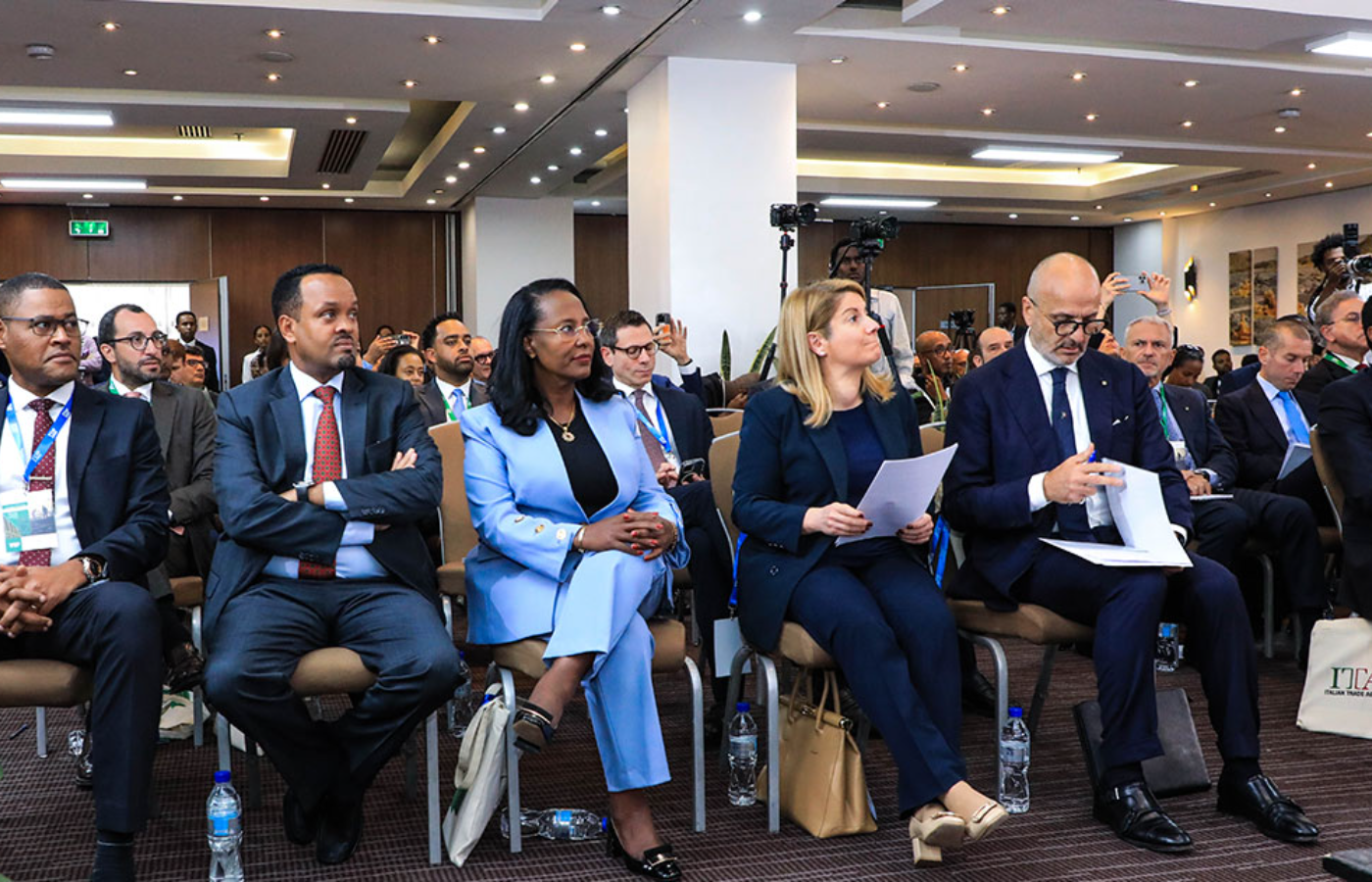
The Italian Trade Agency presented the information in a statement ahead of the Big 5 Construct Ethiopia 2026, scheduled for April 23 to 25 at the Addis Ababa International Convention Center. It said more than 20 Italian companies are expected to participate in the Italian Pavilion, alongside international and domestic exhibitors.
The statement said the exhibition is expected to serve as a meeting point for contractors, developers and suppliers, offering access to upcoming public and private sector projects in Ethiopia’s construction market. Organisers added that the programme will include sector briefings on operating conditions and discussions around collaboration opportunities between foreign and local firms.
The Italian Trade Agency said it continues to support companies seeking to expand internationally through advisory services, promotion and training, as firms position themselves in emerging African markets.




