

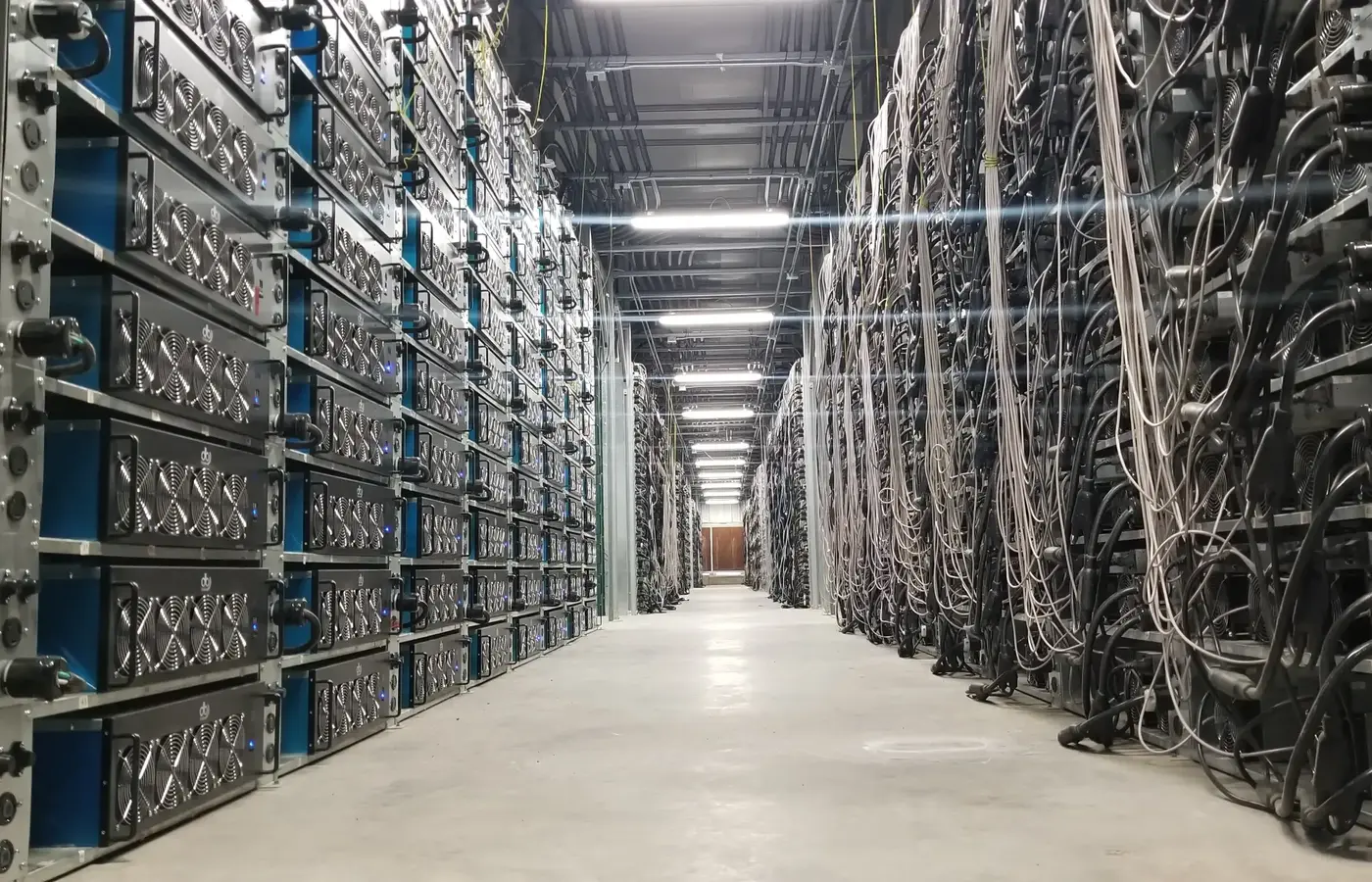
For a country long defined by power shortages, Ethiopia now has a different problem: too much electricity, and too many suitors for it. A flood of cryptocurrency miners, lured by surplus hydropower from the Grand Ethiopian Renaissance Dam (GERD) and rock-bottom tariffs, has transformed the country into one of Africa’s unlikeliest digital outposts. The rush has filled state coffers with foreign currency—but also sparked a political and economic debate over how to use Ethiopia’s new energy wealth.
Drawn by some of the lowest electricity tariffs in the world and Addis Ababa’s willingness to license operators even as cryptocurrency trading remains banned, miners—many displaced from China after Beijing’s clampdown—have flocked to Ethiopia. Their arrival has brought in scarce foreign exchange and burnished the government’s ambitions to develop a data-centre industry.
But Ethiopian Electric Power (EEP), the state utility, is now wary of the boom. It has frozen new licences and plans to phase out existing operations, citing worries about grid stability, economic returns and fair electricity allocation. In August, EEP reported 75.4 billion birr in revenue for the 2024/25 fiscal year, with foreign-currency earnings more than doubling to 330 million US dollar from 140 million US dollar the year before—thanks largely to power exports and data-mining consumption. Yet Asgebir Balcha, the utility’s chief executive, says the activity “consumes vast amounts of electricity while contributing little to jobs or wider growth.”
Industry players counter that Ethiopia’s challenge is not overuse but underuse. “Rapid growth in generation outpaces distribution and consumption,” says Nemo Semret, co-founder of QRB Labs ICT Solution, a data-centre operator based in Addis Ababa. That imbalance, he argues, leaves “stranded” energy that could be profitably absorbed by mining firms. Using the excess, he says, could earn foreign exchange while financing the transmission and distribution upgrades needed to extend electrification.
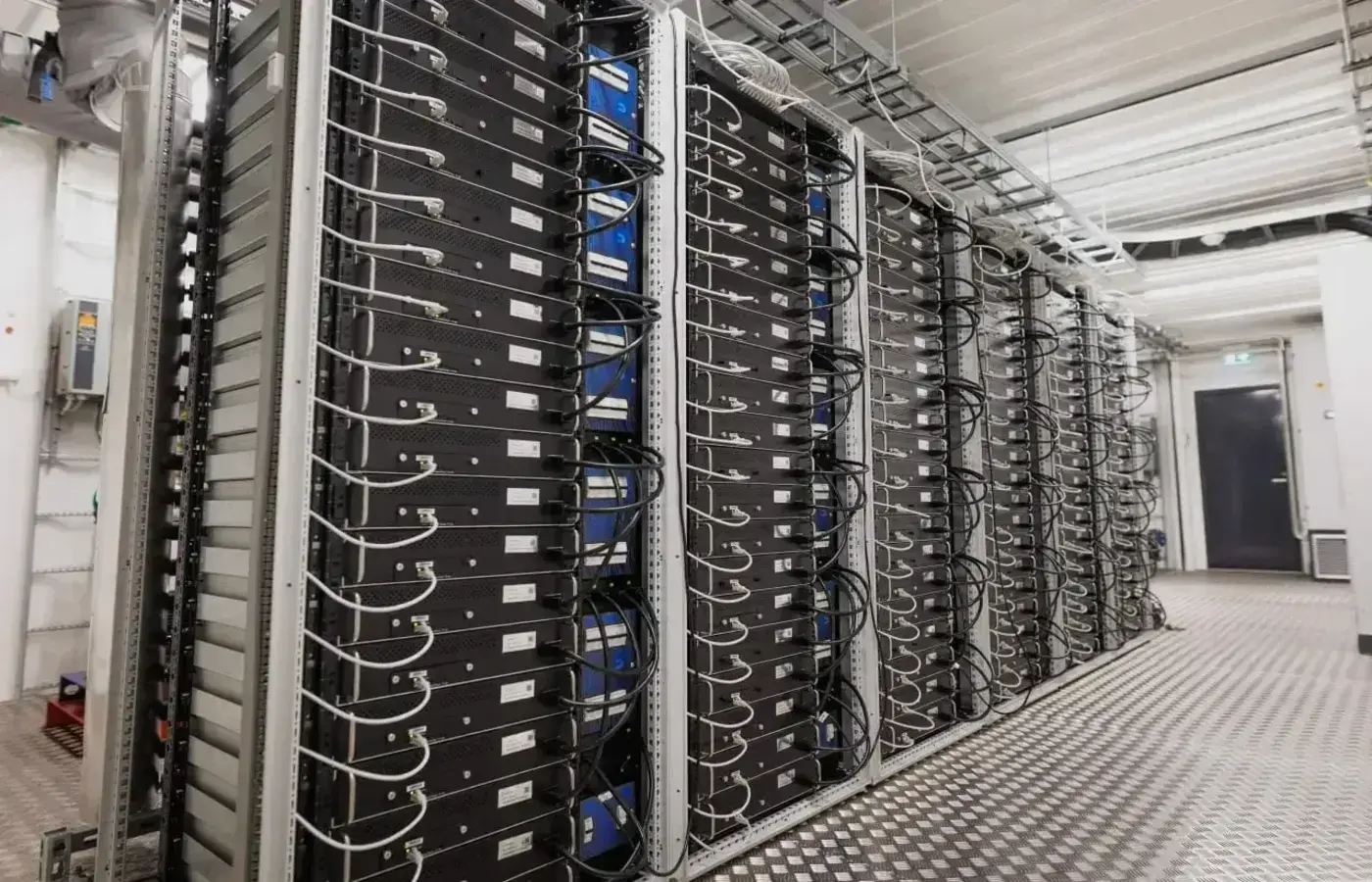
Nemo points to the scale of the country’s energy ambitions. GERD alone provides about 5GW of Ethiopia’s 8GW of installed capacity, with the 2GW Koysha project under construction and other large dams such as Gibe III adding to supply. Yet per-capita consumption remains one-tenth of the global average. To reach middle-income status, he says, the country must reach around 100GW within two or three decades—“the equivalent of adding 10 to 20 GERD.” Bitcoin mining, he argues, “can act as an accelerator of this process of electrification.”
Kal Kassa, founder of BitcoinBirr, an education platform for cryptocurrency, is similarly upbeat. He believes that the dam’s output can sustain mining without disrupting supply to households or businesses. “Bitcoin miners will continue to scale as the power grid in Ethiopia scales,” he says. Miners pay 0.038 US dollar per kilowatt-hour, compared with 0.02 US dollar for commercial users and 0.01 US dollar for households, typically operating on five-thousand-square-metre sites near substations to balance regional loads.
EEP is unconvinced. While the utility and some experts maintain that mining’s wider economic contribution is limited, operators insist the benefits are tangible. Nemo Semret claims that Bitcoin mining creates value “in three ways: by monetising stranded energy to accelerate electrification; by generating about 300 million US dollar annually in foreign exchange—a growth trajectory unmatched by any other industry in Ethiopia in such a short time; and by channelling more than 500 million US dollar into infrastructure and equipment,” supporting jobs in construction, electrical works, telecoms, data-centre operations and computer maintenance.
Critics see a distortion rather than a development strategy. “Bitcoin mining is very bad for Ethiopia; we should be using electricity for productive sectors,” says Mikael Alemu Gorsky, chief executive of 10 Green Gigawatt for Ethiopia. “The whole conversation about ‘stranded electricity’ is misleading—miners operate in Addis, taking power from households that cannot reliably use refrigerators or other appliances.” With tariffs expected to rise to 0.10 US dollar per kilowatt-hour in coming years, he adds, “miners will be unable to afford the electricity price.”

Energy experts worry too that the concentration of mining clusters around the capital is straining the grid. They propose relocating operations to off-grid areas powered by modular mini-grids, which could both soak up idle electricity and advance rural electrification. With GERD and other projects coming online, Ethiopia’s installed capacity is expected to reach nearly 14GW—against a ten-year target of 29GW. “Even if financing is secured for the remaining 14–15GW,” one expert notes, “Bitcoin mining alone cannot consume all renewable output in the short to medium term. The country must pursue energy exports while scaling domestic industrial use.”
Pricing, meanwhile, remains a flashpoint. Subsidised power has made mining artificially profitable, but the government is phasing out such support. “No mining operation has financed new substations or upgrades,” observes another expert. “The true levelised cost of energy far exceeds the subsidised rates miners currently pay. Selling below cost is economically unsustainable.”
Since 2023, more than 27 firms have obtained agreements through the Information Network Security Agency. The industry is estimated to generate 25–28 million US dollar in monthly revenue for EEP, with post-tax electricity rates between 3.2 and 3.6 US cents per kilowatt-hour. In total, miners have contributed around 220 million US dollar to the utility—no small sum for a country whose tariffs remain among the world’s lowest.
Ethiopia’s generation capacity now stands at 7,910 megawatts, expected to climb to 9,000 as new GERD turbines spin up. Yet the energy mountain ahead remains formidable. To reach middle-income status, QRB Labs reckons the country must scale to around 100 gigawatts, roughly the global benchmark of one kilowatt per capita.
The real issue, then, is sequencing. Ethiopia must decide whether to channel its hydropower surplus into short-term digital earnings or longer-term industrialisation. Modular, off-grid setups, targeted industrial loads and power-export deals could turn temporary excess into durable growth. How policymakers navigate this tangle of energy abundance, digital ambition and fiscal prudence will determine whether the country’s hydropower bounty becomes a springboard for development—or another contested current in its economic story.




