

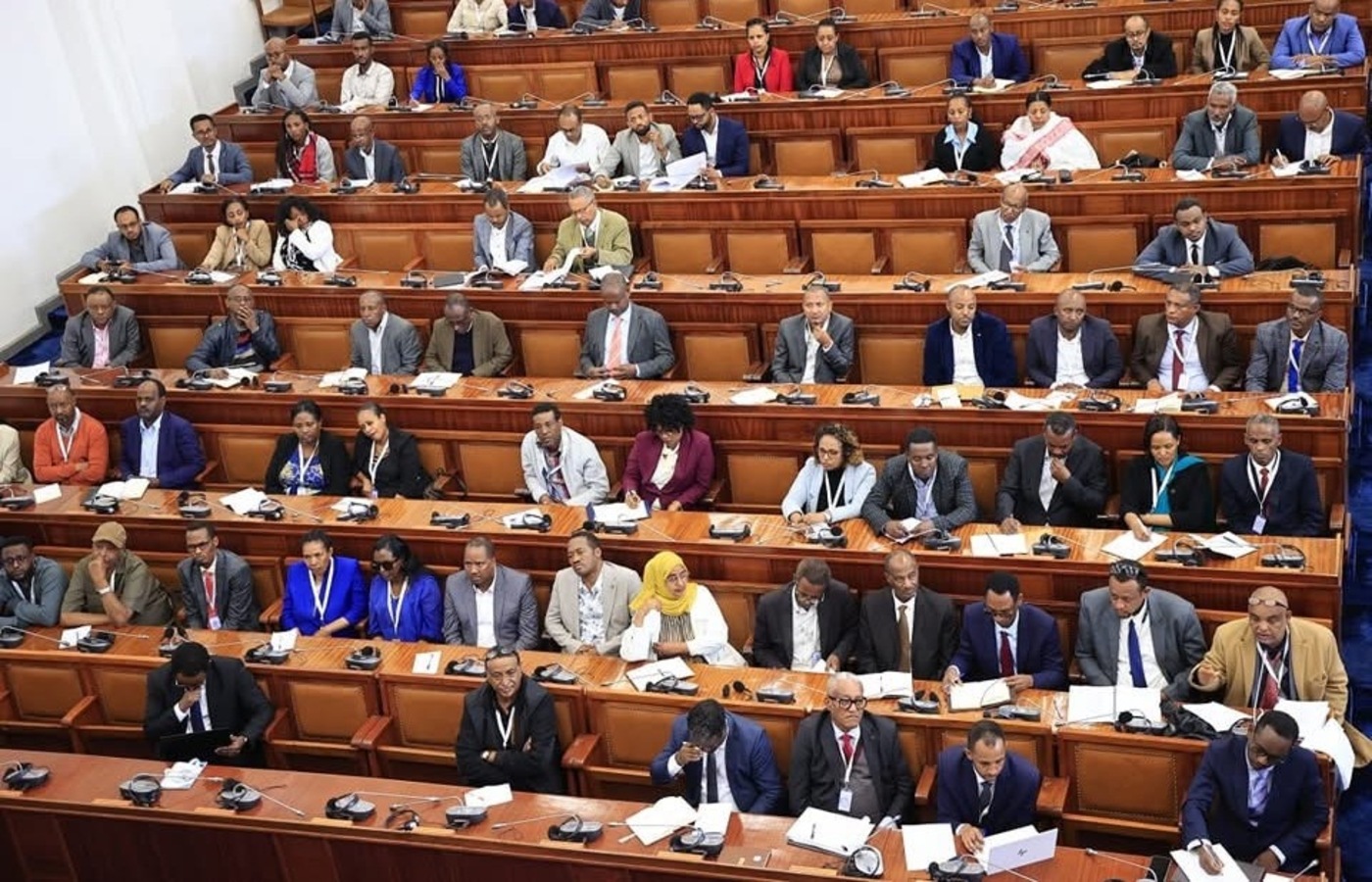
Labour unions and civil society groups have raised strong objections to Ethiopia’s proposed income tax reform, warning during a parliamentary forum that the draft law risks deepening inequality and failing to shield low-income workers from rising inflation.
The concerns were aired at a public discussion convened by Parliament’s Standing Committee on Planning, Budget and Finance, where officials from the Ministry of Finance defended the bill as a fiscally responsible measure aimed at broadening the tax base and supporting national development.
“This amendment is necessary to improve tax collection and answer the development questions of our people,” said committee chairman Desalegn Wedaje. “But the suggestions from taxpayers that taxes are too high must be considered in a balanced manner.”
The draft law, tabled in Parliament earlier this month, proposes raising the tax-free income threshold from 600 birr to 2,000 birr per month and shifting the start of the top 35 percent bracket from 10,900 birr to 14,000 birr. The government has not adjusted these thresholds since 2008, despite years of currency depreciation and double-digit inflation.
While the Ministry of Finance argues that the bill reflects two years of consultation and is calibrated to current fiscal realities, trade unions and advocacy groups say the proposed revision is too modest to provide meaningful relief.
“We welcome the review — but the changes are not enough,” said Kassahun Follo, president of the Ethiopian Trade Union Confederation. “Workers are taxed on what they need to live, not on surplus income. With salaries barely covering rent and food, this is not a sustainable system.”
Kassahun called for a larger tax-free threshold and reduced rates for low-income earners, citing the widening gap between wages and the cost of basic goods. “If this committee is willing, we can show you workers waiting outside hotels at night, asking for leftover food,” he added.
Participants in the forum, including representatives from the Ethiopian Federal Bar Association and business councils, echoed concerns about equity and the law’s implementation. Several attendees called for further differentiation based on profession, ability status, and income level — especially for persons with disabilities.
“The 35 percent rate should be reconsidered in light of inflation,” one participant said. “And 2,000 birr is not sufficient. We are talking about poverty-level incomes still being taxed.”
Deputy Chairman Abraham Alemayehu (PhD) acknowledged that the law must protect both citizens and the state, and said the committee would weigh the concerns carefully. “We need to examine whether our tax policy reflects the reality of people’s lives,” he said.
Officials from the Ministry of Finance said the government is constrained by fiscal limits and stressed that the amendment is part of a broader tax reform agenda aimed at increasing fairness and closing loopholes. “This law was not prepared in haste,” said Fikadu Horeta, an Official from the Ministry of Finance. “It involved multiple institutions and experts. But we cannot raise the threshold beyond this without compromising government revenue — especially for the regions.”
The reform is part of Ethiopia’s strategy to raise the tax-to-GDP ratio significantly from one of the lowest rates globally.
The country has also committed to tightening domestic revenue collection as it restructures 3.5 billion US dollars of bilateral debt under the G20 Common Framework.
The proposed bill also includes changes to rental and self-employment income and introduces new compliance measures, including electronic reporting mechanisms.
Despite government assurances, many stakeholders at the forum expressed concern that the new tax structure could widen the gap between formal sector workers and the cost of living.
“The intention may be good,” one attendee said, “but in practice, it still leaves the majority behind.”




