

Last October, when the National Bank of Ethiopia (NBE) launched its first Annual Financial Literacy Week in Gambella, the visible parts of the campaign were the familiar ones: banners at bank branches, roadshows and workshops for rural communities. The less visible part was a data system. Throughout the week, organisers collected gender-disaggregated information on who was being reached, so that a campaign targeting three million adults, half of them women, could be measured rather than simply announced.
Behind the digital side of that campaign was Beakal Teshome, a technologist who spent the past year inside the central bank's reform machinery and now leads technology work for the Ethiopian Academy of Finance.
"Policy decides where the country wants to go," he said. "Technology decides whether people can actually get there. If you cannot measure who you reached, you have not really reached them."
Ethiopia's financial reform is usually told in macro terms. Since July 2024, the birr has been floated, Banking Business Proclamation No. 1360/2024 has reopened the sector to foreign banks for the first time in five decades, and securities trading has begun on the Ethiopian Securities Exchange. But a growing share of the reform's delivery now runs through digital systems for identity, payments, data and learning, and through the technologists building them inside public institutions. Beakal is one of a generation of young technology professionals for whom that work has become a form of nation-building.
A computer science graduate with an MBA and more than a decade of professional experience, he came to the central bank by an unusual route. He was previously a Director at The Reporter Ethiopia before joining the NBE in February 2025, engaged through FSD Ethiopia. His formal title was Digital Media Specialist; in practice he worked as a digital systems strategist on digital public infrastructure and institutional transformation, in the Project Management Office under the Governor's Office, alongside senior advisers to the Governor.
"People sometimes see the media background and assume I'm a communications person," he said. "I'm a technologist. Communication is a tool I use to make systems land with people, but the work is the system."
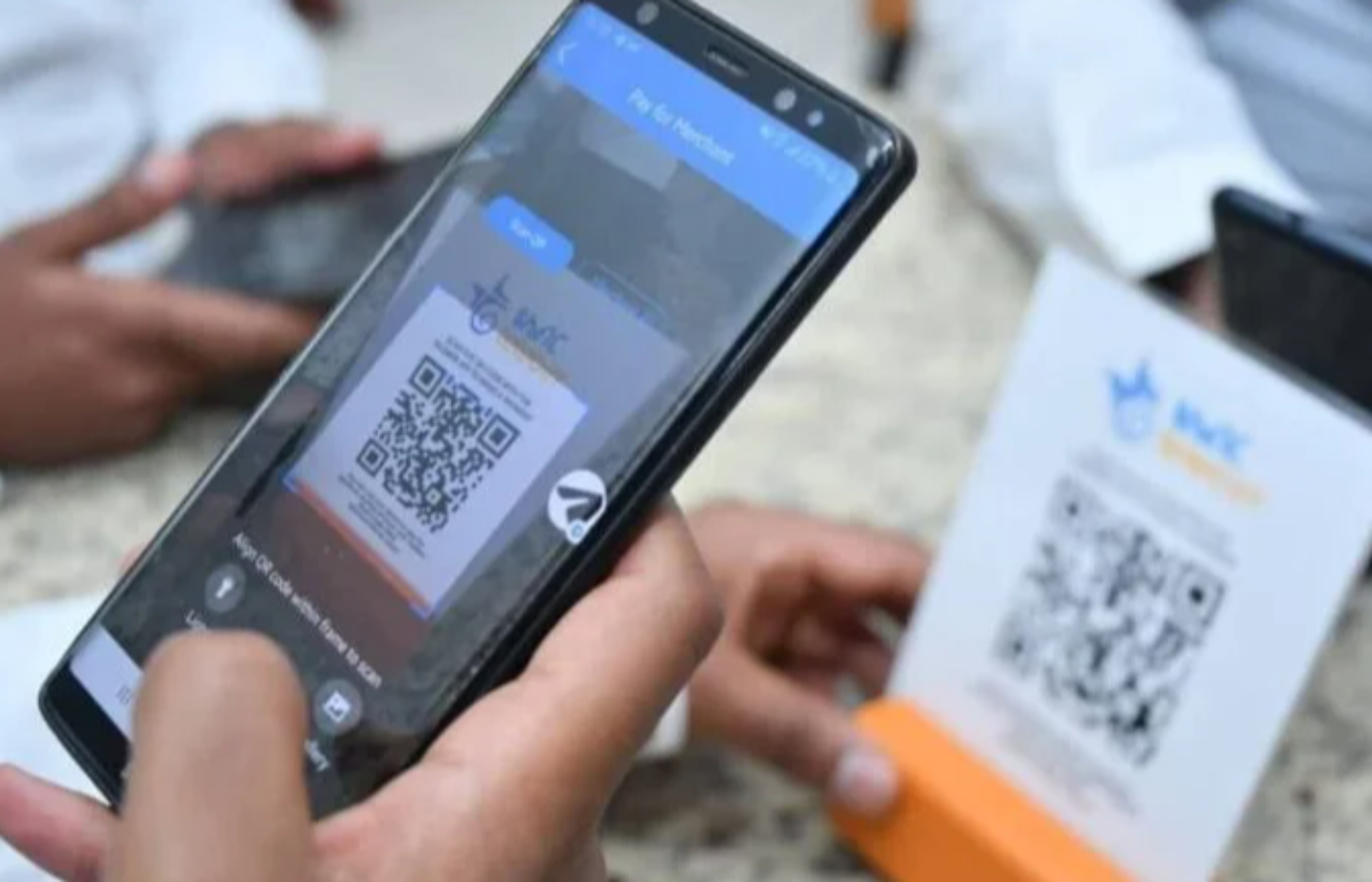
The systems he works on are aimed at a problem the NBE has been candid about. In August, the bank disclosed that Ethiopia has 157 million registered mobile money accounts, but fewer than 15 percent of accounts across its digital financial channels are active. The second National Digital Payments Strategy (NDPS 2.0, 2026–2030) shifts the bank's focus from opening accounts to getting them used. It commits the NBE to a digital public infrastructure framework built on real-time payments, a national identity and trust layer, and data exchange.
"We were very good at counting accounts," Beakal said. "The next five years are about counting use. An account nobody uses is a statistic, not inclusion."
The draft strategy was launched at the second Ethiopia Digital Payment Conference in December 2025, one of several NBE convenings, alongside the Ethiopia Finance Forum, whose digital transformation Beakal led. The same conference introduced EthioPay, the national instant payment system operated by EthSwitch. Its formal launch was announced in February 2026, with 32 banks, 12 microfinance institutions and several payment operators connected. Fayda, the national digital ID, had enrolled close to 50 million people by August, and the NBE has required banks to harmonise accounts with Fayda numbers in phases.
"The rails are largely in place," he said. "What's missing is everything around them: literacy, trust, skills, and data that tells you who is being left out."
Who is left out has become measurable partly because of a tool he describes as one of the reform period's most significant achievements: the NBE's Women's Financial Inclusion Scorecard. Developed with the World Bank's Africa Gender Innovation Lab, its second round, published in July, covers all 32 banks. Women hold 31.3 percent of active digital financial service accounts. They receive 28.5 percent of traditional loans by number but only 17.3 percent by value. In technology-enabled lending, however, their share of loan value exceeds the NBE's 30 percent target.
"That is the most hopeful number in the report," Beakal said. "When data replaces collateral, women borrow on fairer terms. That's an argument for building the infrastructure properly."
The scorecard also names the Network of Ethiopia's Women in Finance (NEWFin), initiated by the NBE, as a driver of progress through cross-institutional training and networking. Beakal led the design and implementation of NEWFin's digital platform: a learning management system with certification, a professional networking space, and a monitoring, evaluation and learning dashboard that tracks participation.
"A network only works if it keeps working after the launch event," he said. "We built it so women in the sector could learn, connect and be counted continuously, not once a year."
The same logic runs through his work on agriculture, the sector reform has reached least. The National Agri-Finance Implementation Roadmap (NAFIR, 2025–2030), a joint programme of the NBE and the Ministry of Agriculture, includes Farmer Access to Streamlined Financial Services (FAST), a framework for faster loan approvals. It links each farmer's digital ID to land records, production data and a mobile wallet, with seasonal credit allowances set by automated scoring. Beakal serves as a branding and technology adviser on NAFIR, working with the FAST team.
"The scoring model is the easy part," he said. "The hard part is the last mile: a farmer whose identity and history a bank's system can read, and who trusts the channel enough to use it twice."
Since February 2026, he has been Seniour Digital Transformation and Workforce Systems Expert, leading the technology wing of its Centre of Excellence and the technology agenda for the Ethiopian Academy of Finance, the NBE's training institution for the financial sector. The work addresses a constraint NDPS 2.0 names directly: equipping the financial workforce for AI, cybersecurity and digital innovation, at a moment when foreign banks are preparing to enter and industry voices warn of skills shortages. When his team assessed the starting point, the academy had no institutional digital learning platform. It is now procuring a learning management system designed to reach about 116,000 learners across the country.
"A credit officer in Jinka or Semera should not have to travel to Addis Ababa to learn cybersecurity or digital lending," he said. "If the reform is national, the learning has to be national."
Beakal sees his path as part of a broader shift. Ethiopia's public institutions have long recruited technologists to maintain systems. Increasingly, they need them to design them.
"There are many young Ethiopians who can build world-class systems," he said. "The question is whether institutions give them a seat where decisions are made, not just a ticket to fix the printer. When they do, you get platforms built here, for here."
He is also clear about the risks. Shared infrastructure concentrates failure as well as reach: an outage, a data breach or a fraud wave on common rails hits every institution at once. The fraud compensation fund planned under NDPS 2.0 is one response. Data protection and resilience, he argues, need the same attention as expansion.
"Every layer we connect makes the system more powerful and more fragile," he said. "Building responsibly means designing for the bad day, not just the launch day."
For now, the measure he returns to is the one the NBE disclosed in August. Not the 157 million accounts, but the 15 percent.
"If, in five years, that number has moved, and we can show who moved it, women, farmers, young people outside Addis, then the reform worked," he said. "That's the part technology can deliver, if we build it right."




