

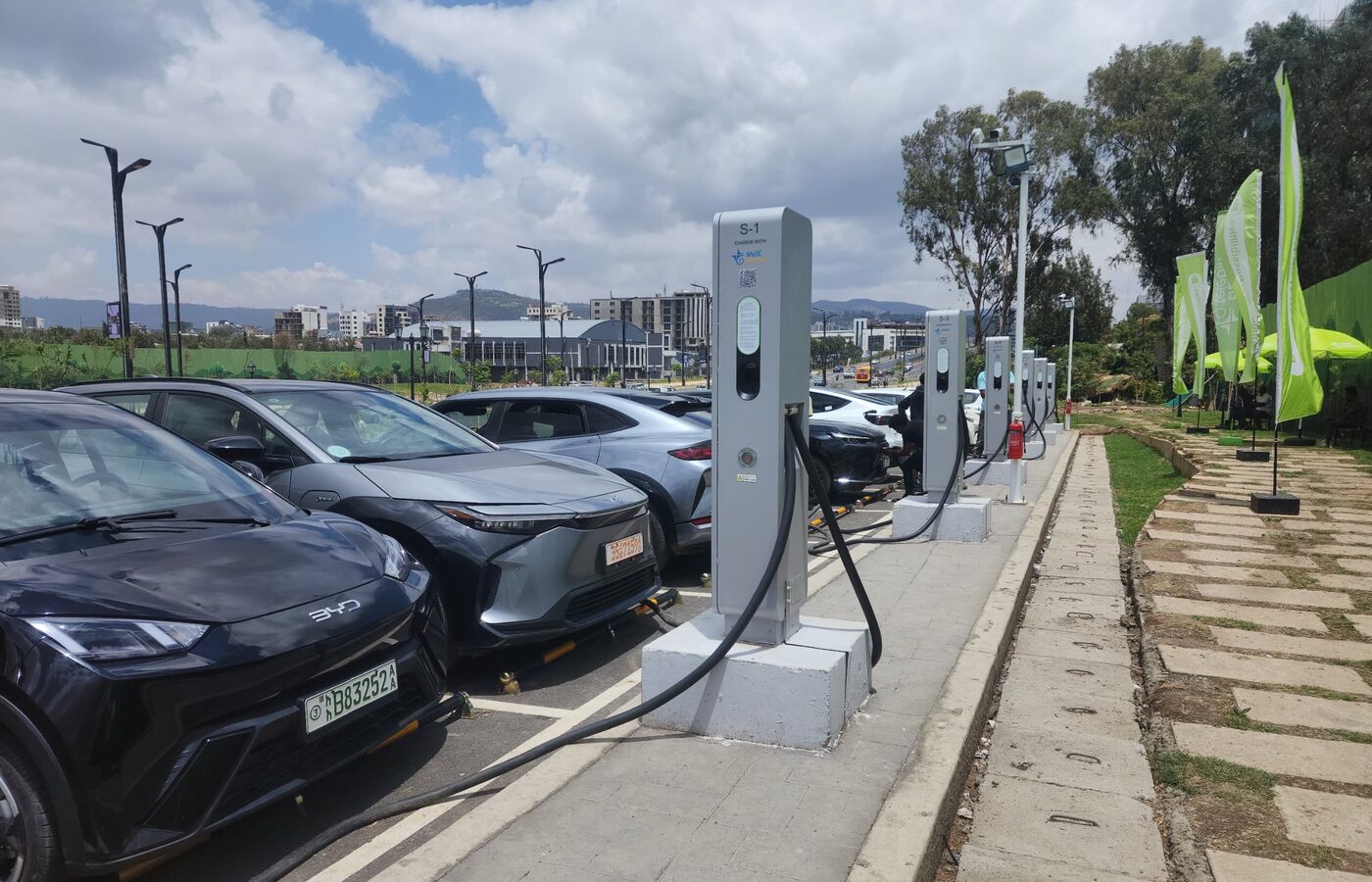
More than 60 percent of newly registered personal cars in Ethiopia in 2024 were electric vehicles (EVs), marking a major shift in the country’s transport and energy landscape, according to data from the Ethiopian Energy Outlook 2025.
The rise in EV adoption follows a series of government-led policy measures designed to reduce reliance on imported petroleum products and promote the use of Ethiopia’s renewable electricity resources. The country currently imports fossil fuels at an annual cost exceeding 4 billion US dollars, representing a substantial burden on foreign currency reserves.
Ethiopia’s electric vehicle fleet has tripled over the past year, growing from 4,600 in early 2023 to approximately 14,000 in early 2025. Total vehicle registrations in Ethiopia stood at 1.4 million in 2022, including 290,000 automobiles, with the majority of new car purchases concentrated in Addis Ababa.
The government’s incentives include full exemptions on VAT, excise tax, and surtax for EVs, and significantly reduced customs duties—5 percent for semi-assembled vehicles and zero for completely knocked-down (CKD) units assembled locally. Simultaneously, restrictions have been placed on internal combustion engine (ICE) vehicle imports, including the denial of foreign currency allocation.
As a result, EVs now represent approximately 5 percent of the total car fleet and account for 0.2 percent of national electricity demand. The government has set a target of reaching 148,000 EVs by 2030.
However, with annual new car registrations averaging 20,000 units, meeting this target may prove challenging without further acceleration in adoption or changes in the car import market.
To support the growing number of EVs, the government has issued a directive for the development of public charging infrastructure. All charging stations are to be connected to the distribution grid and operate on market-based electricity pricing. Plans are also under way to install charging stations along major transport corridors at intervals of 50 to 120 kilometres.
Despite these developments, challenges remain. Infrastructure for EV maintenance, availability of spare parts, and the rollout of public charging networks are still limited. All charging currently takes place at homes or businesses with private access to electricity.
In parallel, the government has also introduced policy measures affecting two- and three-wheeled vehicles, including restrictions on fuel-powered motorcycles in urban areas and preferences for electric alternatives in public procurement.
The shift to EVs is part of a broader energy sector reform in Ethiopia, which includes a phased 400 percent increase in electricity tariffs by 2028, transition to a market-based exchange rate regime, and efforts to attract private investment in renewable generation projects.




