

Commission plans position-by-position assessment as the second phase of reform extends to additional federal institutions and the Addis Ababa city administration
Ethiopia has expanded its civil service restructuring programme to a second group of federal institutions and the Addis Ababa city administration, with officials preparing to examine government positions, workloads and organisational structures while insisting that the exercise is not a layoff programme.
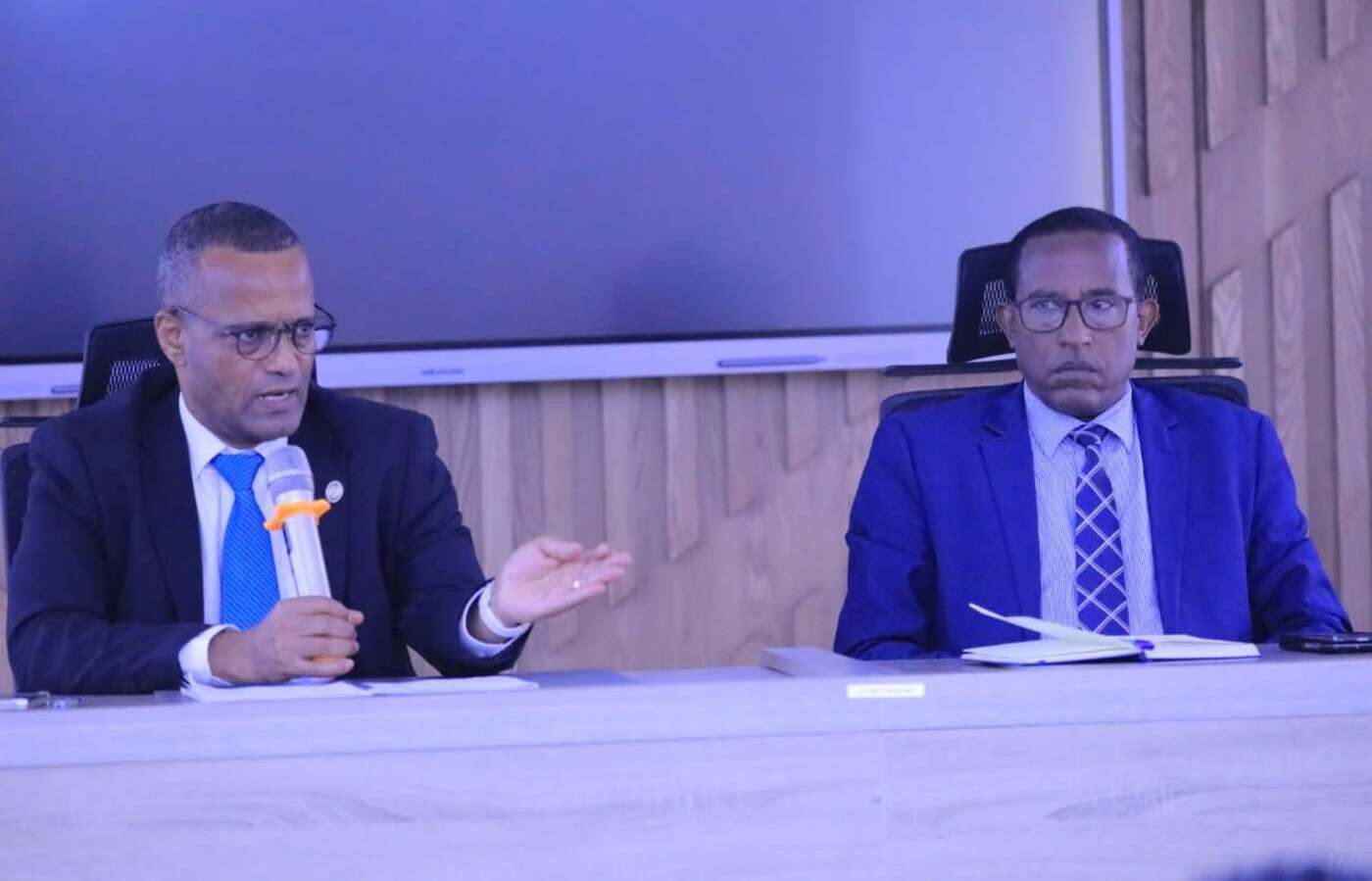
The Federal Civil Service Commission announced the expansion during consultations with deputy ministers, senior federal officials and representatives of the Addis Ababa administration participating in the second phase of the reform.
Commissioner Mekuria Haile said the programme is intended to align the structures of public institutions with their legal mandates and improve the quality, efficiency and accessibility of government services.
The government wants to establish an independent, impartial, inclusive and digitally enabled civil service capable of operating according to international standards, he said.
A major part of the exercise will involve examining individual government positions to determine whether their responsibilities and workloads justify a full working day.
Mekuria said previous assessments had identified positions that were not structured around enough work to occupy an employee for the standard eight-hour day, contributing to inefficiency and placing unnecessary pressure on public resources.
The review will examine the purpose, workload and organisational relevance of each position, according to the commission. Roles may be reorganised as institutions revise their mandates, internal departments and staffing structures.
Mekuria, however, sought to separate the exercise from a public-sector downsizing programme.
He said the purpose was not to reduce the number of government employees but to improve institutional quality and establish organisational structures that can deliver services more effectively.
The assurance is significant because a position-by-position review could raise concerns among civil servants whose roles are found to overlap with others or lack sufficient workloads.
The commission has not yet explained what will happen to employees occupying positions that are merged, reclassified or removed from a redesigned organisational structure. It also did not disclose whether affected employees would be reassigned, retrained or transferred to institutions facing staffing shortages.
Mekuria said public institutions across Ethiopia had created approximately 5.5 million positions, compared with about 2.5 million serving government employees.
The Federal Civil Service Commission’s official website separately lists 2.49 million civil servants and 167 federal institutions.
The commission did not define what was included in the reported 5.5 million positions.
It remains unclear whether the figure represents approved positions contained in organisational structures, funded vacancies, occupational classifications or the combined staffing plans of federal, regional and local government institutions.
The distinction is important because the difference between the two figures does not necessarily mean that the government has three million vacant and funded jobs.
It may instead reflect positions that exist only on organisational charts, unfunded vacancies, duplicated classifications, obsolete roles or staffing requirements that have accumulated as institutions have been repeatedly reorganised.
A detailed breakdown by institution, sector and level of government would be required to determine whether Ethiopia’s public sector is understaffed, overstructured or facing an uneven distribution of employees.
Ethiopia has been preparing the current public service and administration reform for several years.
In September 2023, the Civil Service Commission said the programme would initially be piloted at the commission itself and the ministries of Health, Education, Agriculture, Planning and Development, and Finance. Officials said at the time that policy documents, implementation strategies and legal frameworks were being prepared.
By April 2025, Deputy Prime Minister Temesgen Tiruneh said eight institutions were participating in the initial phase of what the government described as a three-phase reform programme.
The Ministry of Planning and Development later said participating institutions had conducted internal gap assessments and prepared reform roadmaps covering their mandates, structures and service-delivery systems.
The second phase signals that the government is moving beyond the initial institutions and applying the restructuring methodology more widely across the federal administration.
The broader reform is organised around seven areas: institutional restructuring and occupational classification, civil servant competency management, service modernisation, workforce inclusion, human-resource management, digitalisation and leadership development.
The Federal Civil Servants Proclamation adopted in 2025 also introduced a legal basis for competency assessment, transparent recruitment, improved productivity, employee retention and more efficient public-service delivery.
The latest announcement suggests the immediate focus is not the total number of government workers but whether employees are placed in positions with clearly defined responsibilities and measurable workloads.
That could lead to the consolidation of overlapping departments, changes to job descriptions, redeployment of employees and the elimination of unoccupied positions that institutions can no longer justify.
It could also reveal shortages in essential services where approved structures contain positions that have never been filled.
The effect on government expenditure will depend on whether the restructuring merely redraws organisational charts or produces changes in staffing, recruitment and resource allocation.
The commission did not announce a timetable for completing the second phase, identify all participating institutions or say whether the assessment results would be published.
Chalachew, the commission’s head of organisational development, presented the methodologies and assessment procedures that institutions will use during the restructuring.
For civil servants, the government’s assurance rules out an explicitly declared mass-layoff programme. It does not, however, mean that jobs, responsibilities and places of assignment will remain unchanged.




