

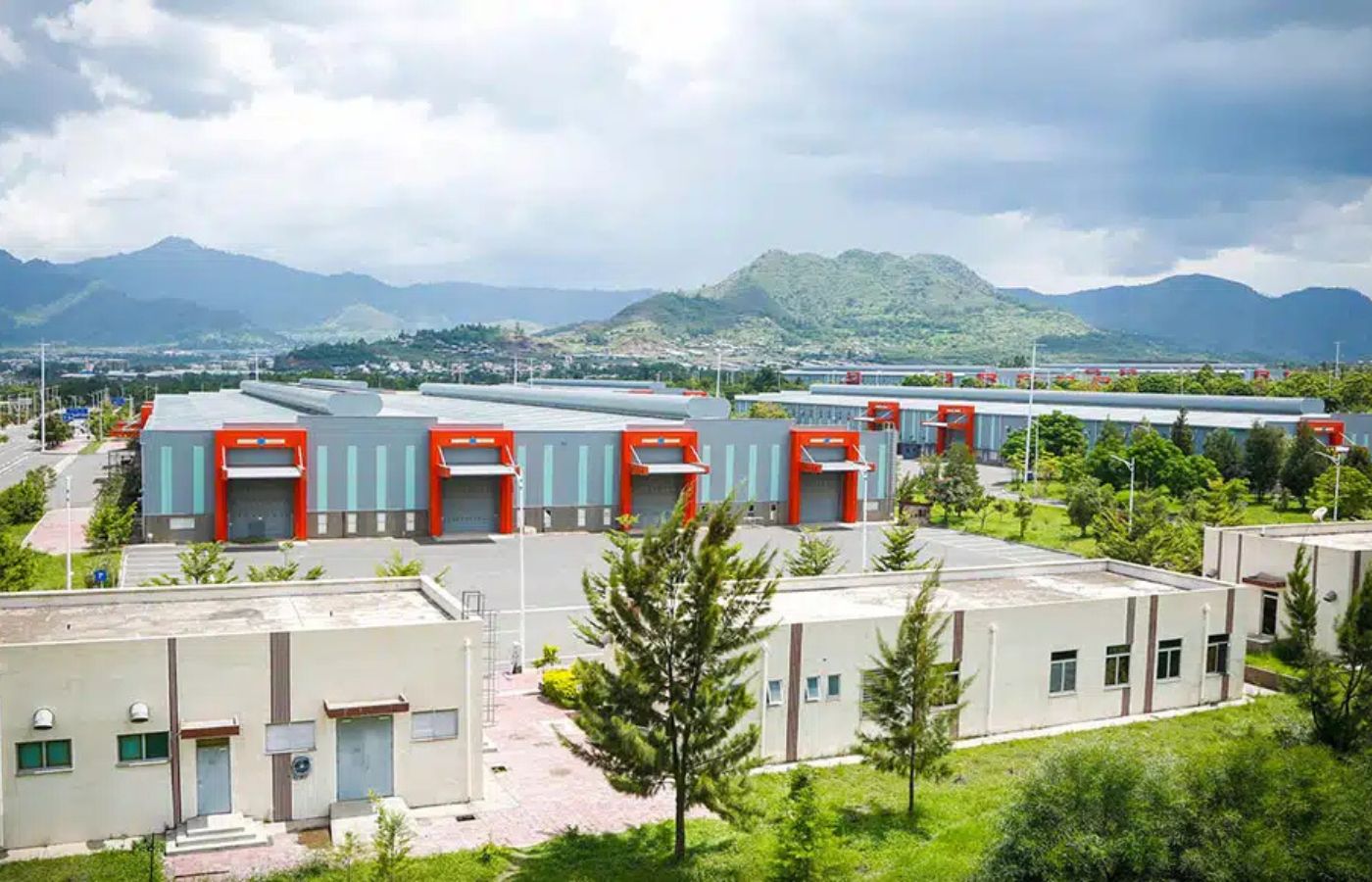
Domestic investors accounted for 84 percent of newly approved projects in IPDC-run industrial parks and special economic zones last year, marking a significant change in an industrial-development model historically built around attracting foreign manufacturers.
Ethiopian investors accounted for more than eight in every 10 new projects approved in state-run industrial parks and special economic zones during the latest fiscal year, as domestic capital takes a larger role in facilities originally developed largely to attract foreign manufacturers.
The Industrial Parks Development Corporation said 166 new investment projects with combined registered capital exceeding 750 million US dollars were approved across the industrial parks and special economic zones it administers during the 2025/26 fiscal year.
Domestic investors accounted for 84 percent of the projects, while foreign direct investment represented 10 percent. The remaining six percent were joint ventures between Ethiopian and foreign investors, according to IPDC.
Based on the percentages disclosed by the corporation, roughly 139 of the 166 projects were domestic, about 17 were foreign direct investments and around 10 were joint ventures.
IPDC did not disclose how the more than 750 million US dollars in registered capital was divided among domestic investors, foreign investors and joint ventures.
The distinction is significant because the 84 percent figure measures the number of projects rather than their value. A smaller number of foreign projects could still account for a disproportionately large share of the capital committed during the year.
The latest investment mix nevertheless contrasts with the foreign-investor orientation that characterised Ethiopia's first generation of state-developed industrial parks.
Industrial parks including Hawassa and Bole Lemi were developed as part of Ethiopia's export-led industrialisation strategy, with foreign manufacturers — particularly companies from China, India and other Asian economies — targeted to establish labour-intensive manufacturing operations.
Earlier World Bank research on Ethiopia's industrial parks found that foreign investment was concentrated particularly in textiles and apparel, with China and India together accounting for about 70 percent of investment covered by the study.
The latest figures indicate that the new investment pipeline in IPDC-administered facilities is now dominated by Ethiopian projects by number.
The change comes as the government converts industrial parks into broader special economic zones and expands the range of activities companies are permitted to undertake within them.
The 166 projects are spread across agro-processing, pharmaceuticals and medical equipment, textiles and garments, engineering and metals, chemicals, construction materials, trade and logistics.
That represents a broader investment mix than the textile and apparel concentration associated with several of Ethiopia's earlier industrial parks.
Foreign investors approved during the year came from countries including China, the United States, the United Kingdom, India and Djibouti, according to IPDC.
The corporation has been repositioning several industrial parks as special economic zones as the government attempts to increase occupancy, diversify production and allow activities beyond export-oriented manufacturing.
The shift also gives companies operating in the zones greater opportunities to serve Ethiopia's domestic market.
IPDC said companies operating in its industrial parks and special economic zones produced more than 26.7 billion birr worth of import-substituting products during the fiscal year.
The volume of products supplied to the domestic market increased by 44 percent compared with the previous year.
Bole Lemi, Adama and Debre Berhan were among the zones with the highest supply of import-substituting products to the domestic market.
The increased role of domestic investors comes alongside stronger export performance from companies already operating within IPDC facilities.
Manufacturers generated more than 266.9 million US dollars in export earnings during 2025/26, the highest annual export figure reported by the corporation.
The result was more than double the approximately 124 million US dollars generated a year earlier.
IPDC also reported revenue exceeding 5.8 billion birr during the fiscal year.
Companies operating within the corporation's zones created more than 70,000 new jobs during the period.
The corporation said it also facilitated market linkages for more than 152 enterprises and 5,800 farmers during the year.
Transactions generated through links between farmers, manufacturers and companies exceeded 17 billion birr, representing growth of 19 percent from the previous year.
Ethiopia has spent heavily over the past decade developing industrial parks as part of an effort to build a manufacturing export base and attract foreign direct investment.
The model initially relied heavily on attracting international manufacturers with serviced industrial sheds, infrastructure, fiscal incentives and access to comparatively low-cost labour.
The government has since begun converting several of those facilities into special economic zones with broader mandates covering manufacturing, logistics, trade, agro-processing and other activities.
The latest project approvals indicate domestic investors are becoming an increasingly important source of new tenants under that model.
The figures do not establish whether domestic investors now account for the majority of total investment already operating across IPDC facilities. They cover new projects approved during the 2025/26 fiscal year.
Nor has IPDC disclosed whether domestic projects are smaller or larger, on average, than the foreign investments approved during the period.
The corporation's investment data show that foreign companies remain active in the zones, including investments in higher-capital industries.
But measured by the number of newly approved projects, Ethiopia's latest industrial-park investment pipeline is now overwhelmingly local.




