

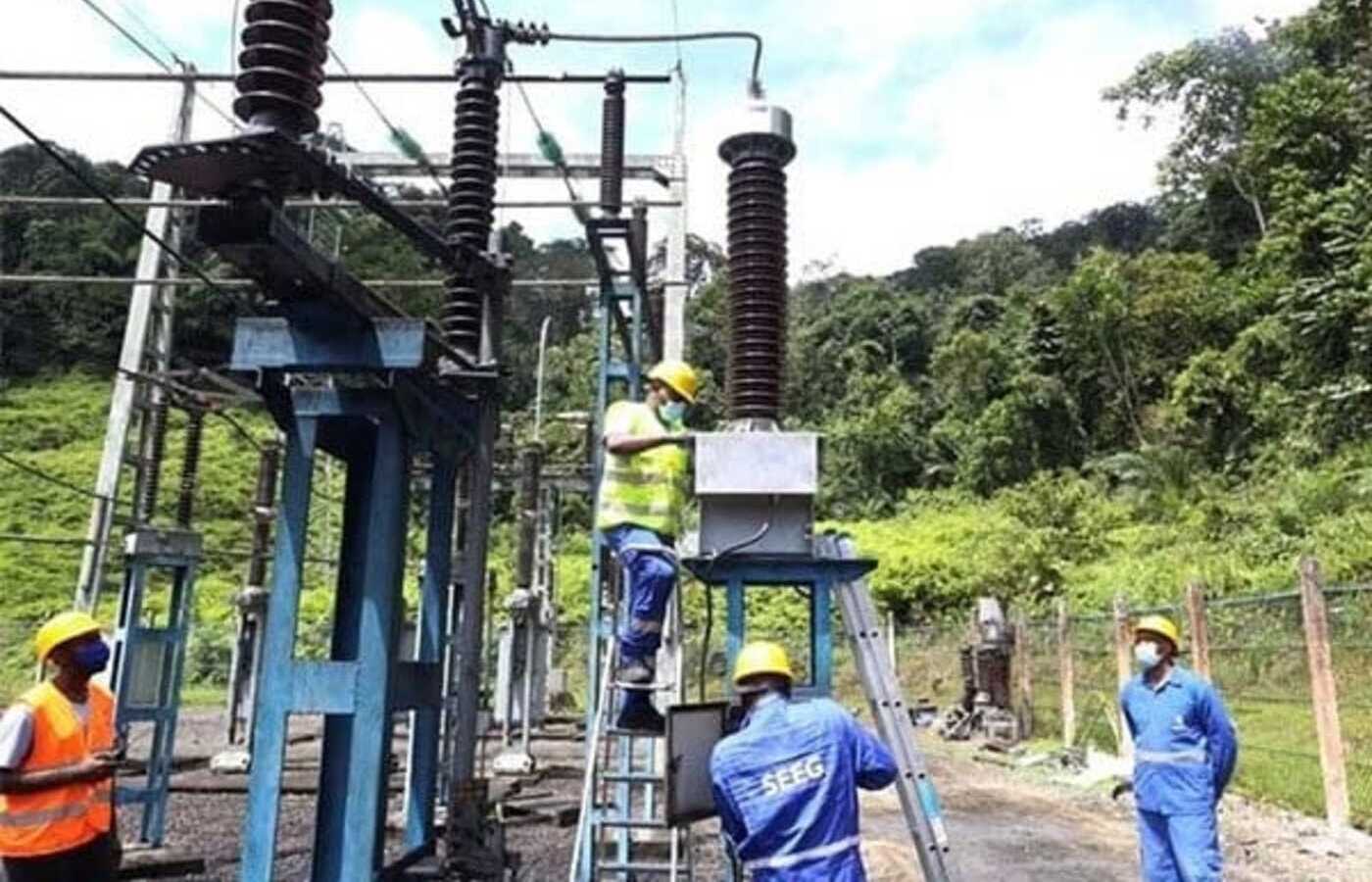
A severe deficit in national electricity generation threatens Gabon's strategic objective to process up to 700,000 metric tons of manganese ore locally each year by the end of 2031, as expanding industrial mining ambitions outpace regional power grid capacity.
Technical figures presented by Mines Minister Sosthène Nguema Nguema during high-level consultations with teams from Huawei Digital Power Technologies in China on September 19, 2026, indicate that Gabon’s total power demand could reach 2.5 gigawatts if planned industrial mining developments materialize. The capital city, Libreville, faces an immediate power deficit of 500 megawatts, highlighting the structural gap between current utility supply and industrial demand.
The energy constraints follow a major agreement executed at the end of July 2026 between the Gabonese government, French mining group Eramet, and its local subsidiary Comilog, which extracts roughly 90 percent of national manganese production. The agreement establishes a framework to process 700,000 metric tons of ore domestically within five years, a target that the signed document explicitly recognizes is contingent upon securing continuous, stable, and competitively priced electricity supplies.
Macroeconomic data from the latest quarterly economic report published by the Directorate General of Economy and Fiscal Policy indicates national power generation dropped 20 percent year-on-year during the first quarter of 2026. The production decline complicates implementation of Gabon’s National Energy Compact, published in June 2026, which targets raising national installed generation capacity to 1,100 megawatts by 2030.
In his State of the Nation address, President Brice Clotaire Oligui Nguema announced an allocation exceeding 800 billion Central African CFA francs (approximately 1.3 billion US dollars) toward constructing new power generation infrastructure. However, the head of state acknowledged that the physical commissioning of new plants and net addition to grid capacity will require several years to materialize.
To address energy shortfalls and bypass transmission bottlenecks on the fragile national grid, Huawei Digital Power Technologies proposed off-grid utility systems combining solar generation, battery storage, and localized hydropower installations directly adjacent to mining operations in Gabon's interior regions.
The technology company cited a similar utility project executed in Saudi Arabia that integrates 400 megawatts of solar capacity with 1.3 gigawatt-hours of energy storage as a operational reference model. Gabon possesses significant undeveloped hydroelectric potential, with multiple sectoral studies estimating the country's unexploited river potential at between 5,000 and 6,000 megawatts.
Despite the identified hydro potential, the immediate execution of local manganese smelting operations remains constrained by key operational variables. Beyond the fundamental generation shortfall, sector analysts note that critical details regarding project financing structures, plant ownership models, and future industrial electricity tariffs remain unresolved between state authorities, private mining operators, and prospective technology partners.
For deeper analysis of critical mineral supply chains, infrastructure logistics, and African industrial policy, read full coverage on Gabon Structural Electricity Deficits Manganese Processing, or review policy frameworks at the Ministry of Mines Gabon and Eramet Group Official Portal.




