

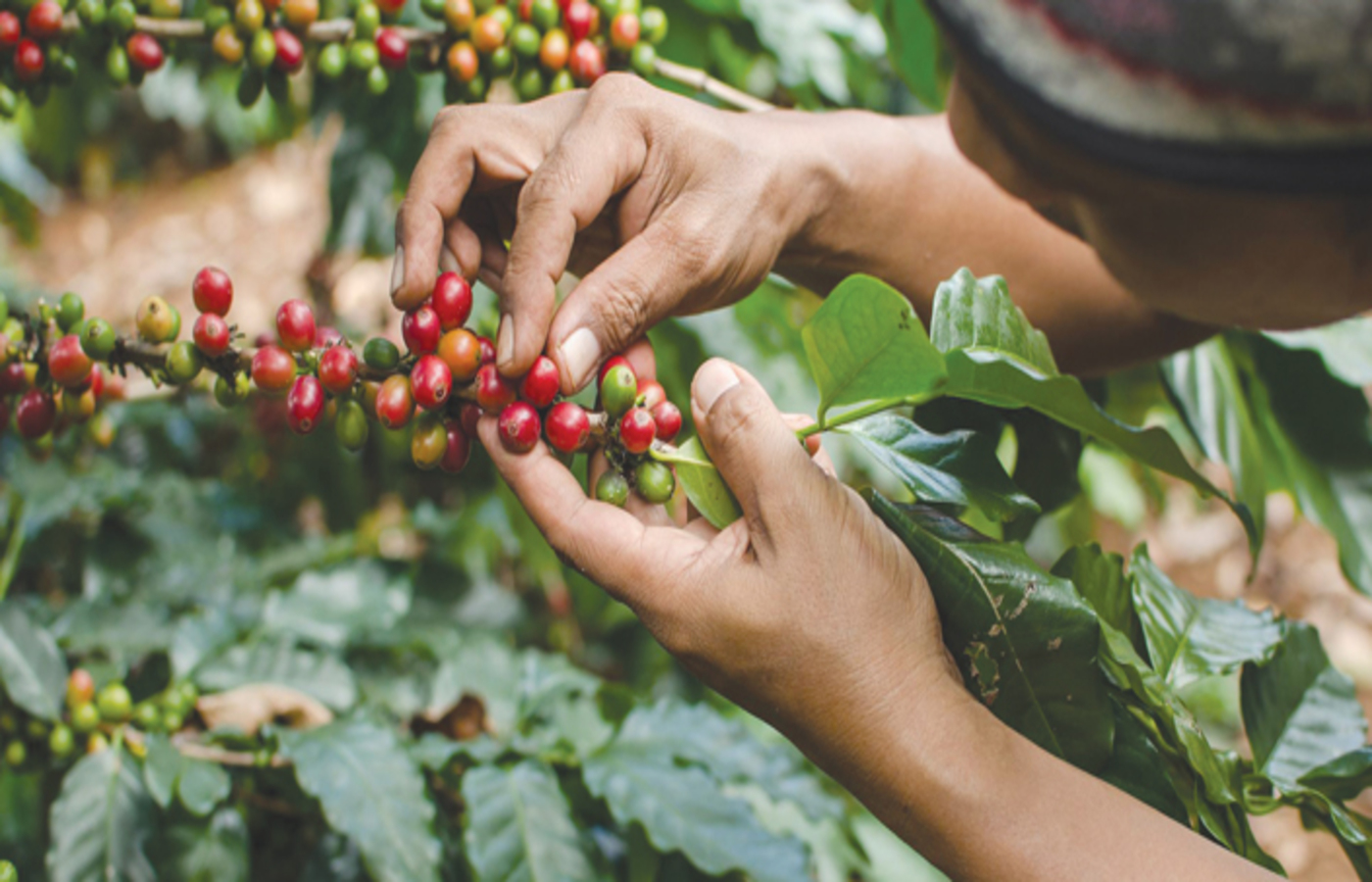
Arabica coffee futures experienced a significant drop on Tuesday, falling 2.66 percent, as broader equity market sell-offs reverberated through commodity markets.
The decline in global coffee prices comes at a critical time, as increased U.S. tariffs spark concerns among exporters that rising costs could further discourage trade or drive up global coffee prices.
The price fall, compounded by global trade disruptions and the spectre of potential U.S. tariffs, casts a shadow over coffee exporters, particularly in nations like Ethiopia, where coffee constitutes a vital economic lifeline.
On Tuesday, May arabica coffee futures (KCK25) shed 10.00 points, a decline of 2.66 percent, while trading in May ICE robusta coffee (RMK25) remained suspended due to the Easter Monday holiday closure of London markets.
The downturn in arabica prices aligns with a wider sell-off in equity markets, highlighting coffee’s vulnerability to macroeconomic turbulence. Just last week, arabica prices had climbed to a two-week high on Thursday, with robusta peaking at a three-week high the previous day.
However, this momentum reversed sharply, with ICE-monitored arabica inventories swelling to a one-month high of 795,588 bags last Thursday, and robusta stocks hitting a one-week peak of 4,272 lots. This buildup suggests a potential oversupply, adding downward pressure on prices.
For Ethiopia, a leading arabica producer, the stakes are particularly high. Coffee exports reached 1.5 billion US dollars by the end of the last quarter, fueled by elevated arabica prices—a boon for an economy where coffee accounts for a significant share of foreign exchange earnings.
Yet, Tuesday’s price drop threatens to unravel these gains. A prolonged slump could erode export revenues, straining Ethiopia’s trade balance and economic resilience.
Compounding the challenge are global trade headwinds, including the looming possibility of U.S. tariffs on coffee imports. Such measures could inflate costs for American consumers, dampen demand, and further compress margins for exporters.
Exporters like Ethiopia are particularly vulnerable to price fluctuations due to their reliance on coffee as a primary export. The recent drop, if sustained, could significantly impact their revenue streams.
Elsewhere, production and export data paint a mixed picture. In Brazil, the world’s coffee powerhouse, Minas Gerais—a key growing region—received 17.9 mm of rain in the week ended April 12, equivalent to 89 percent of the historical average, per Somar Meteorologia.
While this rainfall offers some relief, it falls short of assuaging concerns about future yields. Brazil’s crop agency, Conab, forecasts the 2025/26 coffee harvest at 51.81 million bags, down 4.4 percent year-on-year, and has trimmed its 2024 estimate to 54.2 million bags from 54.8 million.
March green coffee exports from Brazil slumped 26 percent year-on-year to 2.95 million bags, according to Cecafe, signaling logistical or demand-side pressures. Yet, Brazil’s full-year 2024 exports surged 28.8 percent to 50.5 million bags, per Conab, bucking a broader global trend.
Vietnam, a robusta heavyweight, saw January-March exports fall 15.3 percent year-on-year to 495,780 metric tons, per the Vietnam Customs Department. Globally, coffee exports from October to December 2024 dipped 0.8 percent to 32.25 million bags, according to the International Coffee Organization.
Looking ahead, the USDA projects 2024/25 global coffee production to rise 4 percent to 174.855 million bags, with arabica up 1.5 percent to 97.845 million bags and robusta up 7.5 percent to 77.01 million bags.
Despite this uptick, ending stocks are expected to shrink 6.6 percent to 20.867 million bags—a potential buffer against further price declines if demand holds firm.




