

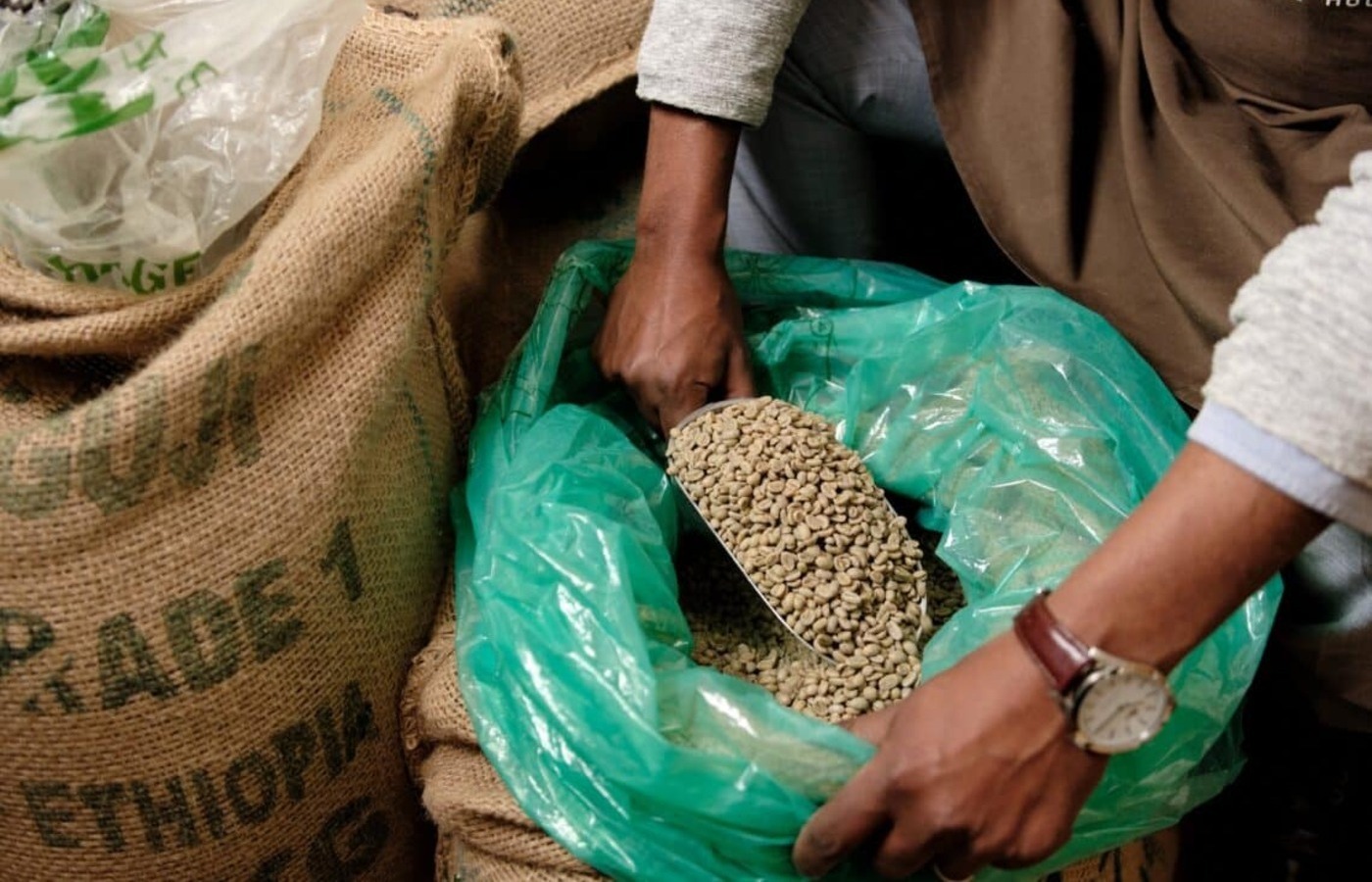
An exceptionally rare lot of Guji coffee has sold for 2,376.50 US dollars per kilogram, setting a new record for Ethiopian coffee and extending the country’s rapid ascent in the international market for ultra-premium beans.
The coffee was offered under the “Faysal Abdosh Signature” label by Faysal Abdosh, founder and CEO of Tasty Trading Plc, also known as Tasty Coffee. The online auction was conducted through M-Cultivo, an international platform used to sell some of the world’s most exclusive specialty coffees.
At the exchange rate cited by the organisers, the winning price is equivalent to approximately 380,000 birr for a single kilogram of unroasted coffee.
The sale eclipsed Ethiopia’s previous auction record of 1,739 US dollars per kilogram, set by a coffee produced by Alo Coffee in September 2025. The latest winning bid is 637.50 US dollars higher, representing an increase of nearly 37 percent in less than a year.
It also marks a second major auction breakthrough involving Abdosh. In July 2025, a Sidama Keramo Super Natural coffee offered during his inaugural online auction sold for 1,604 US dollars per kilogram, briefly becoming the most expensive Ethiopian coffee on record before being overtaken by Alo Coffee two months later.
The new Guji sale raises Ethiopia’s record by almost 50 percent from Abdosh’s first auction high.
Ethiopian specialty coffee prices have climbed sharply over the past six years. At the country’s inaugural Cup of Excellence auction in 2020, the highest-ranked coffee fetched about 407 US dollars per kilogram. The record rose to approximately 884 US dollars in 2022.
In 2024, Angelino’s Coffee of the United States paid 445 US dollars per pound—equivalent to roughly 981 US dollars per kilogram—for Ethiopia’s highest-ranked Cup of Excellence lot. That bid was, at the time, the highest price paid for any coffee in the 25-year history of the Cup of Excellence programme.
Private auctions then pushed Ethiopian prices beyond the 1,000-dollar threshold in 2025. Abdosh’s 1,604-dollar sale was followed by Alo Coffee’s 1,739-dollar record before the latest Guji lot lifted the benchmark to 2,376.50 US dollars.
The price is a national record, rather than a global one. The world auction record remains 30,204 US dollars per kilogram, paid in 2025 for a washed Geisha coffee from Hacienda La Esmeralda in Panama. A Dubai-based buyer purchased the 20-kilogram lot for a total of 604,080 US dollars.
That means the Ethiopian record remains about one-thirteenth of the global high. However, the comparison also carries historical significance: Panama’s celebrated Geisha variety traces its genetic origin to Ethiopia, although Panama has built the world’s most lucrative auction market around the variety.
The latest sale is commercially significant because it strengthens Guji’s position alongside Sidama among Ethiopia’s most valuable specialty-coffee origins. These unusually high prices apply to tiny, carefully processed lots and should not be interpreted as representative of the prices received for Ethiopia’s mainstream coffee exports.
The auction announcement did not disclose the identity of the buyer, the size of the winning lot, its variety, processing method, cupping score or the total amount generated by the auction.
Tasty Trading said the entire proceeds would be channelled through the Tasty Foundation to finance the construction of a modern health centre in Denbi Udo Kebele, Shakiso Woreda, in the Guji Zone.
The company presented the initiative as a direct return to the farming community responsible for producing the record-setting coffee.
The record comes as coffee assumes an even greater role in Ethiopia’s export economy. The country exported approximately 469,000 tonnes and earned a record 2.65 billion US dollars during the 2024/25 fiscal year. Export earnings reportedly reached about 3 billion US dollars in 2025/26, supported by higher international prices, increased shipments and stronger demand for differentiated Ethiopian coffee.
Explore trade facilitation reforms in Ethiopia Moves to Simplify AfCFTA Export Procedures for Local Businesses. And also view national agricultural trade updates on the official FDRE Ministry of Agriculture portal.




