

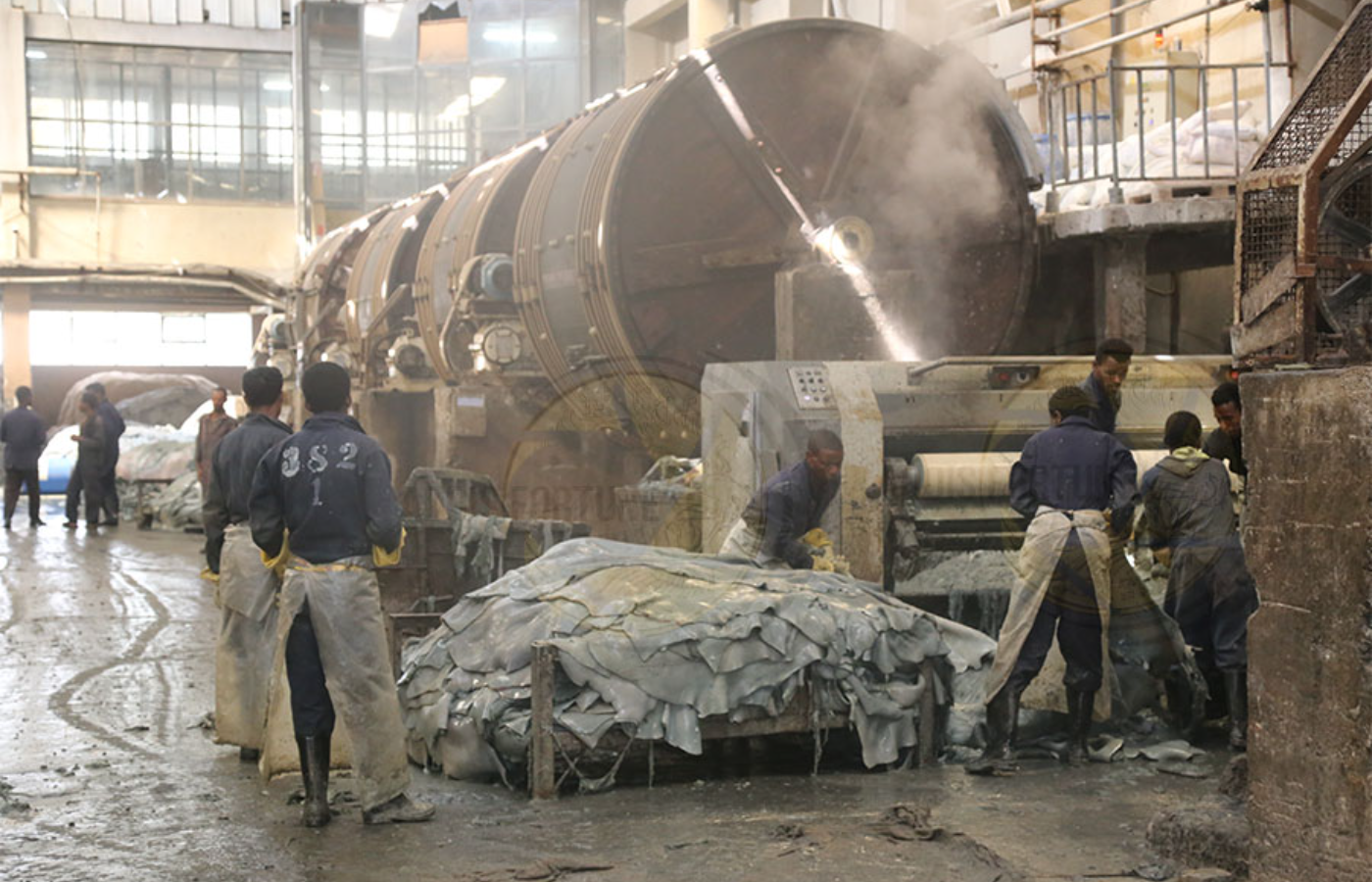
Ethiopia’s cattle outnumber its people by a wide margin. Hides should therefore be plentiful, cheap and easy to collect. Yet tanneries complain of scarcity, production lines stall and households discard skins as waste. What looks like a logistical glitch is in fact a policy story—one in which abundance has been steadily mismanaged into shortage.
For years, leather was cast as a model industry: labour-intensive, export-oriented and rooted in domestic resources. Successive strategies promised value addition, foreign exchange and jobs. Instead, the sector now illustrates how industrial ambition can unravel when incentives along the supply chain fail to align.
The industry’s troubles worsened after Ethiopia was suspended from the African Growth and Opportunity Act (AGOA) in 2022, cutting access to the United States market just as global trade was emerging from pandemic disruption. But the damage was not merely external. Long before AGOA, policy choices had distorted market signals. Export taxes—sometimes as high as 150 percent—were imposed on raw hides, skins and semi-finished leather to force processing at home. While well intentioned, they depressed shipments of intermediate products and unsettled domestic supply.
“In 2020, many companies had stopped exporting fully, especially to the U.S. market. This mainly involved foreign shoe manufacturing companies,” said Zulfikar Abajihad, general director at the Leather Industry Development Institute. He noted that around 60 percent of shoes had previously been exported to the United States, supporting a workforce of over 8,000 employees.
Structural weaknesses along the value chain magnified these shocks. Dagnachew Abebe, secretary general of the Ethiopian Leather Industry Association (ELIA), which represents around 200 members, said the sector’s problems are longstanding rather than cyclical.
The pandemic brought these weaknesses to the surface. Manufacturers withdrew from hide auctions run by the Addis Ababa Abattoirs Enterprise. In response, the enterprise began selling hides directly to companies, some of which exported them for food consumption, mainly to West African markets.
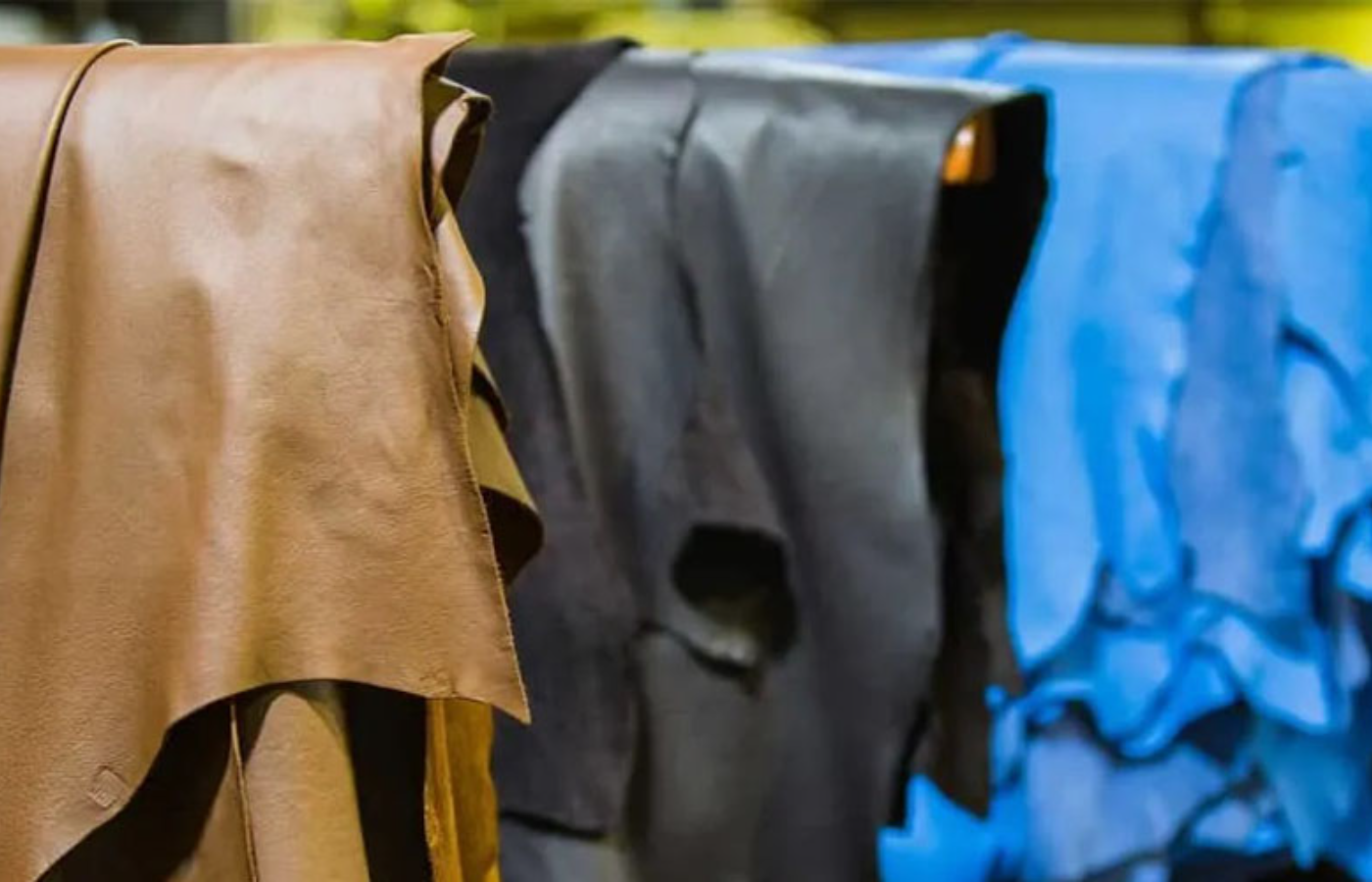
“After the pandemic, manufacturers stopped participating in auctions, and some hides ended up being exported for food rather than processed leather,” Dagnachew told Birrmetrics. He added that the shift in how hides are sold has undermined quality and traceability. “The way hides are now handled in this market has created serious challenges for the leather industry, affecting both quality and quantity,” he said.
Collectors say the consequences are now felt at the bottom of the supply chain. The breakdown of auctions and changing market practices have weakened incentives for households to preserve and sell hides. What was once a modest but reliable income source is increasingly treated as waste.
Medfu Tadesse, who traditionally co-slaughters with his neighbour during major holidays, said they used to sell the hides. “They are now cheap, and we’re discarding them along with other waste,” he said.
Manufacturers, from small workshops to larger firms, report growing operational strain. Although some bottlenecks have eased, inconsistent quality and unreliable volumes of hides remain binding constraints.
“We frequently receive hides that do not match the samples we submit for auctions. This inconsistency has disrupted production and caused us to miss key deadlines,” said Abenezer Tadesse, chief executive of Sabawiyan.
The cumulative effect has been contraction. Some firms have shifted from leather into garments and textiles, sectors seen as less exposed to input shortages. An industry observer, speaking on condition of anonymity, said, “Based on my research, there were 17 leather manufacturing companies. That has now declined to just 10.”
According to Zulfikar, raw hides remain the industry’s most critical input challenge, as identified in Ethiopia’s ten-year leather strategy for 2015–2025. The problem begins with livestock production itself.
“Although Ethiopia has abundant livestock resources, the absence of modern husbandry and veterinary systems means many animals suffer injuries or diseases, which directly reduces hide quality,” he said. Traditional, manual slaughtering compounds the losses, as consumers often fail to recognise the economic value of hides.
To address these weaknesses, the Leather Industry Development Institute is implementing capacity-building programmes across the value chain—from abattoirs and processors to end consumers—aimed at improving quality, traceability and efficiency.
External demand has further tightened supply. West African markets, particularly Ghana, Togo and Nigeria, are absorbing rising volumes of Ethiopian raw hides for food consumption, diverting inputs from domestic industry.
Abenezer said the shift has intensified shortages for local manufacturers, worsening an already constrained input market.
Zulfikar said the government is revising directives governing the hides supply chain and the broader development framework for the leather sector. “Some licensed companies are exporting raw hides after winning auctions that were intended for industrial processing, which runs counter to the country’s objective of promoting manufacturing and exporting finished leather products,” he said.
Shortages extend beyond hides. Abenezer said constraints in accessories have eased somewhat, though prices remain volatile. Allowing duty-free imports would help lower costs, he argued. According to ELIA, shortages of imported inputs in 2023 forced 10 out of 28 leather factories and tanneries to halt production, while the remaining 18 operated at minimal capacity.
One area of progress is data management. Abenezer said traceability has improved markedly since manual systems were replaced. “Data is now digitised and securely managed by the government,” he said.
The government’s broader revival effort shows tentative results. Zulfikar said export performance is recovering. In the first five months of the current fiscal year, leather exports rose by 37 percent compared with the same period last year, reaching 14.7 million US dollars. In the fiscal year ended June 2025, total exports stood at 27 million US dollars.
Import substitution is also advancing. Zulfikar said leather footwear supplied to state security institutions is now sourced entirely from domestic manufacturers. Safety shoes used across construction sites and manufacturing firms are increasingly produced locally.
Environmental constraints, however, loom large. Leather manufacturing is water-intensive, chemically complex and produces substantial waste. Around 60 chemical inputs are used across the production cycle, raising compliance costs.
To manage wastewater, the Leather Industry Development Institute has drawn on experiences from China and India, where leather production is organised into industrial clusters with shared treatment facilities. Ethiopia lacks such an integrated system. Zulfikar said plans for a leather industry park have been approved, and financing is now being mobilised.
On solid waste, the institute has launched the Green Tannery Initiative in partnership with India’s Central Leather Research Institute (CSIR-CLRI), covering five Ethiopian manufacturers. The programme replaces hazardous chemicals such as sodium sulphide with enzyme-based alternatives and converts by-products, including hair and fleshings, into value-added materials. It also aligns producers with international sustainability standards.
Zulfikar said global buyers are increasingly scrutinising production practices as closely as product design. To meet these expectations, manufacturers are being supported to align with the Leather Working Group, a UK-based certification body that assesses producers against 17 environmental and operational criteria. Six Ethiopian firms have secured membership, with some achieving gold-level certification. According to Zulfikar, the accreditation has strengthened compliance and improved access to export markets.
For a country rich in livestock, Ethiopia’s leather problem is not one of nature but of coordination. Until incentives align from pasture to port, too many hides will continue to be wasted—and too many factories left waiting.




