

IMF Managing Director Kristalina Georgieva has warned Ethiopia against using broad energy subsidies or tax cuts to respond to rising prices, saying such measures could prolong the impact of high costs as the country faces pressure from the Middle East war.
“This is not the time for untargeted measures, such as energy subsidies or broad-based tax cuts, which would only prolong the pain caused by high prices,” Georgieva told The Ethiopian Herald Sunday Edition in an interview published on May 10, 2026.
The warning places the IMF at the centre of one of Ethiopia’s most sensitive economic debates: whether the government should cushion households through broad relief measures or preserve fiscal discipline as fuel, fertiliser and import costs rise.
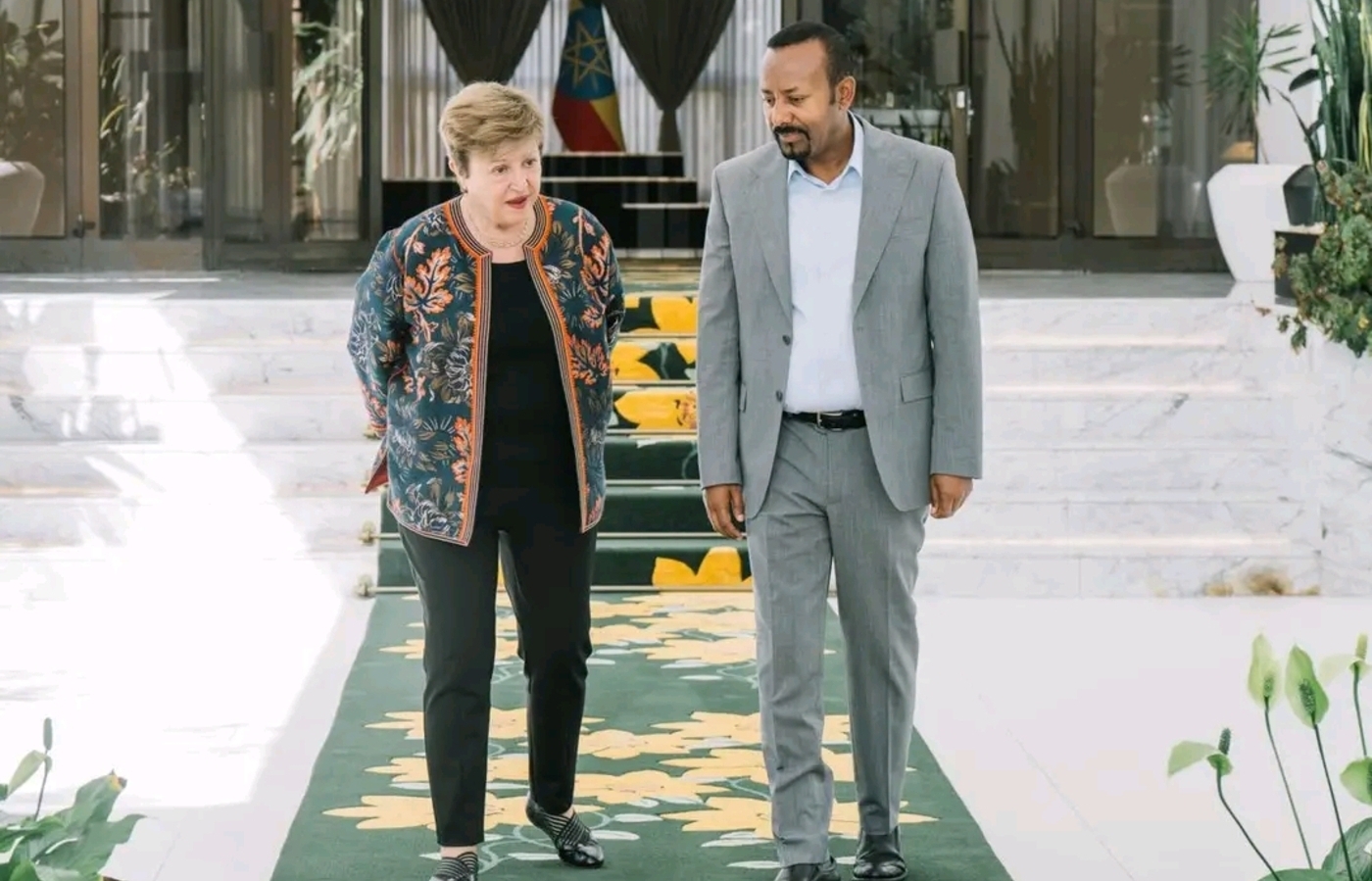
Georgieva met Prime Minister Abiy Ahmed in Addis Ababa on Monday, where the two discussed Ethiopia’s economic progress, partnership and reform priorities. After the meeting, she said Ethiopia was continuing to make progress despite difficult conditions.
“At a difficult time, Ethiopia is making impressive progress on an ambitious economic reform program,” Georgieva wrote on X, adding that she had reaffirmed the Fund’s support for the reform effort and its wider engagement with Ethiopia and the region.
Her message was supportive, but also politically sharp. While praising Ethiopia’s reform programme, the IMF chief made clear that the Fund does not support blanket subsidies or broad tax cuts as a response to rising prices.
Georgieva said Ethiopia is entering the current shock from a stronger position because of reforms already undertaken by the government.
“Ethiopia is entering this shock from a position of strength, thanks to the reforms undertaken by the authorities. Growth last year was strong, and exports and revenues exceeded expectations,” she said.
But she warned that the war in the Middle East is already affecting Ethiopia’s economy through higher import costs and supply constraints. Ethiopia imports all of its petroleum fuel, making the economy highly exposed to global oil price movements.
“The war is certainly taking a toll on the economy. Ethiopia imports all of its petroleum fuels, so rising prices and supply constraints are having a significant impact,” Georgieva said. “Fertilizer prices are also increasing, placing additional pressure on an economy in which agriculture plays a central role.”
The remarks come as Ethiopia continues implementing its Homegrown Economic Reform Agenda under an IMF-supported programme. The programme has involved major policy changes aimed at stabilising the economy, easing external imbalances, improving revenue mobilisation and restoring debt sustainability.
But the IMF’s position also exposes the difficult trade-off facing policymakers. Energy subsidies and tax cuts are often seen as immediate relief tools when households and businesses face rising costs. The IMF, however, argues that untargeted measures are costly, weaken public finances and could worsen inflation.
Georgieva said Ethiopia should instead use limited public resources carefully and direct support towards vulnerable households.
“Our advice is to use resources wisely to maintain economic stability and support vulnerable people and households,” she said. “A tight fiscal and monetary policy stance will help keep inflation under control.”
She also warned that a prolonged conflict in the Middle East could force Ethiopia into a harder adjustment.
“A prolonged shock would require the economy to adjust to persistently higher prices for these essential imports, potentially leading to a more significant slowdown in growth and leaving less room for other imports,” she said.
Despite the warning, Georgieva said the IMF remains confident in Ethiopia’s reform direction.
“Ethiopia’s reform trajectory is encouraging, and we remain committed to supporting the country on this path,” she said.
Ethiopia completed the fourth review of its IMF-supported programme in January, unlocking about 261 million US dollars and bringing total disbursements under the arrangement to about 2.183 billion US dollars, according to the IMF.
Discussions on the fifth review are currently underway, according to The Ethiopian Herald interview, with the impact of the Middle East war expected to be one of the key policy issues.




