

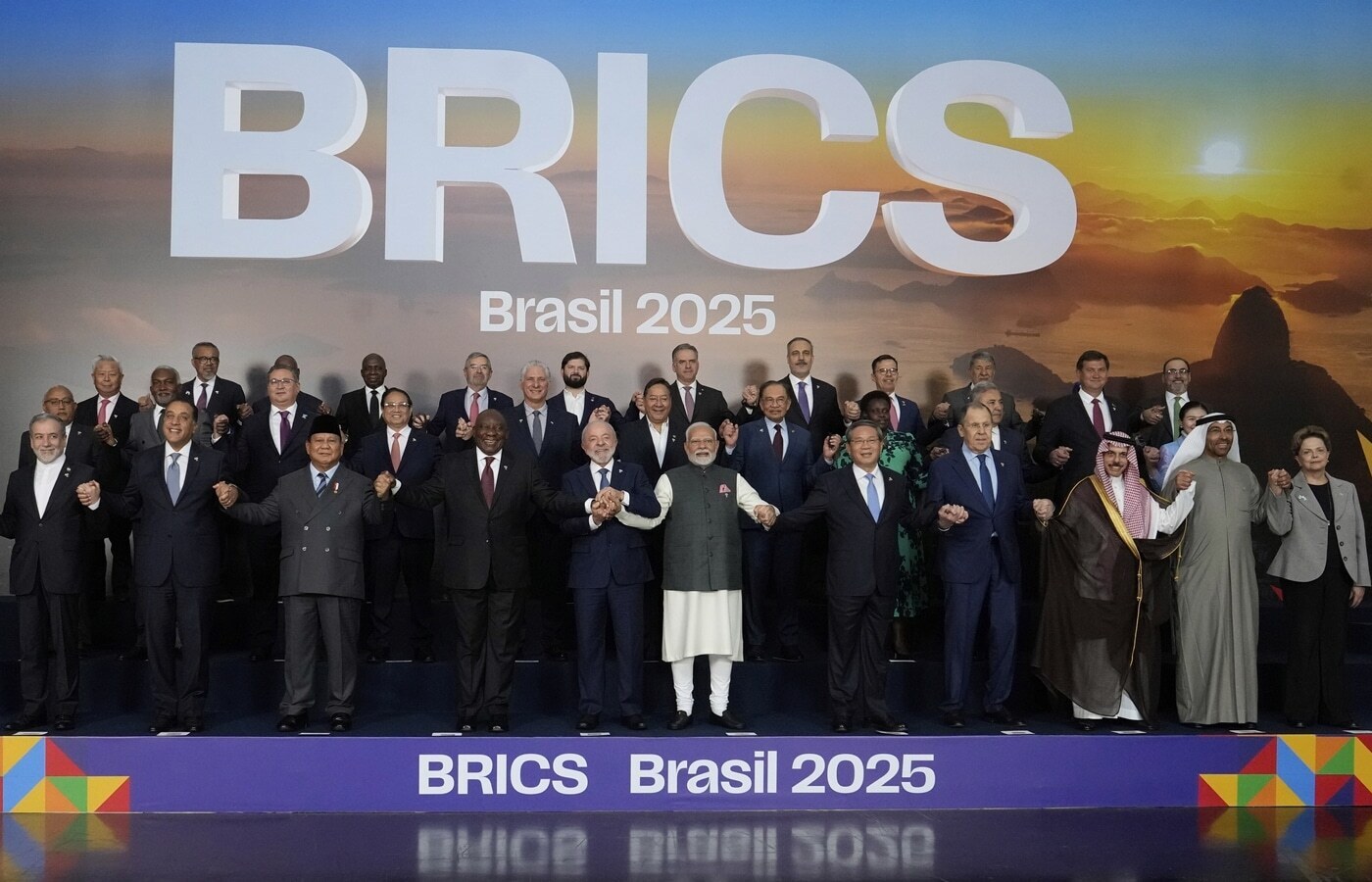
India has been named president of the BRICS+ grouping for the 2026 term and will officially take charge on January 1, 2026, following a rotational decision adopted by member states in December in Brazil.
The handover will come after Brazil’s presidency, which began on January 1, 2025, following Russia’s term. The expanded BRICS+ bloc currently includes ten countries: Brazil, China, Egypt, Ethiopia, India, Indonesia, Iran, Russia, South Africa and the United Arab Emirates.
Ethiopia joined the grouping as a full member in January 2024 and participated in its first summit as a member state later that year in Kazan, Russia, alongside Egypt, Iran and the United Arab Emirates. Indonesia formally joined the bloc in early 2025, becoming its first Southeast Asian member. Since the expansion, the term BRICS+ has been used informally to reflect the enlarged membership.
BRICS was first formed in 2009 by Brazil, Russia, India and China as an annual coordination platform among major emerging economies. South Africa joined in 2010, leading to the adoption of the BRICS name. The bloc operates without a permanent secretariat, with leadership rotating annually among member states.
Under the rotating presidency, the chairing country hosts the annual leaders’ summit and coordinates ministerial meetings involving finance ministers, foreign ministers, central bank governors and other senior officials.
Indian Prime Minister Narendra Modi has previously said that BRICS is non-confrontational and not directed against any country, describing it as a platform focused on cooperation among non-western economies. At the seventeenth BRICS Summit held in Rio de Janeiro on July 7, 2025, Modi said India would seek to give a new direction to the grouping during its 2026 presidency, including a focus on cooperation, sustainability and institutional reform.
For Ethiopia, BRICS membership places the country within a bloc that accounts for more than a quarter of global economic output and nearly half of the world’s population. The group’s financial arm, the New Development Bank, focuses on infrastructure and development financing and has approved more than 32 billion US dollars for projects across member countries since its establishment in 2015.




