

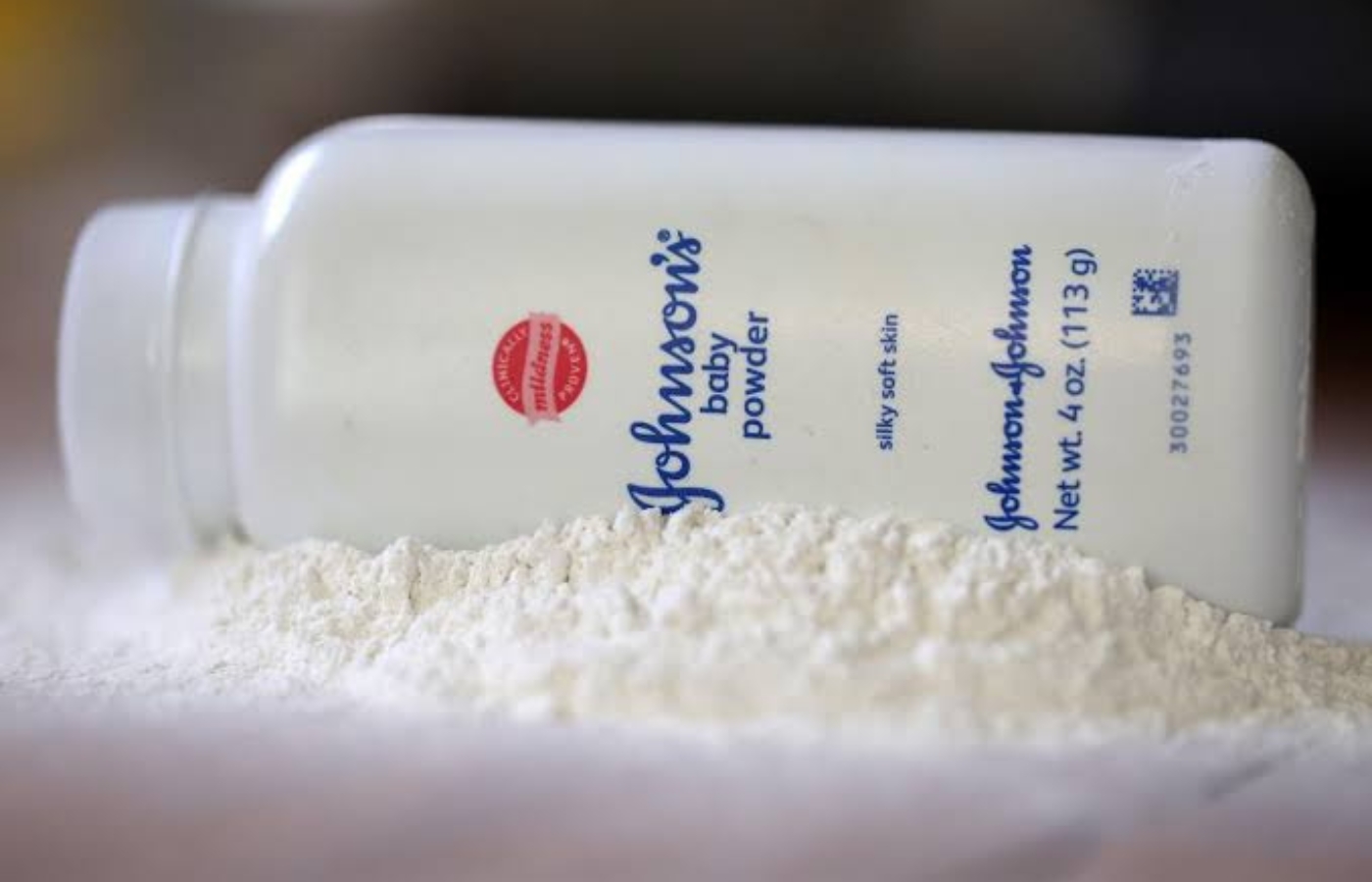
Johnson & Johnson has agreed to pay an estimated 5.5 billion US dollars to resolve about 76,000 lawsuits alleging that its talc-based baby powder and other talc products caused ovarian cancer.
The proposed settlement, announced on Monday, July 27, covers nearly all remaining ovarian cancer claims against the US healthcare company in federal and state courts. It will take effect only if at least 95 percent of eligible claimants agree to participate.
Johnson & Johnson said it would make an initial payment of no more than 3 billion US dollars in 2027, with the remaining payments beginning in 2028. The amount could increase depending on the number of claimants who join the agreement.
The company did not admit liability and continues to maintain that its cosmetic talc products were safe, did not contain asbestos and did not cause cancer.
Erik Haas, Johnson & Johnson’s worldwide vice-president of litigation, said the agreement would allow the company to end the long-running dispute and focus on its healthcare operations.
Law firms representing the claimants also backed the proposed settlement, describing it as a resolution to litigation that has continued for more than a decade.
The agreement applies to lawsuits filed in the United States and does not provide compensation to consumers in Ethiopia or other countries who are not part of the US proceedings.
Johnson & Johnson stopped selling talc-based baby powder in the United States and Canada in 2020 before discontinuing the product globally in 2023. It replaced the talc formulation with a cornstarch-based alternative.
The company said the worldwide withdrawal followed a review of its product portfolio and declining demand rather than concerns about the product’s safety.
Talc is a naturally occurring mineral used in cosmetics and personal-care products because it absorbs moisture and reduces friction. It has also been used in pharmaceuticals, ceramics, paint, paper and other industrial products.
Some natural talc deposits are located near asbestos deposits, creating concerns that talc may become contaminated during mining and processing. Asbestos is known to cause cancers, including mesothelioma.
In July 2024, the International Agency for Research on Cancer, the cancer research agency of the World Health Organization, classified talc as “probably carcinogenic to humans”.
The agency said its assessment was based on limited evidence of cancer in humans, sufficient evidence from animal studies and strong evidence from laboratory research. The classification identifies talc as a potential cancer hazard but does not establish that every talc product causes cancer or that talc caused the illness of an individual claimant.
The US lawsuits were filed mainly by women who said they developed ovarian cancer after using Johnson & Johnson’s talc-based products over extended periods. Other cases alleged that asbestos contamination in talc products caused mesothelioma.
Johnson & Johnson said it has separately settled about 95 percent of the mesothelioma lawsuits filed against it, along with claims brought by US states and disputes involving talc suppliers.
The latest agreement followed a federal court ruling in New Jersey that raised questions about whether lawyers for thousands of claimants had sufficient expert evidence to prove that Johnson & Johnson’s products caused ovarian cancer in individual cases.
The court did not dismiss the lawsuits or rule that talc was safe. It required the claimants to provide admissible scientific evidence establishing a direct link between talc use and each claimant’s cancer.
Johnson & Johnson had previously attempted to resolve the litigation by transferring its talc liabilities to subsidiaries that later filed for bankruptcy protection.
US courts rejected the bankruptcy strategy several times. A judge rejected the company’s most recent proposal, which would have provided nearly 9 billion US dollars to resolve the claims through bankruptcy proceedings.
The new agreement seeks to settle the cases directly through the civil court system rather than bankruptcy.
Separate talc-related proceedings are continuing outside the United States. More than 7,000 potential claimants are pursuing a case in the United Kingdom alleging that Johnson & Johnson’s talc products caused ovarian cancer and mesothelioma. The company denies the allegations.
The US settlement will become binding only after the required level of participation is reached and other legal conditions are met.




