

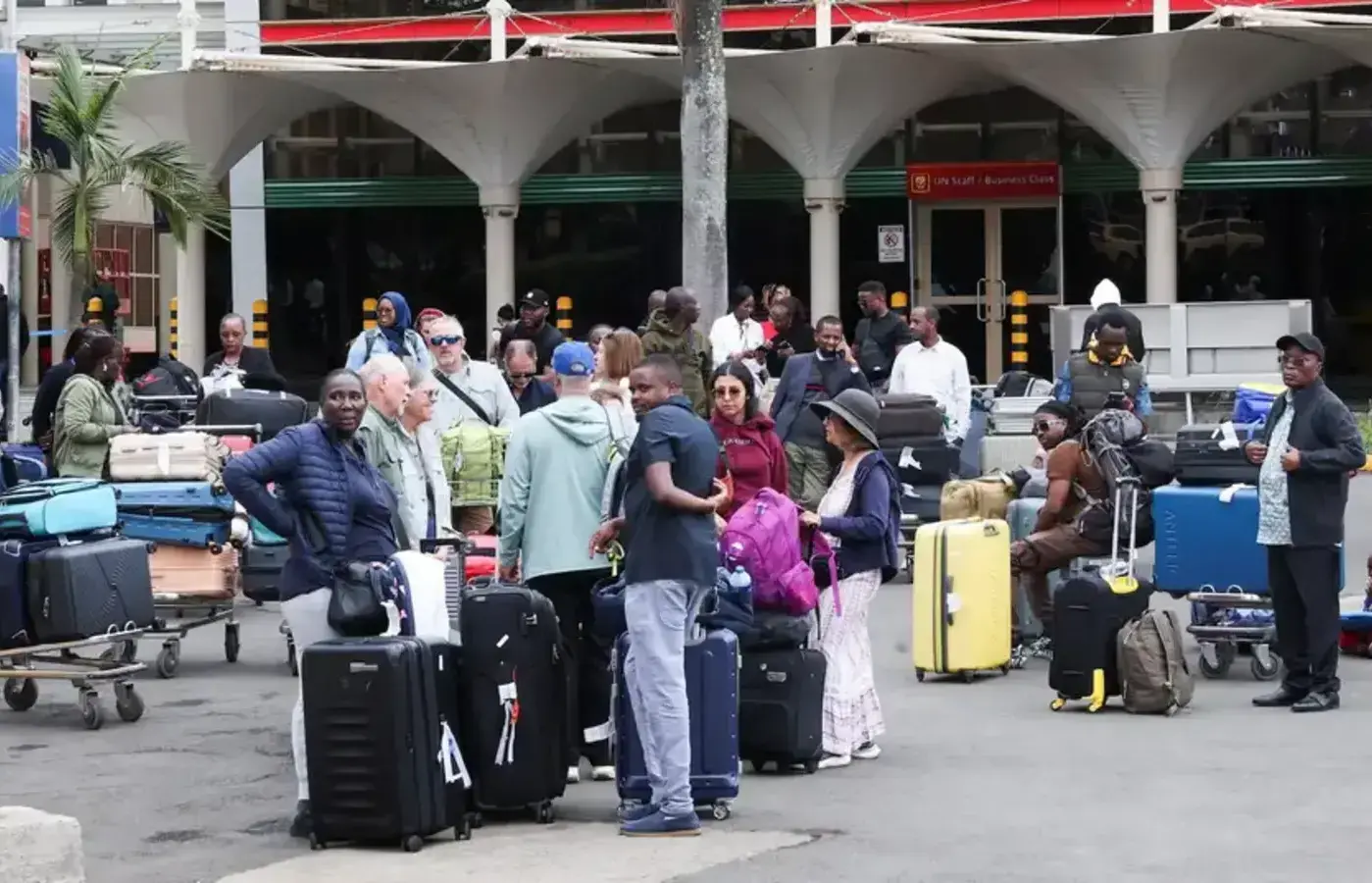
Kenya’s aviation workers have ended a two-day strike that disrupted flights at the country’s main airports and forced airlines operating across East Africa to cancel or reschedule services.
The Kenya Aviation Workers Union (KAWU) called off the industrial action on Tuesday after reaching a return-to-work agreement with the Ministry of Transport, Kenya Airports Authority (KAA), Kenya Civil Aviation Authority (KCAA) and Jambojet.
The strike, which began on Sunday, August 30, was centred on long-running disputes over collective bargaining, salary reviews, union dues and the treatment of union members. The action was concentrated largely among air traffic controllers and disrupted operations at Jomo Kenyatta International Airport (JKIA) in Nairobi and other airports.
Flights serving Rwanda, Burundi, Tanzania, Uganda, Somalia and Mauritius were among those affected by the disruption, according to Reuters.
Under the return-to-work agreement, KAWU directed affected employees to resume their duties immediately and cooperate with management to restore normal airport operations.
One of the immediate commitments is the release and remittance of agency fees held by KAA and owed to the union. The agreement also provides for the immediate resumption of negotiations between KAWU and KCAA over a collective bargaining agreement.
The dispute over the CBA has been running for years. Transport Cabinet Secretary Davis Chirchir said mechanisms were being established to address three collective bargaining agreements that have been suspended since 2015.
The Salaries and Remuneration Commission has also issued new parameters to guide the negotiations after withdrawing earlier guidance issued in July. KAWU said it had reservations about the new guidelines but agreed to address its concerns through the bargaining process.
A separate dispute between KAWU and Jambojet over union recognition remains before the courts. The parties agreed to await the court’s determination and comply with the eventual ruling.
The agreement also protects workers who participated in the industrial action from victimisation, intimidation, discrimination or disciplinary action solely because of their participation in the strike.
The walkout caused significant disruption at JKIA, a major regional aviation hub, with passengers reporting lengthy waits and flight cancellations. Kenya Airways warned passengers that delays could continue as airlines worked through the backlog created by the industrial action.
Kenya Airports Authority subsequently said airport operations were returning to normal, with 244 flights handled across major airports during a nine-hour period on Tuesday as services resumed.
The settlement ends the immediate disruption but leaves several of the underlying labour disputes unresolved. The next stage will be negotiations between KAWU and KCAA on the outstanding collective bargaining issues, while the Jambojet recognition dispute remains subject to the courts.




