

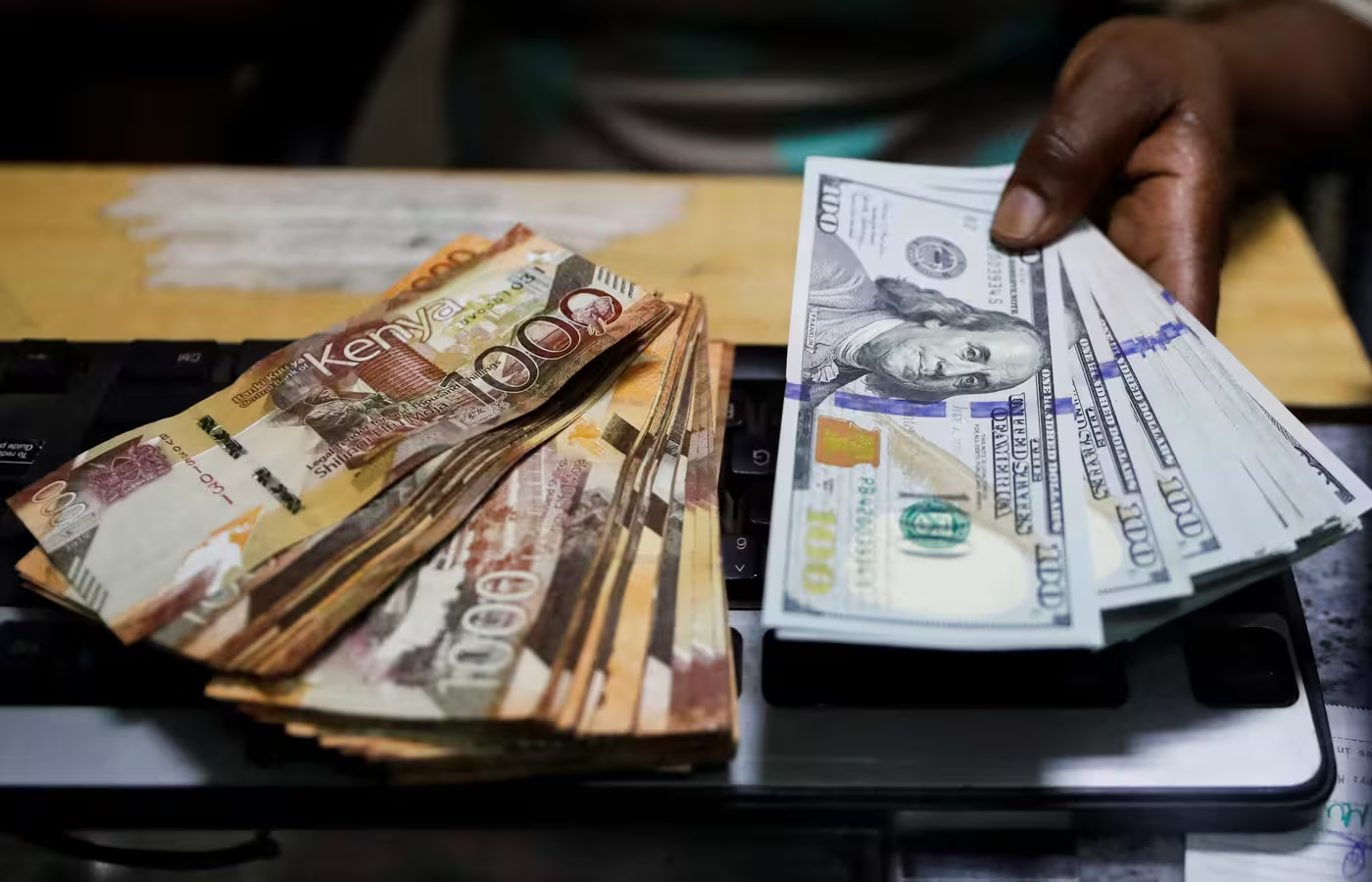
Kenya’s foreign exchange reserves have risen above 10 billion US dollars, offering a critical buffer to the Kenyan shilling and positioning the Central Bank of Kenya (CBK) to manage external pressures as global financial conditions tighten.
Data from the CBK show reserves stood at 1.410 trillion Kenyan shillings (10 billion US dollars) as of June 19, equivalent to 4.8 months of import cover. This exceeds the statutory minimum of four months and reflects sustained interventions by the CBK to preserve currency stability and manage liquidity in the foreign exchange market. The shilling strengthened to 129.28 Kenyan shillings against the US dollar last week.
The accumulation of reserves comes at a time when many emerging market currencies are under pressure due to the strengthening of the US dollar and shifting global capital flows. For Kenya, a consistent inflow of diaspora remittances has been instrumental in mitigating these pressures. According to the CBK, Kenyans abroad sent home 440.1 million US dollars in May, bringing the 12-month total to 5.03 billion US dollars—a year-on-year increase of 11.6 percent. The United States remains the largest source of these flows, accounting for 57 percent of May’s remittances.
Remittance inflows, alongside earnings from key export sectors such as tea, have provided critical support to Kenya’s external account. The country’s tea exports have benefited from firm global prices, buoyed by demand from markets in the Middle East and Asia, even as rival producers such as Sri Lanka and India contend with supply constraints.
The CBK’s position has also been bolstered by strong demand for government securities. On June 18, the Treasury reopened a tranche of long-term bonds and received 101.4 billion Kenyan shillings in bids—more than double the 50 billion Kenyan shillings on offer. The oversubscription suggests sustained investor confidence in the country’s debt markets and has helped shore up dollar inflows.
Conditions in the domestic interbank market have remained stable. The average interbank rate eased marginally to 9.65 percent from 9.72 percent the previous week, despite a relatively tight liquidity environment. Transaction volumes and frequency remain subdued, though the market has shown no signs of dislocation.
Kenya’s foreign exchange position has improved against a backdrop of cautious global monetary policy. Both the US Federal Reserve and the Bank of England maintained interest rates in June amid ongoing inflationary concerns, offering temporary relief for capital flows into emerging markets.
The CBK’s ability to sustain current reserve levels will depend on external variables, including global commodity prices, investor sentiment, and interest rate trajectories in advanced economies. A renewed surge in oil prices or further monetary tightening in the US could weigh on the shilling’s recent gains.
Nonetheless, the current reserve position offers the CBK space to manage near-term volatility, marking a shift from earlier periods of currency pressure and signaling improved resilience in Kenya’s external accounts.




