

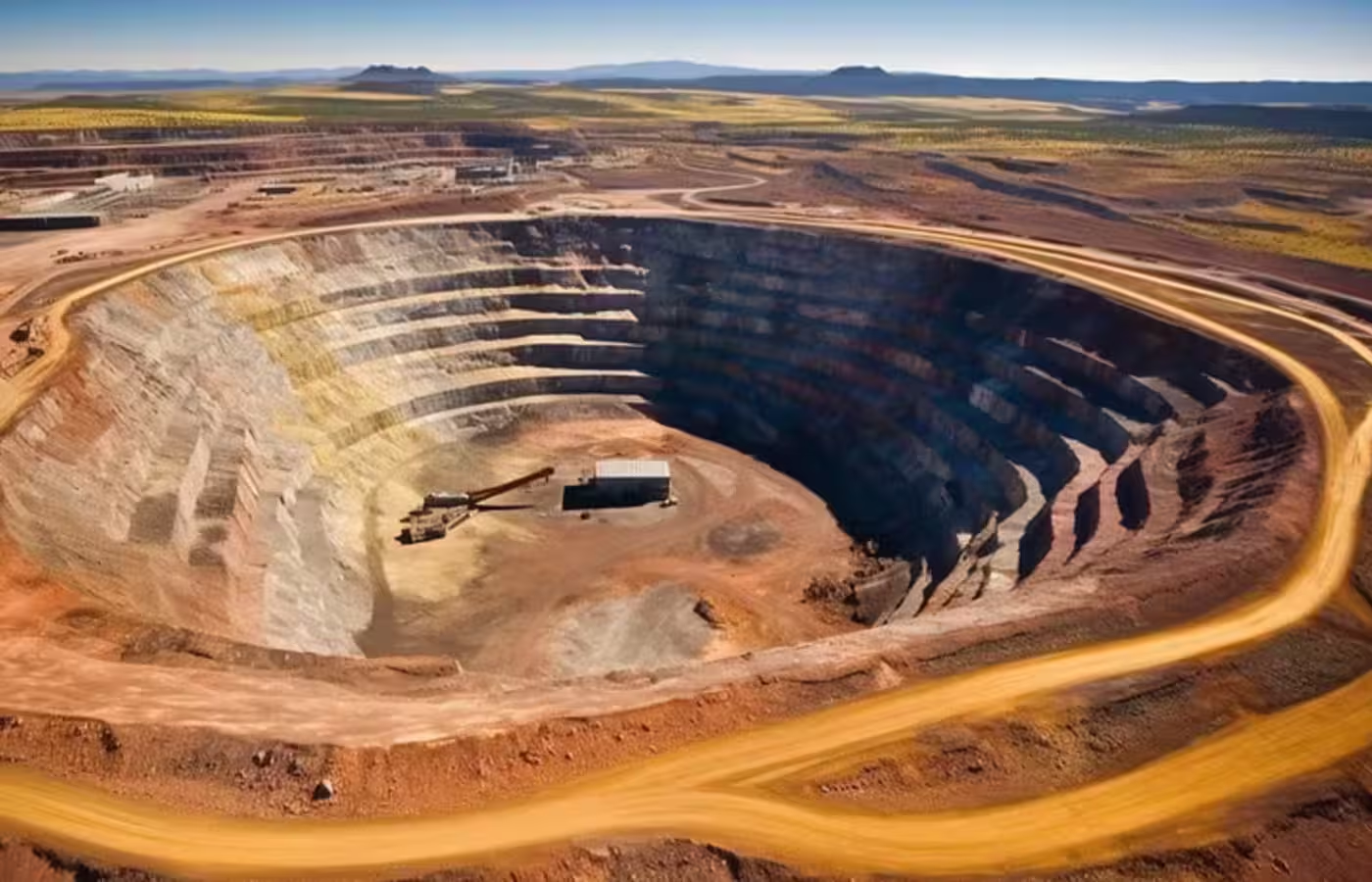
Kurmuk Gold Mine Commissioning 2026 Shift Ahead of First Industrial Pour, Grid connection and first ore through the crusher put Allied Gold's 500 million US dollar mine within weeks of a pour that would transform the country's commercial mining output.
The Kurmuk gold mine in Benishangul-Gumuz has entered the final stage of commissioning after connecting to the national power grid and passing its first ore through the crushing circuit, bringing Ethiopia to within weeks of its first gold pour from a modern industrial-scale operation.
Kurmuk Gold Mine PLC, the local operating company of Toronto- and New York-listed Allied Gold Corporation, disclosed on September 17 that the 88-kilometre power line connecting the mine to the Ethiopian grid has been commissioned and energised, and is now supplying enough power to complete commissioning and advance the ramp-up of operations. First ore was fed through the crushing circuit earlier this month, with handover to the operations team under way, and the company expects ore to enter the grinding circuit and first gold to follow soon after.
The company has formally notified the Ministry of Mines that it anticipates conducting the first pour during the hot commissioning and production testing window, while stressing that the initial pour forms part of testing and does not constitute the formal launch of commercial operations. The distinction carries fiscal weight: under the project's development agreement, the government's seven percent equity participation is triggered once the mine enters commercial production, and royalties are payable on sales from commercial output.
Located in the Asosa zone near the Sudanese border, roughly 750 kilometres west-northwest of Addis Ababa, Kurmuk combines the Dish Mountain and Ashashire deposits, which hold 2.74 million ounces of mineral reserves and sit behind a development programme requiring about 500 million US dollars in capital. The large-scale mining licence, granted on September 30, 2021 for 20 years, covers 100.4 square kilometres, with surrounding exploration licences of 1,460.7 square kilometres.
Output projections place Kurmuk among the more significant new gold mines in Africa. The company has guided to roughly 290,000 ounces a year over the first four years and about 240,000 ounces a year over the life of mine, at all-in sustaining costs below 950 US dollars an ounce based solely on reserves. Allied is targeting a minimum inventory of five million ounces at Kurmuk and a mine life of at least 15 years at production above 250,000 ounces a year, a horizon that depends on exploration converting resources into reserves.
Energy costs anchor the low-cost case. The 132-kV line supplies power at about 0.04 US dollars per kilowatt-hour under a 20-year agreement with Ethiopian Electric Power, while mining has built stockpiles of about one million tonnes, targeted to reach nearly 1.5 million tonnes, or three months of plant feed, ahead of full circuit commissioning.
The state's return runs through several channels. The development agreement, signed with the federal government in September 2021 for an initial 20-year term, sets corporate income tax at 25 percent, a royalty of five percent on precious metals, government participation of seven percent acquired through public road upgrades and installation of the 132-kV line from Asosa, and a community development fund distributing the higher of two percent of annual net profit or operating costs. A two percent net profit sharing interest applies once certain milestones are met. Part of the metal is already committed: Wheaton Precious Metals International holds the right to purchase 6.7 percent of payable gold under a 175 million US dollar streaming agreement signed to help finance construction.
Kurmuk arrives as gold has become the dominant line in Ethiopia's external accounts, and as the composition of that output draws scrutiny. Ministry of Mines figures for 2025/26 show 44.16 tonnes of gold produced and nearly 5.6 billion US dollars in sector revenue, of which 40.86 tonnes, or 92.7 percent, came from small-scale, traditional and artisanal miners using basic manual methods. Commercial, large-scale operations contributed 3.2 tonnes, or 7.3 percent, the bulk of it from MIDROC Gold's Legedembi operation.
At guided rates, Kurmuk alone would produce around nine tonnes a year, close to triple the entire commercial output recorded last fiscal year. With bullion trading in the 4,300 to 4,600 US dollar range through late August and into September, that volume carries a gross value above 1.2 billion US dollars a year before royalties, tax, the stream and the state's equity share.
The macro backdrop magnifies the figure. Ethiopia generated 11.2 billion US dollars in export earnings in 2025/26, nearly 20 percent above target and 35 percent higher than the preceding year, with gold at about 5.6 billion US dollars, roughly half of total export earnings, and coffee at 3.1 billion US dollars. The Prime Minister told parliament that gold export revenue between 1992 and 2019 amounted to 3.7 billion US dollars, less than what the sector earned in 2025/26 alone. The Ministry of Mines has set a revenue target of 6.7 billion US dollars for the current fiscal year.
Kurmuk also changes the shape of that flow. Artisanal volumes have been drawn in largely through central bank purchase incentives, a channel the IMF expects to narrow: the fund has projected that the National Bank of Ethiopia will exit the gold market by end-2026, with private banks taking over, and noted that reserve money grew 71 percent partly on liquidity injected through the central bank's gold purchase operations. A commercial exporter of Kurmuk's size delivers foreign exchange without that monetary side effect.
The mine reaches production with its ownership settled after a year of uncertainty. Zijin Gold agreed in January to acquire Allied Gold in an all-cash deal at C$44 a share, implying an equity value of about C$5.5 billion, and shareholders approved it with 99.54 percent of votes cast in favour. The transaction was terminated after both parties concluded that outstanding conditions, primarily approvals from Chinese regulatory authorities, could not be satisfied before the July 29, 2026 deadline. Zijin instead subscribed for roughly 12.8 million shares at C$32.55 each, a 295 million US dollar investment leaving it with about 9.2 percent of Allied and earmarked in part for the Kurmuk ramp-up. The project itself has changed hands before: Egyptian conglomerate ASCOM ran Kurmuk for a decade from 2007 before its licence was revoked over security concerns and transferred to Allied Gold in 2017.
Three risks sit against the outlook. Commissioning and ramp-up of a greenfield plant routinely slip against schedule, and commercial production is declared only once throughput and recovery hold at design levels; the company has disclosed a first-full-year target of 240,000 to 270,000 ounces. Price exposure is real in both directions after a volatile year for bullion. And the border is unsettled: across the frontier, the RSF and allied SPLM-N fighters took the Sudanese towns of Geissan and Kurmuk this year, and Khartoum has repeatedly accused Ethiopia of providing logistical backing and safe haven to the RSF, allegations Addis Ababa has not publicly addressed. Allied has reported the project on schedule and on budget and has disclosed no operational disruption.
For more analysis on East African mining developments, macroeconomic trends, and energy networks, explore PAPSS China India Expansion 2027: Payment Linkage Beyond Africa, and also enjoy tracking market updates directly on the Nairobi Securities Exchange (NSE) portal.




