

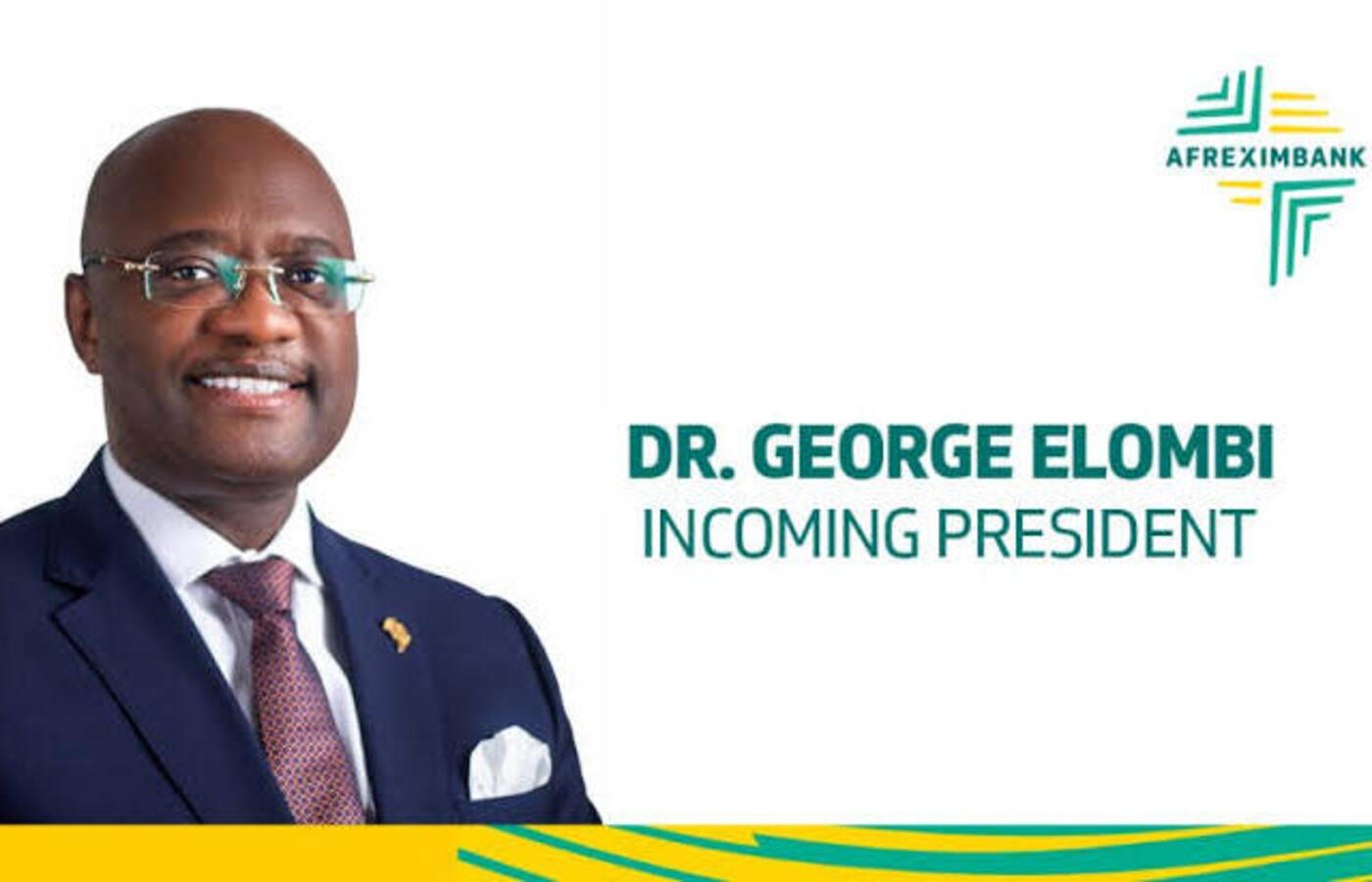
The African Export-Import Bank has appointed George Elombi as its next President and Chairman of the Board, as the Cairo-based lender grapples with an ambitious growth agenda and renewed scrutiny from credit rating agencies.
Elombi, a Cameroonian national and three-decade veteran of the bank, was endorsed by shareholders on Saturday at Afreximbank’s 32nd Annual Meetings in Abuja, Nigeria. He will assume the presidency in September 2025, succeeding Benedict Oramah, who has led the institution since 2015.
The leadership change comes at a moment of both institutional inflection and reputational challenge. Just last month, Fitch Ratings downgraded Afreximbank’s long-term foreign currency issuer default rating from ‘BBB’ to ‘BBB–’ and assigned a negative outlook — citing what it called growing credit risk tied to African sovereign exposures and concerns around loan classification practices.
In a rare public rebuttal, Afreximbank formally rejected Fitch’s downgrade, describing the action as “inconsistent with the bank’s financial fundamentals and regulatory compliance.” It specifically challenged Fitch’s methodology, arguing that the agency’s classification of certain sovereign loans as non-performing is “misaligned with International Financial Reporting Standards (IFRS)” and ignores the bank’s robust provisioning and loan recovery history.
Afreximbank’s statement has drawn attention to the increasingly complex dynamics between African multilaterals and international ratings agencies, with some observers warning that externally imposed methodologies may distort the realities of operating in African credit markets.
“Elombi inherits an institution that is expanding fast — but also one that must increasingly defend the validity of its business model to global capital markets,” said a senior African central bank official familiar with the bank’s operations.
Elombi, who joined Afreximbank in 1996 as a Legal Officer, has steadily climbed the ranks to become Executive Vice President, overseeing governance, legal affairs, and corporate services. He has been instrumental in developing the bank’s structure, including the formation of its key subsidiaries: the Fund for Export Development in Africa (FEDA) and AfrexInsure. He also chaired the Emergency Response Committee during the COVID-19 pandemic, helping mobilise over US$2 billion for vaccine procurement across Africa and the Caribbean.
More recently, he supervised equity mobilisation efforts that raised US$3.6 billion by April 2025 — a crucial step as the bank pursues its aspiration to become a US$250 billion institution within the next decade. Afreximbank’s total assets stood at US$40.1 billion as of December 2024, while its shareholder funds reached US$7.2 billion.
In his acceptance speech, Elombi said: “I have worked alongside remarkable colleagues and extraordinary leaders to help shape this institution’s vision. As we look to the future, I see Afreximbank as a force for industrialising Africa and for regaining the dignity of Africans wherever they are.”
His appointment followed a global search initiated in January 2025, culminating in board endorsement and final approval by shareholders on June 28.
Founded in 1993, Afreximbank has positioned itself as a central pillar in Africa’s trade infrastructure, with a mandate to finance intra- and extra-African trade. It has taken a leading role in supporting the African Continental Free Trade Area (AfCFTA), including through the Pan-African Payment and Settlement System (PAPSS) and a US$10 billion Adjustment Fund to help countries navigate tariff liberalisation.
Despite the Fitch downgrade, Afreximbank retains investment-grade ratings from other agencies, including Moody’s (Baa1), GCR (A), and China’s CCXI (AAA). The divergence highlights growing debate around how multilateral development banks should be assessed in emerging markets, particularly those operating with quasi-sovereign mandates in regions marked by credit stress.




