

The financial difficulties described by Jemal relate principally to conditions before and during the early stages of the restructuring
MIDROC Investment Group says a six-year restructuring has restored businesses that were previously weighed down by losses, unpaid obligations and weak corporate oversight.
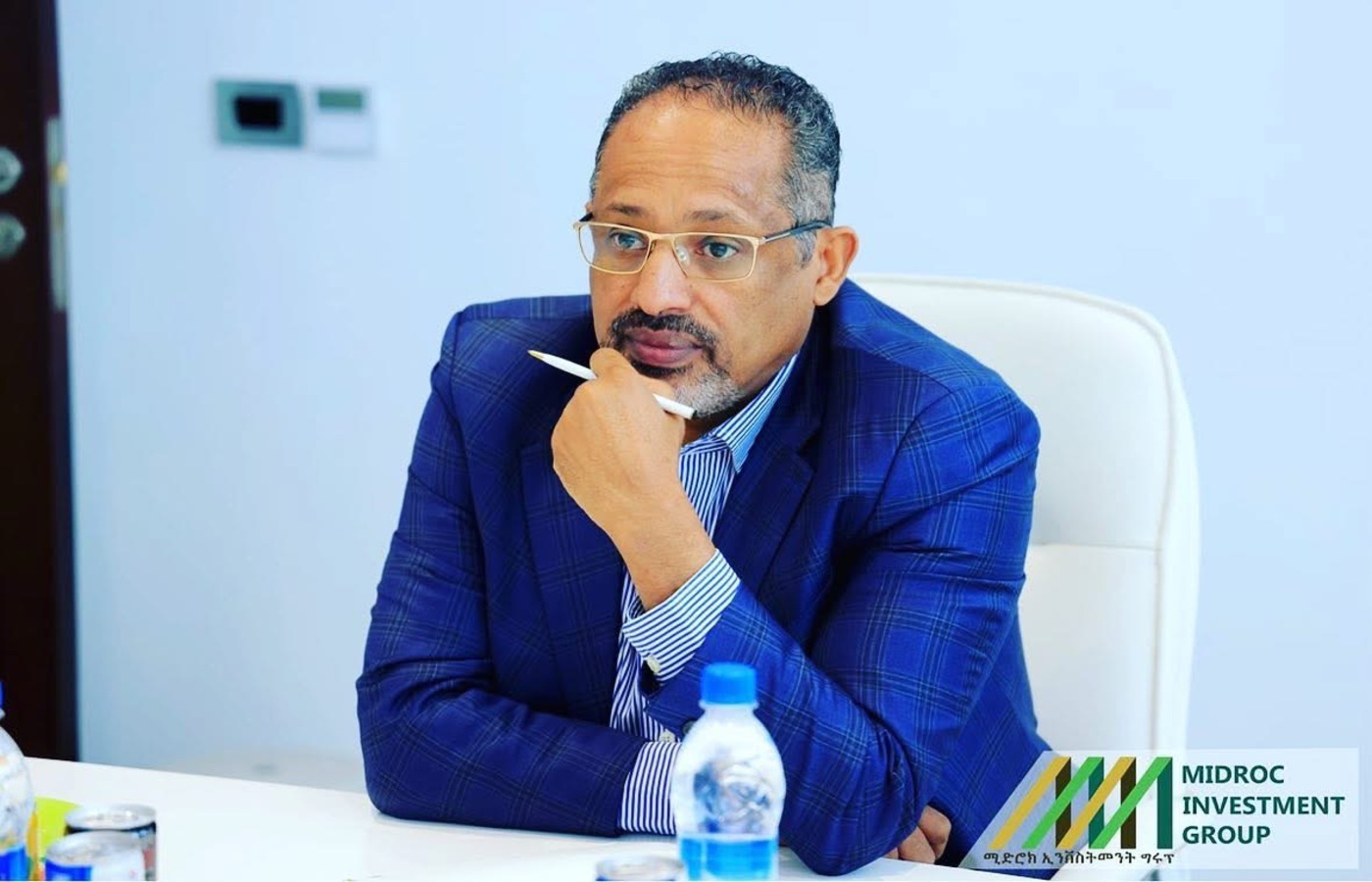
Chief Executive Officer Jemal Ahmed, speaking in an interview with Fana Television, said several companies within the business empire of Ethiopian-born Saudi billionaire Sheikh Mohammed Hussein Ali Al-Amoudi were in severe financial distress when the restructuring began nearly six years ago.
The financial difficulties described by Jemal relate principally to conditions before and during the early stages of the restructuring, rather than MIDROC’s present financial position.
At the time, only a small number of businesses, including NOC Ethiopia and Horizon Plantations, could operate without financial assistance from the wider group, Jemal said.
Some companies could no longer pay salaries, while creditors moved against the assets of others, according to Jemal. Properties belonging to certain subsidiaries were placed under court-ordered auction or used as collateral against unpaid loans.
The CEO said MIDROC Ethiopia Technology Group, which previously administered dozens of businesses, had deteriorated into an “empty shell” carrying around 20 loss-making companies before the overhaul.
MIDROC Construction Ethiopia was among the companies that faced severe financial and operational problems, he said. The company, which undertakes roads, bridges, buildings and other civil works, was at one stage unable to cover basic obligations, with some of its assets facing possible auction.
Jemal states the tiresome journey he had to go through when he took office as some companies faced trials which then settled down based on legal ways.
Court records reported by Addis Fortune showed that MIDROC Foundation had argued that alleged mismanagement by a former executive contributed to its insolvency and left it carrying 8.5 million birr in debt. The courts ultimately ordered the company to settle claims arising from the rental agreements.
Jemal said another major industrial company, Moha Soft drinks, was shut down carrying debt initially estimated at 3.7 billion birr, which later rose to close to five billion birr.
He also alleged that shares and other assets belonging to Sheikh Mohammed had been improperly transferred, requiring the new management to spend as long as five years recovering ownership rights and correcting property and company documents.
The individuals accused of mismanagement or improperly taking shares were not identified. No court records or audit reports supporting the wider allegations were presented during the interview, and the claims could not be independently verified.
The crisis followed the detention of Sheikh Mohammed in Saudi Arabia in November 2017 as part of Crown Prince Mohammed bin Salman’s anti-corruption crackdown.
Sheikh Mohammed was held for more than 14 months before his release in January 2019. No public account has been provided detailing the terms of his release or establishing that he was convicted of an offence.
His prolonged absence appears to have exposed how heavily parts of MIDROC depended on the founder’s personal financing and authority.
Jemal said Sheikh Mohammed had repeatedly brought money from abroad to support struggling companies but had not always imposed strong profitability targets or demanded sufficient accountability from senior managers.
That financing kept some businesses operating while concealing deeper weaknesses in their management, balance sheets and internal controls, according to the CEO.
After the owner’s detention, many subsidiaries could no longer rely on the same flow of external financial support. Years of accumulated losses, unpaid taxes, bank debt, idle machinery and weak oversight then became difficult to conceal.
Jemal said the group’s previous success had depended heavily on Sheikh Mohammed’s personal wealth and generosity rather than on institutions capable of surviving independently of their founder.
MIDROC—originally derived from Mohammed International Development Research and Organization Companies—is the umbrella name used by a large collection of businesses controlled by Sheikh Mohammed and members of his family.
MIDROC’s official website describes the Investment Group as a collection of Sheikh Mohammed’s companies operating through six principal clusters: agriculture and agro-processing, manufacturing, mining, commerce, hospitality, and construction and real estate.
Speaking in recent public engagements, the CEO highlighted the Group’s ongoing activities and future investment direction, emphasizing the importance of strengthening existing businesses while pursuing new opportunities in key sectors of the Ethiopian economy.
He says efforts to boost the group’s contribution to national development, societal change and employee’s change will be further strengthened meeting the organization’s reputation in recent times.
Jemal said MIDROC’s future investment stride is expected to focus on strengthening existing operations, developing new projects, introducing modern technologies, expanding market opportunities and creating additional employment.
The group currently contains 45 companies in total and has operated in Ethiopia for more than three decades engulfing businesses across six major clusters.
However, MIDROC is not a publicly listed company and does not publish a single consolidated ownership statement or group-wide financial report. Its businesses were historically established as separate legal entities with their own shareholders, accounts and management structures.
For example, International Finance Corporation documents show that MIDROC Ethiopia Plc—the group’s hospitality company and owner of Sheraton Addis—is 75 percent owned by Sheikh Mohammed and 25 percent by his wife, Sofia Saleh Al-Amoudi. That ownership structure applies to MIDROC Ethiopia Plc and should not automatically be treated as the structure of every company using the MIDROC name.
The portfolio includes or has included businesses such as Sheraton Addis, MIDROC Gold, Derba MIDROC Cement, NOC Ethiopia, Horizon Plantations, MIDROC Construction Ethiopia, MIDROC Foundation Specialist, National Mining Corporation, Ethio Agri-CEFT, Saudi Star Agricultural Development, Addis Tyre, Kombolcha Steel Products Industry and numerous manufacturing and commercial companies.
Sheikh Mohammed was born in Dessie in 1946 to an Ethiopian mother and a father of Yemeni-Hadhrami origin. He moved to Saudi Arabia while young and built his initial fortune through construction and property before expanding into oil refining, mining, agriculture, cement, manufacturing and hospitality.
His investments eventually stretched across Ethiopia, Saudi Arabia, Sweden, Morocco and other markets. Forbes valued his fortune at USD 8.1 billion in 2017, before his detention, and described his wealth as originating from oil and diversified investments.
In Ethiopia, he became the country’s most prominent private investor after returning with capital during the transition from the Derg’s command economy to a market-oriented system.
MIDROC Ethiopia was formally established in the 1990s, although Sheikh Mohammed’s investments in the country predated its formation. The group later became involved in almost every major productive sector, including gold, cement, fuel distribution, coffee, tea, tyres, steel, construction, hotels and large-scale agriculture.
In a 2014 interview, Jemal estimated that MIDROC had invested more than USD 5 billion in Ethiopia over the preceding two decades. However, because the businesses maintained separate accounts, there was no consolidated public balance sheet against which the figure could be independently assessed.
Sheikh Mohammed also became widely known for philanthropic contributions, including support for healthcare, education, sport, housing and the Grand Ethiopian Renaissance Dam.
That combination of investment and philanthropy made his detention in Saudi Arabia more than a personal legal matter. It created uncertainty around Ethiopia’s largest private business network and the jobs, suppliers, banks and government revenues connected to it.
MIDROC responded to the crisis by bringing previously fragmented companies under MIDROC Investment Group and reorganizing them into industry-based clusters.
The restructuring introduced central oversight, internal audit, annual external audits and clearer lines of responsibility between individual companies and group management, Jemal said.
Previously, companies operated under structures including MIDROC Ethiopia, MIDROC Ethiopia Technology Group and Horizon Plantations, with limited coordination across the wider portfolio.
Jemal said the new system requires each company to produce an independent annual audit showing its assets, liabilities, revenue, and profit and tax position. The aim is to prevent managers from concealing losses, accumulating liabilities or treating the companies as personal operations.
The restructuring also consolidated profitable and distressed businesses under a system in which earnings could be reinvested across the group.
MIDROC claims the turnaround has been substantial. Its workforce has reportedly risen from approximately 47,000 to 80,000, while its annual payroll has increased from less than one billion birr to more than 8.5 billion birr.
Jemal said group revenue has increased more than twentyfold and that MIDROC exported goods worth USD 390 million during the latest reporting year—more than it exported during the preceding decades combined.
MIDROC’s official performance statement for the 2025/26 fiscal year says the group achieved 99 percent of its planned sales, recorded 52 percent year-on-year growth and paid more than 31 billion birr in taxes and other government obligations.
A further sign of restored lender confidence came in May 2026, when the IFC approved an USD 80 million long-term loan to MIDROC Ethiopia Plc. The financing forms part of a project costing up to USD 116 million to refurbish Sheraton Addis and construct another Sheraton hotel in Addis Ababa.
Editor’s note: An earlier version of this article did not make sufficiently clear that the financial distress described by MIDROC Chief Executive Officer Jemal Ahmed related mainly to conditions before and at the beginning of the group’s restructuring approximately six years ago, rather than its current financial position. The headline and opening paragraphs have been revised to clarify the timeline. We apologise to MIDROC Investment Group and our readers for the misleading impression created by the earlier wording.




