

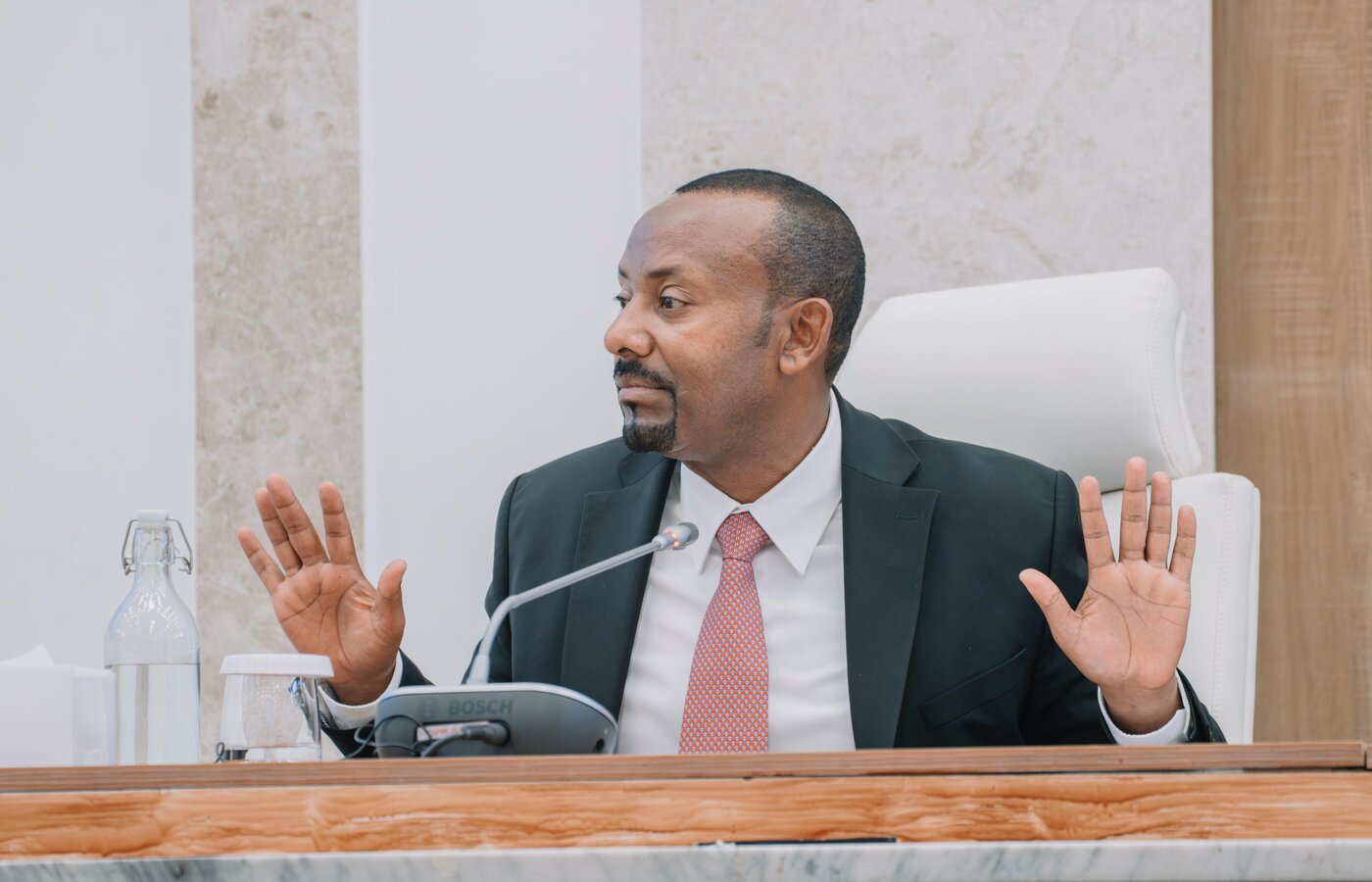
Prime Minister Abiy Ahmed has announced the completion of the Grand Ethiopian Renaissance Dam (GERD), describing the moment as a historic milestone not just for Ethiopia, but for the wider Nile Basin region.
Addressing the parliament today, Abiy confirmed that preparations are underway for an official inauguration in September, and extended an open invitation to Egypt, Sudan, and other neighboring countries to attend the ceremony.
“While there are those who believe it should be disrupted before that moment, we reaffirm our commitment: the dam will be inaugurated,” Abiy said. “The Renaissance Dam is not a threat, but a shared opportunity. It is a symbol of regional cooperation and mutual benefit.”
His remarks appeared to address longstanding objections from Egypt, which relies on the Nile for more than 90 percent of its freshwater supply and fears the dam could reduce downstream flows. Sudan, while less vocal in recent years, has also raised concerns about the dam’s impact on water availability and dam safety.
Abiy struck a conciliatory tone, emphasizing Ethiopia’s commitment to a cooperative approach. “Egypt’s Aswan Dam has never lost a single litre of water due to the GERD,” he said. “Likewise, Ethiopia remains committed to ensuring that our growth does not come at the expense of our Egyptian and Sudanese brothers and sisters. We believe in shared progress, shared energy, and shared water.”
The GERD, situated on the Blue Nile River in Ethiopia’s Benishangul-Gumuz region near the Sudanese border, is Africa’s largest hydropower project. Construction began in 2011, with initial plans targeting completion in 2017. However, the project faced delays due to design revisions, funding challenges, and protracted diplomatic disputes.
The dam is now designed to have a generating capacity of 5,150 megawatts (MW)—slightly reduced from earlier projections of 6,450 MW. According to Ethiopian Electric Power, it is expected to produce an average of 15,760 gigawatt-hours (GWh) of electricity annually.




