

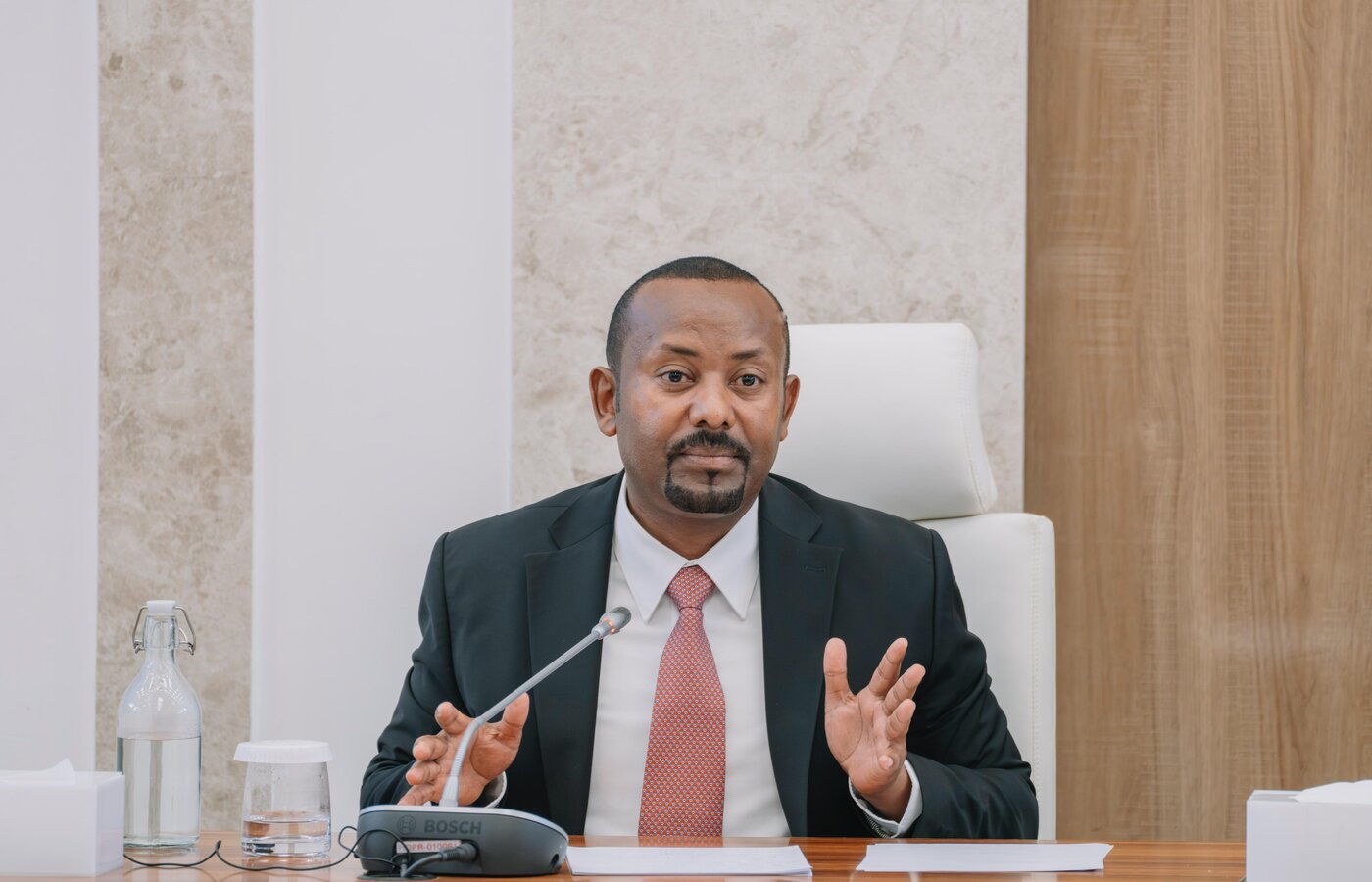
Prime Minister Abiy Ahmed appeared before Ethiopia’s parliament today to defend his administration’s economic reform agenda, as lawmakers debated the government’s largest-ever proposed budget of 1.93 trillion birr for the 2025/26 fiscal year.
In a session marked by questioning from MPs over inflation, debt sustainability and the rising cost of living, Abiy cited what he described as “remarkable progress” in macroeconomic performance over the past year—particularly in export earnings and foreign currency inflows.
Ethiopia, he said, earned over 8.1 billion US dollars in goods exports during the 2024/25 fiscal year—more than double the previous year’s total and three billion US dollars above the government’s target. “This remarkable growth is a direct result of the ongoing export reform efforts,” Abiy told parliamentarians, pointing to diversification strategies and improved logistics.
Including seven billion US dollars in remittances, four billion US dollars in foreign direct investment (FDI), and 8.3 billion US dollars from services, Ethiopia’s total foreign exchange inflows reached 32 billion US dollar—up from 24 billion US dollars the previous year, according to official data. Over the past seven years, no new commercial loans have been taken, the PM said.
“These outcomes clearly reflect the positive impact of the country’s macroeconomic reforms,” Abiy added, as he sought to position the proposed budget as a continuation of those efforts.
The Prime Minister’s remarks come at a pivotal moment for Ethiopia’s economy, which is undergoing a series of IMF-backed reforms tied to a 3.4 billion US dollars Extended Credit Facility. The IMF, which just completed its third review of the programme, commended the authorities for “better-than-expected” results on inflation, export growth, and reserve accumulation—though it warned that structural challenges remain, particularly in public finance.
The draft budget—up from 1.2 trillion birr in the current fiscal year—includes steep increases in capital spending, education, food security, and debt service.
Abiy noted that Ethiopia’s tax-to-GDP ratio remains below seven percent, compared to 14 percent in Kenya. He added that only 37 percent of registered taxpayers are compliant, and that 46,000 entities remain on the books without paying due taxes—either due to reported losses or non-disclosure. “If we had reached a 10 percent tax-to-GDP ratio, we could have collected 1.3 trillion birr,” he said.
Beyond fiscal metrics, Abiy painted a cautiously optimistic picture of Ethiopia’s external balances. The trade deficit, he said, has narrowed to four billion US dollars, while the balance of payments recorded a surplus of 2.6 billion US dollars—its first positive result in over a decade. Foreign reserves, he claimed, had “tripled,” although no official figure was disclosed. Ethiopia's gross international reserves, according to the IMF, stood at 3.4 billion US dollars (equivalent to 1.6 months of import coverage) at the end of October 2024, up from 1.4 billion US dollars (0.7 months of coverage) at the end of June 2024.
Mignot Tariku contributed to this story




