

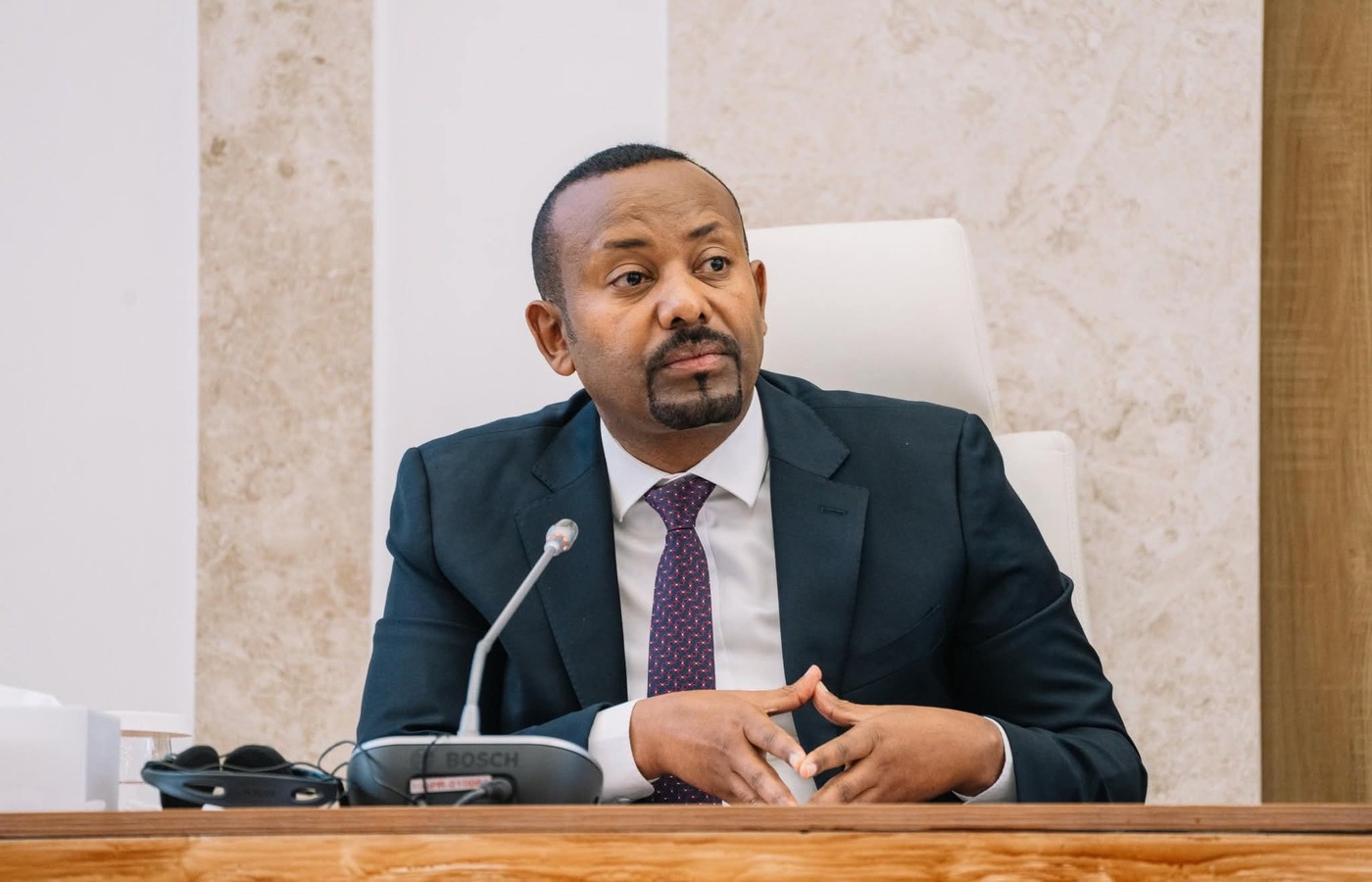
Prime Minister Abiy Ahmed (PhD) told Ethiopia’s parliament that the Grand Ethiopian Renaissance Dam was completed without receiving “a single birr of aid or loan,” as international tensions over the project resurfaced following renewed United States engagement in the Nile dispute.
Addressing the House of Peoples’ Representatives during discussions on the federal government’s six-month performance report for the 2025/26 fiscal year, Abiy rejected suggestions that Ethiopia lacked the capacity to deliver major infrastructure projects using domestic resources.
“It cannot be said that a government which successfully completed the Grand Renaissance Dam without a single birr of aid or loan is incapable of carrying out major projects,” Abiy told lawmakers. “Ethiopia did not take even one birr in aid or loans for the Renaissance Dam; it is a collective national project realised through the firm determination, resilience, and unity of heroic Ethiopians who stood together and worked tirelessly.”
The remarks come days after United States President Donald Trump signalled plans to re-enter mediation efforts between Ethiopia and Egypt, following talks with Egyptian President Abdel Fattah El-Sisi on the sidelines of the World Economic Forum in Davos. Trump said Washington would seek to bring the two countries into fresh negotiations over the dam, which remains one of the most contentious geopolitical disputes in north-east Africa.
Trump has repeatedly claimed that the United States helped finance the dam, an assertion Ethiopian officials have consistently rejected. In a recent letter offering to restart US-led mediation, Trump aligned himself with Egypt’s demand for predictable Nile water releases and warned against any country unilaterally controlling the river’s resources.
Negotiations over GERD have been stalled for years, despite mediation attempts by the African Union, the United States and Gulf states. Ethiopia has completed construction of the multi-billion-dollar hydropower project, while Egypt argues the dam threatens its water security, particularly during drought periods.
Ethiopia rejects those claims, insisting the project is vital for development, electrification and economic growth and does not significantly harm downstream flows. Addis Ababa has also pushed back against calls for a binding agreement on the filling and operation of the dam, arguing for equitable use of Nile waters.
Abiy told parliament that GERD is part of a broader infrastructure drive that has continued despite diplomatic and economic pressures. He cited ongoing construction of the Koysha hydropower project, which he described as Africa’s third-largest, and a new airport that he said would become the continent’s largest.
Ethiopia officially inaugurated GERD in September 2025, presenting it as a national milestone and a cornerstone of its long-term energy strategy.




