A US-funded humanitarian programme has restored housing and water access for thousands of people in East Borena Zone, Oromia Region, with the Ethiopian Red Cross Society (ERCS) completing 506 shelters and rebuilding a water supply system in areas affected by drought and insecurity.
The East Borena interventions form part of a wider Emergency Response and Recovery Project financed by the US Foreign Humanitarian Assistance, which has been running since August 2024. The programme covers shelter, water, sanitation and hygiene (WASH), and multipurpose cash assistance across seven zones of Oromia.
The project has so far delivered 3,930 shelters across East Borena, East Wollega, West Wollega, Buno Bedele, Kellem Wollega, Ilu Aba Bor and Horo Guduru Wollega zones, with another 1,000 shelters currently under construction. It has also completed or rehabilitated 11 water supply schemes, eight of which are already serving communities, while 1,810 households have received cash assistance.
In East Borena, the newly built shelters in Liben, Da’as and Gorodola districts are now occupied by beneficiary families. A separate cash support programme reached 100 households in Arero district, while a water project in Da’as district restored access to safe drinking water for communities that had faced shortages for almost three years.
A delegation from the US Foreign Humanitarian Assistance programme recently visited the project sites to review implementation progress and meet local authorities, community representatives and beneficiaries.
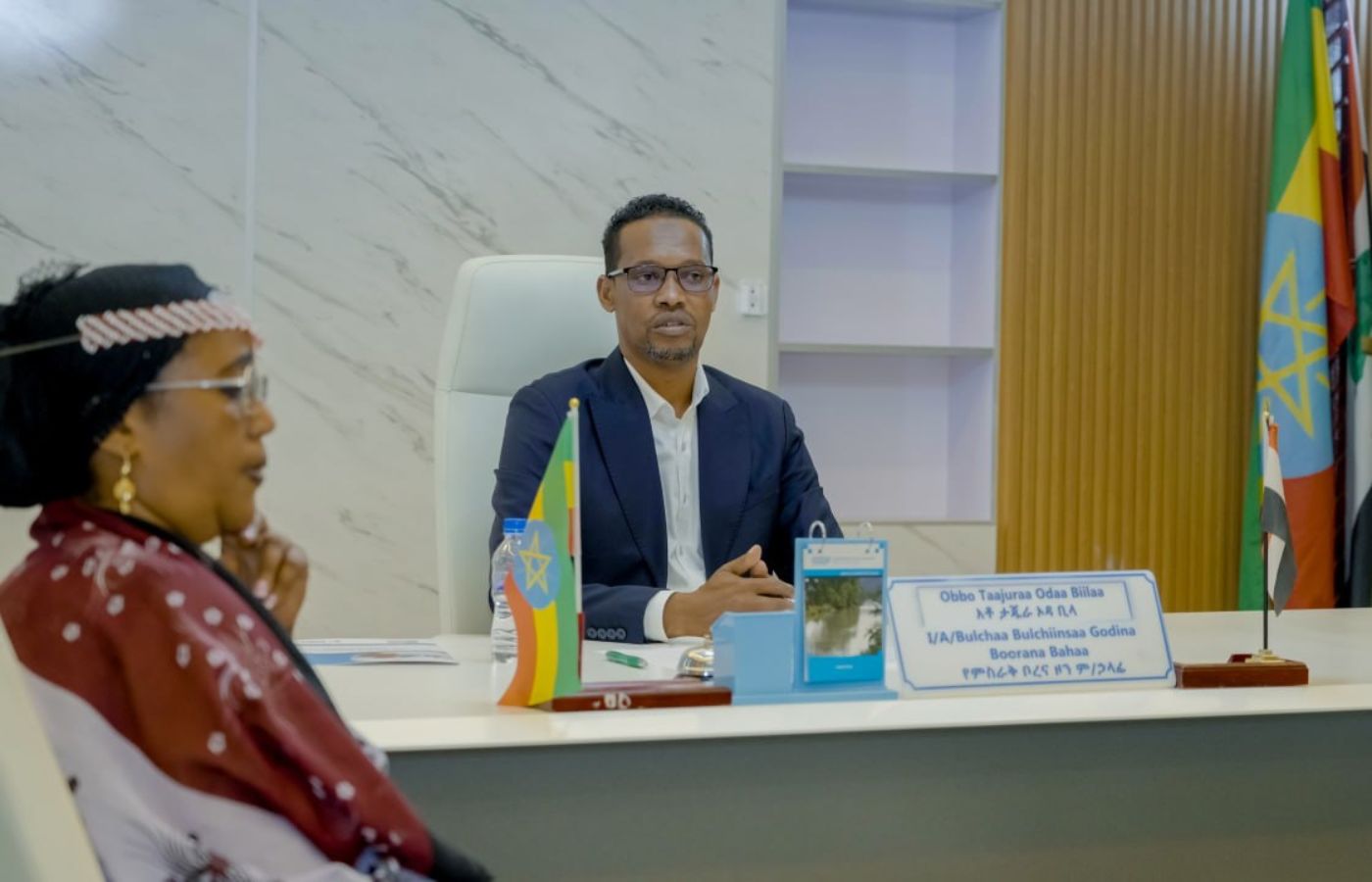
During discussions with the delegation, East Borena Zone Deputy Administrator Tajura Oda said the area had experienced repeated droughts and security challenges, but cooperation between government institutions and the ERCS had helped deliver support in shelter, water and cash assistance.
Tajura called for continued assistance, particularly for pastoralist communities whose livelihoods were affected by drought and conflict. He also highlighted the need for sustained investment in damaged health facilities and water infrastructure.
The delegation visited Me’esa Kebele in Liben district, where it inspected 85 completed shelters and met members of Community Engagement and Accountability (CEA) committees involved in beneficiary selection, construction processes and community participation.
Residents told the delegation that they had been displaced by insecurity nearly four years ago and had endured difficult living conditions before receiving support. They said the new shelters helped their families regain safer living conditions.
Sintayehu Eshete, Program Specialist at the US Foreign Humanitarian Assistance Section in Ethiopia, said the project demonstrated the impact of combining financial support with community participation and local contributions.
“The most impressive aspect of this project is the collaboration between the government and the Ethiopian Red Cross Society,” Sintayehu said. “By combining community contributions, government support, and Red Cross assistance, you have created a model that can be replicated elsewhere.”
ERCS Project Coordinator Gosa Abera said the field assessment provided partners with direct insight into the project’s results by allowing discussions with beneficiaries, local officials and community committees. He added that feedback from the visit would help identify remaining needs and guide future resource mobilisation efforts.