

New pandemics and biological risks have fallen out of the top ten risks across every global region in the UN’s 2026 risk survey, with respondents in Sub-Saharan Africa now placing war, geopolitical tensions and inequality ahead of public-health threats.
New pandemics have dropped out of the ten biggest global risks identified by respondents in Sub-Saharan Africa, marking a sharp reversal in perceptions only six years after Covid-19 disrupted health systems, economies and daily life across the continent.
The United Nations’ 2026 Global Risk Report finds that neither a new pandemic nor broader biological risks made the top ten in any of the seven regions covered by its latest survey, including Sub-Saharan Africa, where such risks were still regarded as pressing in the previous survey two years ago.
“Six years after Covid-19, respondents are noticeably less worried about new pandemics and biorisks than they were in 2024,” the report says. It also finds that respondents now perceive the multilateral system as comparatively better prepared to deal with societal risks, a category that includes pandemics.
The change does not mean experts believe another pandemic has become impossible or that health systems have eliminated their vulnerabilities. Rather, it reflects a major reordering of what policymakers, businesses, civil society organisations and risk specialists currently regard as the most consequential threats facing the world.
The UN itself cautions that its rankings are based on perceptions and that those perceptions can move even if the underlying danger has not changed. A risk, it says, should not be regarded as resolved merely because another threat has climbed above it.
What has displaced pandemic anxiety is striking.
For respondents from Sub-Saharan Africa, large-scale war now ranks as the most important risk, followed by geopolitical tensions and rising inequality. Climate-change inaction comes fourth, followed by weapons of mass destruction. Large-scale pollution, misinformation and disinformation, a global financial crisis, natural hazards and mass movement of people complete the region’s top ten.
The shift forms part of a broader global turn away from the public-health fears that dominated perceptions in the aftermath of Covid-19 and towards political, security and economic instability.
The UN says large-scale war and geopolitical tensions are now among the five biggest risks in six of the seven regions surveyed, compared with only one region each in 2024. Weapons of mass destruction have also entered the top ten in Sub-Saharan Africa, Central and Southern Asia, and Oceania.
The decline is not confined to Africa.
“Respondents stopped viewing biorisks and new pandemics as highly important,” the report says, with both falling outside the top ten across all seven regions.
In 2024, the picture was significantly different. Pandemic and biological risks were still regarded as pressing concerns among respondents in Sub-Saharan Africa, Eastern and South-Eastern Asia, and Latin America and the Caribbean.
At the global level, the report also finds that respondents now regard pandemics as less likely and less severe than they did two years ago. Meanwhile, concern has increased around global financial crises, artificial intelligence and frontier technologies, and the concentration of power made possible by technology.
The change is particularly notable given the scale of the shock that preceded it.
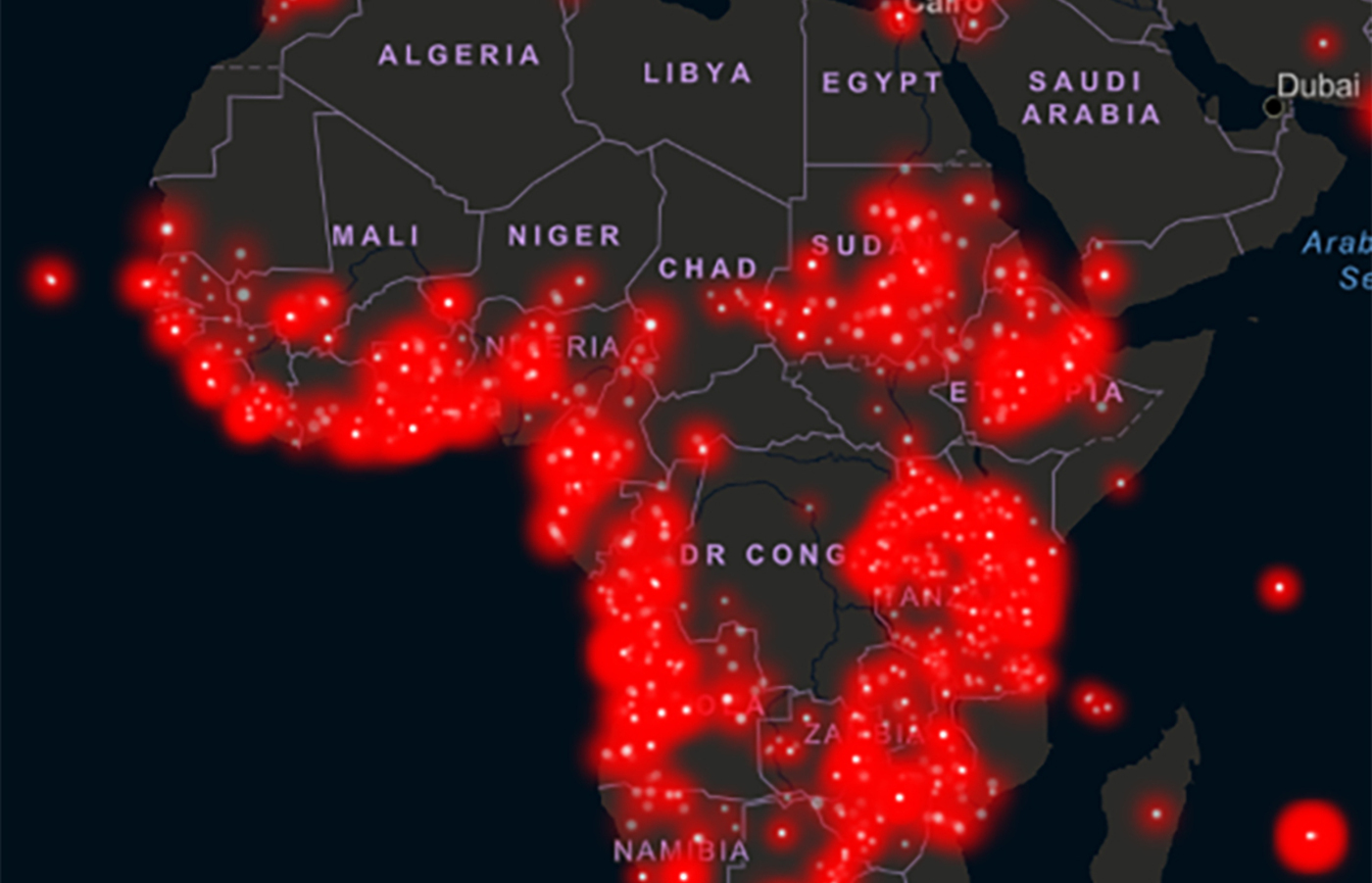
The World Health Organization declared Covid-19 a pandemic on March 11, 2020. Africa’s first confirmed case had been recorded in Egypt less than a month earlier, on February 14, and the first case in the WHO African Region was reported on February 25. Within months, the virus had reached countries across the continent.
Ethiopia confirmed its first Covid-19 case in Addis Ababa on March 13, 2020, two days after the global pandemic declaration. The first patient was a 48-year-old Japanese national who had travelled through Burkina Faso before arriving in Ethiopia, according to WHO records.
The pandemic subsequently triggered restrictions on movement, disruptions to businesses, school closures, pressure on public finances and an unprecedented health response.
Its effects went far beyond infections themselves.
WHO found major disruptions to essential health services across Africa during the first year of the pandemic. In an analysis covering 14 African countries, utilisation of five key health services—including outpatient care, hospital admissions, skilled birth attendance, malaria treatment and childhood vaccination—fell by more than 50 percent during the most disrupted months of May, June and July 2020 compared with the same period in 2019.
By June 2023, the WHO African Region had officially recorded more than 9.5 million Covid-19 cases and about 175,000 deaths, although testing limitations and differences in surveillance meant official case numbers did not capture every infection. WHO ended Covid-19’s status as a Public Health Emergency of International Concern on May 5, 2023.
The fall in pandemic risk therefore says as much about what has happened since Covid as it does about attitudes towards infectious disease.
When the UN conducted its first Global Risk Survey in 2024, respondents were primarily worried about environmental risks, misinformation and pandemics.
Two years later, “geopolitics and war moved to the centre,” according to the report.
Large-scale war recorded the biggest movement of any risk in terms of perceived imminence, jumping 16 positions. More than a third—36 percent—of respondents said they expected a large-scale war to materialise within one year, while 76 percent expected it within seven years.
Pandemics moved in the opposite direction.
The survey found that new pandemics and biorisks are increasingly regarded as longer-term concerns, while global financial crises and supply-chain disruptions are expected sooner.
That contrast could be particularly relevant to countries such as Ethiopia, where external economic shocks, trade disruptions and geopolitical instability can quickly spill into domestic prices, access to imported commodities, foreign-exchange demand and government financing.
The UN report itself does not rank risks specifically for Ethiopia. Its African findings cover Sub-Saharan Africa as a whole, meaning the results should not be interpreted as an Ethiopia-specific risk assessment.
Still, the regional sample is sizeable. Of the 1,300 respondents included in the final global analysis, 215, or 16.5 percent, were from Sub-Saharan Africa, making it the second-largest regional respondent group after Europe and Northern America. Sub-Saharan Africa’s share had declined from 19.7 percent in the 2024 survey.
The survey included government representatives, civil society organisations, private-sector participants, risk experts, academics and employees of international organisations. The final analytical sample included 80 representatives of UN member states and 1,220 respondents from other stakeholder groups.
Respondents assessed 28 risks covering political, technological, economic, environmental and societal categories. They were asked to judge likelihood, severity, how soon risks might materialise, and how prepared multilateral institutions are to address them.
The survey was carried out between February and April 2026.
The most important qualification in the findings is contained in the report itself: “Perceptions do not always match conditions.”
The UN says changing rankings can affect where governments and international institutions direct political attention and money, potentially creating a risk that threats receiving less attention also receive fewer resources even when the underlying danger remains.
That distinction is particularly relevant for pandemic preparedness.
Although respondents are now less concerned about pandemics, the report still identifies gaps in the ability to manage them. For fast-moving threats including new pandemics, AI and misinformation, respondents identified inadequate data and information as an important barrier to effective response. They also cited incorrect prioritisation as an obstacle to dealing with future pandemics.
The legacy of Covid has nevertheless left health systems with new surveillance systems, emergency-response structures and institutional experience that did not exist at the same level before 2020.
WHO said in 2023 that surveillance had strengthened across its African Region and that around 90 percent of countries had developed capacity for genetic sequencing of confirmed SARS-CoV-2 specimens. But the pandemic also exposed longstanding weaknesses in health financing, staffing and continuity of routine medical services.
Globally, the recovery was also incomplete when the acute emergency ended. A WHO survey covering 139 countries in late 2022 and early 2023 found that countries were still reporting disruptions to nearly one-quarter of routine health services on average, although this was considerably lower than during the height of the pandemic in 2020.
The bigger message emerging from the UN survey is therefore not simply that fear of another pandemic has faded.
The entire risk hierarchy has changed.
Political risks now dominate a landscape that only two years earlier was weighted heavily towards health and environmental concerns. In Sub-Saharan Africa, war and geopolitical tensions occupy the first two positions. Inequality ranks third. Climate inaction remains high at fourth, while a global financial crisis is also among the ten biggest concerns.
Across all regions, climate-change inaction remains the most important global risk overall, but the UN says political risks have overtaken many environmental risks in both perceived likelihood and severity.
For ongoing regional economic updates, explore BirrMetrics Macroeconomic Analysis, or review international monitoring frameworks via the World Health Organization (WHO) health security portal.




