

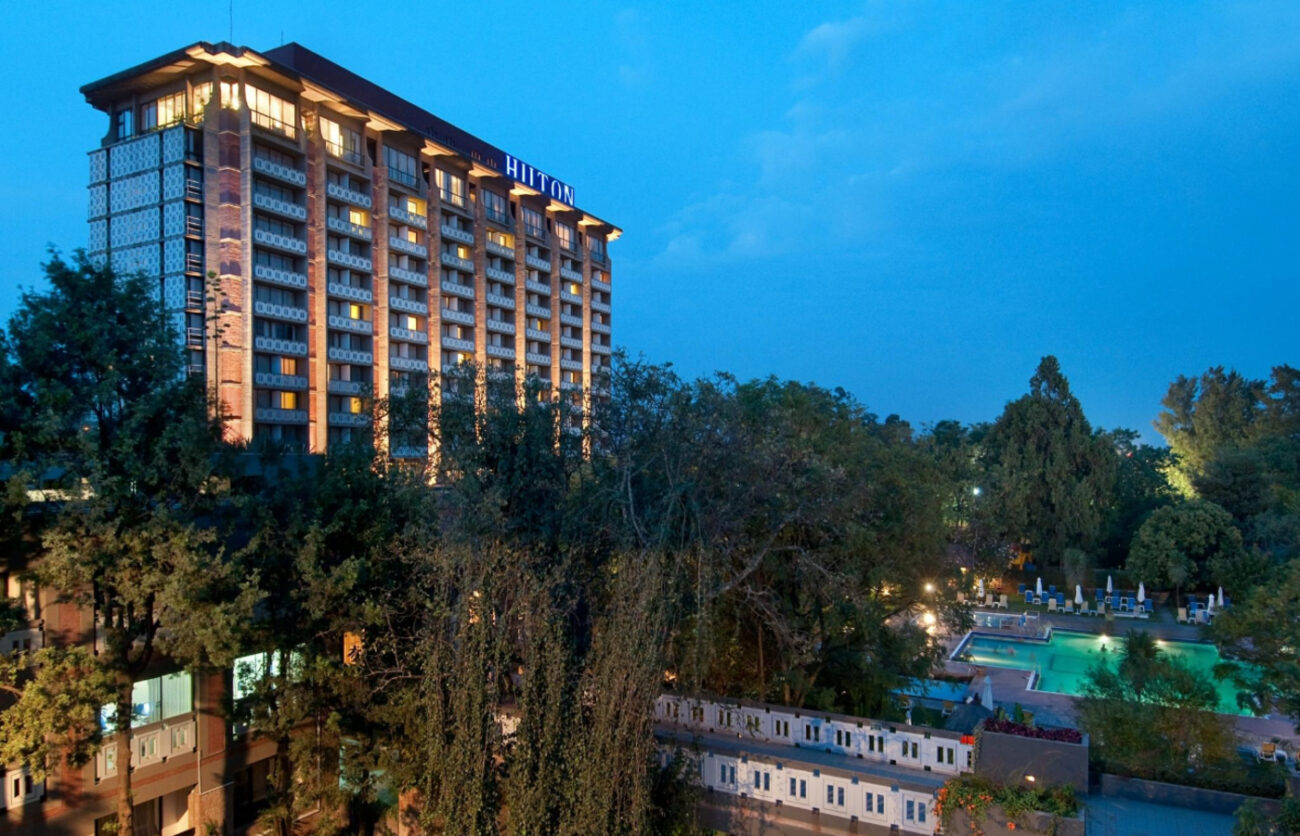
The state-owned Development and Hotel Company S.C. (DHC), which owns the Hilton Addis Ababa, nearly doubled revenue and more than doubled net profit in the financial year ended 2025, reflecting a rebound in tourism and conference activity in the capital.
Revenue rose to 506.4 million birr from 256.5 million birr a year earlier, while net profit climbed to 308.6 million birr, according to audited financial statements. The company declared a 317 million birr dividend to the government.
DHC’s earnings are driven largely by its profit-sharing arrangement with Hilton Worldwide, which operates the hotel under a long-term management contract while ownership remains with the Ethiopian state. Revenue from share of profit accounted for 484.4 million birr, the bulk of total income.
Opened in 1969, the Hilton Addis Ababa was the first Hilton hotel in Africa and remains one of the capital’s flagship properties, serving diplomats, international organisations and business travellers. Its performance improved as Addis Ababa consolidated its role as a regional diplomatic and conference hub.
Ethiopia recorded more than 1.3 million international visitors in 2025, the highest level on record, supported by a post-pandemic recovery and stronger air connectivity through Ethiopian Airlines. Addis Ababa hosted over 150 regional and international events during the year, lifting demand for high-end accommodation and conference facilities.
Occupancy rates at premium hotels exceeded pre-pandemic levels, industry data show, as infrastructure upgrades, new cultural attractions and urban renewal projects improved the city’s appeal for business and meetings tourism.
In dollar terms, DHC’s revenue equates to roughly three to four million US dollars, based on mid-2025 exchange rates, with net profit of about two to three million US dollars, a notable improvement for a legacy asset operating in a volatile currency environment.
The company’s balance sheet strengthened over the year, with total assets rising to 1.98 billion birr and equity reaching 815 million birr. Auditors issued an unqualified opinion.
The results come as the government’s direct footprint in the hospitality sector has narrowed sharply. Since the early 1990s, Ethiopia has privatised most state-owned hotels that were nationalised after the 1974 revolution. Today, the government directly owns or controls fewer than five to 10 major hotels, largely legacy properties held through state-owned enterprises such as DHC.
Alongside the Hilton, other historic properties such as the Ghion Hotel remain under government ownership or influence, though several former state-run hotel chains, including Wabe Shebele, have been privatised or returned to previous owners.
The wider hotel market is led by private developers and international brands, including Sheraton, Marriott and Radisson, as tourism and conference activity rebounds. Ethiopia recorded more than 1.3 million international visitors in 2025, the highest level on record, while Addis Ababa hosted over 150 regional and international events during the year, supporting demand for high-end accommodation.
Separately, the state maintains an indirect presence in the sector through Ethiopian Airlines Group, which owns and operates the Ethiopian Skylight Hotel near Bole International Airport. The 1,024-room property, Africa’s largest hotel, primarily serves airline passengers and conference traffic and is structurally distinct from legacy holdings such as the Hilton Addis Ababa.




