

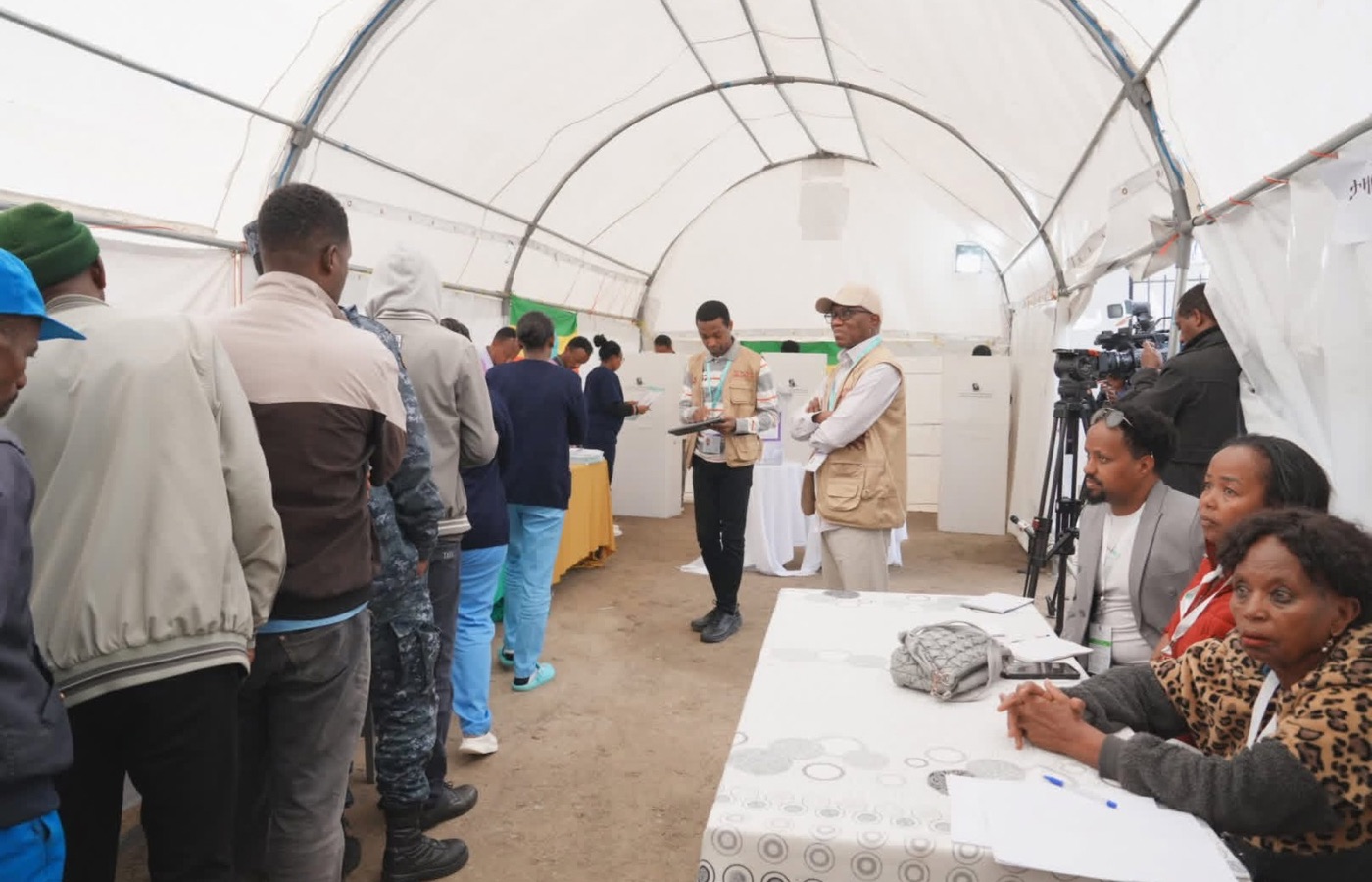
Ethiopians began voting on Monday in the country’s seventh general election, with citizens casting ballots for members of the House of Peoples’ Representatives and regional councils in a vote taking place amid security concerns, opposition complaints and the exclusion of some constituencies.
Polling stations opened at 6:00am, with voters queuing early in parts of Addis Ababa. Security presence was reported in the capital as voting began.
The election is being conducted under the National Election Board of Ethiopia, which is responsible for organising the vote, handling electoral complaints, overseeing counting procedures and announcing official results. Voters are choosing representatives for federal, regional and city council seats.
More than 54 million voters are registered for the election, according to official figures. More than 10,000 candidates are contesting seats, including candidates for the House of Peoples’ Representatives and regional councils. Voting is taking place across tens of thousands of polling stations.
However, the election is not being held in all parts of the country. Tigray is not participating in the vote, while some constituencies in Amhara have also been excluded because of security concerns. The exclusions have added to wider questions over participation and the overall electoral environment.
Opposition parties have raised concerns over campaign access, candidate registration, security and the ability to freely reach voters in some areas. The election board has said it has worked to address complaints and that conditions are suitable for voting in most parts of the country, except areas where security and administrative conditions do not allow polling to proceed.
Regional and continental observer missions are monitoring the vote. The African Union Election Observation Mission, led by former Kenyan President Uhuru Kenyatta, has deployed observers to follow opening, voting, closing, counting and tabulation procedures. IGAD observers are also monitoring the process.
The election is taking place as Ethiopia continues to face political, security and economic pressures, including unresolved tensions following the northern conflict and continuing instability in parts of Amhara and Oromia.
The final assessment of the vote will depend on the conduct of polling, counting, complaints handling and the official results announced by the election authorities.




