War is bad. And it brings unimaginable loss for people affected by it. It is no different in Ethiopia. In fact, no country as Ethiopia would understand the impacts of war. It is a country that saw two full-scale civil wars in less than half a century. That may have led to the death of probably a hundred thousand.
The impact of war on the economy is also unbearable. It drains government’s expenditure and forces states to spend money allotted for development projects to finance war and perhaps buy as much as weapons to destroy their enemies. The longer they try to end the war objectives, the more affected citizens would be. And in a country like Ethiopia, where the agricultural sector is the dominant player in the economy, the impacts would be severe on farmers.
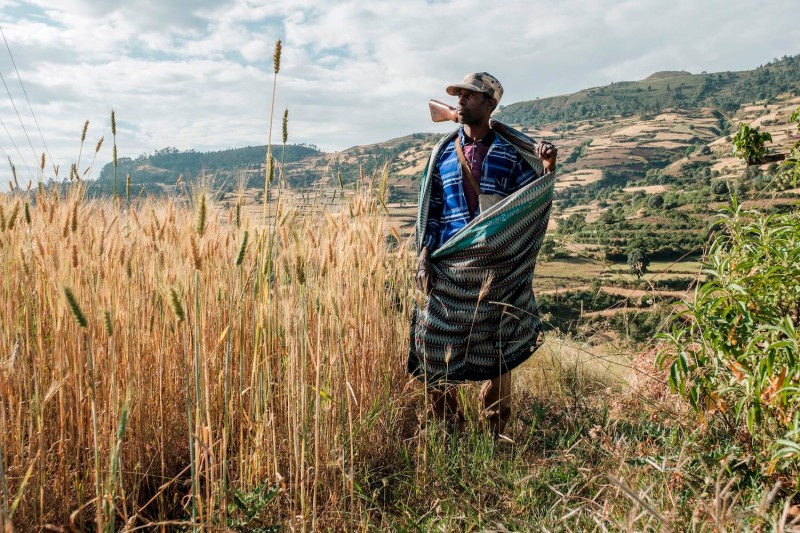
A latest report from the UN-OCHA indicates more than nine million people are in need of urgent food assistance because of the war in the Northern Part of Ethiopia, particularly in Tigray, Afar and Amhara regions. A majority of these people are farmers. Some have skipped the last cropping season, while others have been forced to leave their homeland and join the list of internally displaced Ethiopians.
Though the horrifying consequences of the war seems a new normal to Ethiopians, there are signs of hope for change recently. Led by Prime Minister Abiy Ahmed, Commander-in-Chief of the Army, an allied force formed to drive out the forces of the Tigray People Liberation Front (TPLF) seems to be succeeding in achieving its objectives.
Many towns that were under the siege of the rebel groups are now liberated. There are signs that warring parties are becoming open to sit for negotiation. Both are good news that Ethiopians should cherish. Yet these are not enough. More has to be done in rebuilding areas ravaged by the war. The first should be resettling the farmers, of course, and delivering as much aid as possible for people who are in need of urgent assistance.
Equally important is looking for assistance to ensure no one would suffer because of lack of food supplies. This requires rebuilding relations with the west, including the United States and the European Union as well as its member countries, and development partners. The importance of these institutions for rebuilding efforts should not be overlooked.
It is also naïve to politicise every development activities of the organizations. Whenever someone in the political circle, or an activist in support of the warring parties, paints a bad picture about these institutions, they must understand that is no different from taking food off the plate of a person on the verge of dying from hunger. That won’t be fair.
Of course, it is critical to check the aid is being delivered to the right beneficiaries. The warring parties should also stop using aid trucks for military purposes. This is in particular true for the forces of the TPLF, which have expropriated over a thousand trucks and are reportedly using it for their military operations in neighbouring Amhara towns. The more stranded the trucks are, the more severe the situation in Tigray would get. Regrettably, the rebel groups failed to understand the importance of these aid trucks to deliver food for almost a million Tigrayans, whom they claim to fight for.
Regional authorities of areas where there is no fighting have to respond to the crisis in an innovative way. Resettling farmers may not be enough, for instance. They should not be provided with food aid only. Now seems to be the right time to encourage them to be involved in off-farming activities.
It may start with providing a short-term TVET training with finance to establish SMEs. Wood work, for instance, is a sector worth consideration. Farmers can be easily trained on how they can make furniture products for the urban market. Bee-keeping and poultry are also other business areas that the farmers could capitalize on. If successful, the war at least would be an opportunity to create wealthy farmers, who are rare to find across Ethiopia.
This article is written by Melat Gizaw, an expert specialised in food security management.