


The Ethiopian Economics Association’s latest Quarterly Macroeconomic Update (Vol.10, No.2, September 2025) remains one of the few institutional efforts bringing rigor and reliability to Ethiopia’s fiscal discourse. In a policy environment where dependable data often arrives late—or not at all—the Association deserves credit for consistency, technical precision, and professional neutrality.

The publication captures the fiscal pulse of the first quarter of the 2024/25 budget year, reporting a 77 percent surge in total revenue and grants compared with the same quarter a year earlier. Domestic revenue reached 165 billion birr, with tax income contributing more than 90 percent of the total, and the overall fiscal deficit narrowed to roughly 21 billion birr. On paper, these figures look not just encouraging but almost transformative.
Yet fiscal stories cannot be told by figures alone. The update’s strength lies in its precision; its limitation lies in its restraint. It enumerates changes in revenue, expenditure, and financing, but stops short of interrogating what they signify about the economy’s health or the institutional forces behind them. Numbers are never neutral: they reflect policy choices, compliance behavior, and administrative capacity. Understanding Ethiopia’s fiscal reality requires reading not just the ledgers, but the logic that shapes them.
The Association attributes the revenue surge to improved tax administration and compliance. But there is little evidence of institutional or policy reform robust enough to justify such a leap. Inflation, which stood at 13.2 percent in September 2025, offers a more plausible explanation. When prices rise, value-added and customs duties expand automatically, inflating nominal revenue without any corresponding improvement in productivity.
By not adjusting for inflation or clarifying the deflator used to compute “real” growth, the update risks confusing nominal buoyancy with genuine reform. This distinction is not mere technicality; it separates progress from illusion.
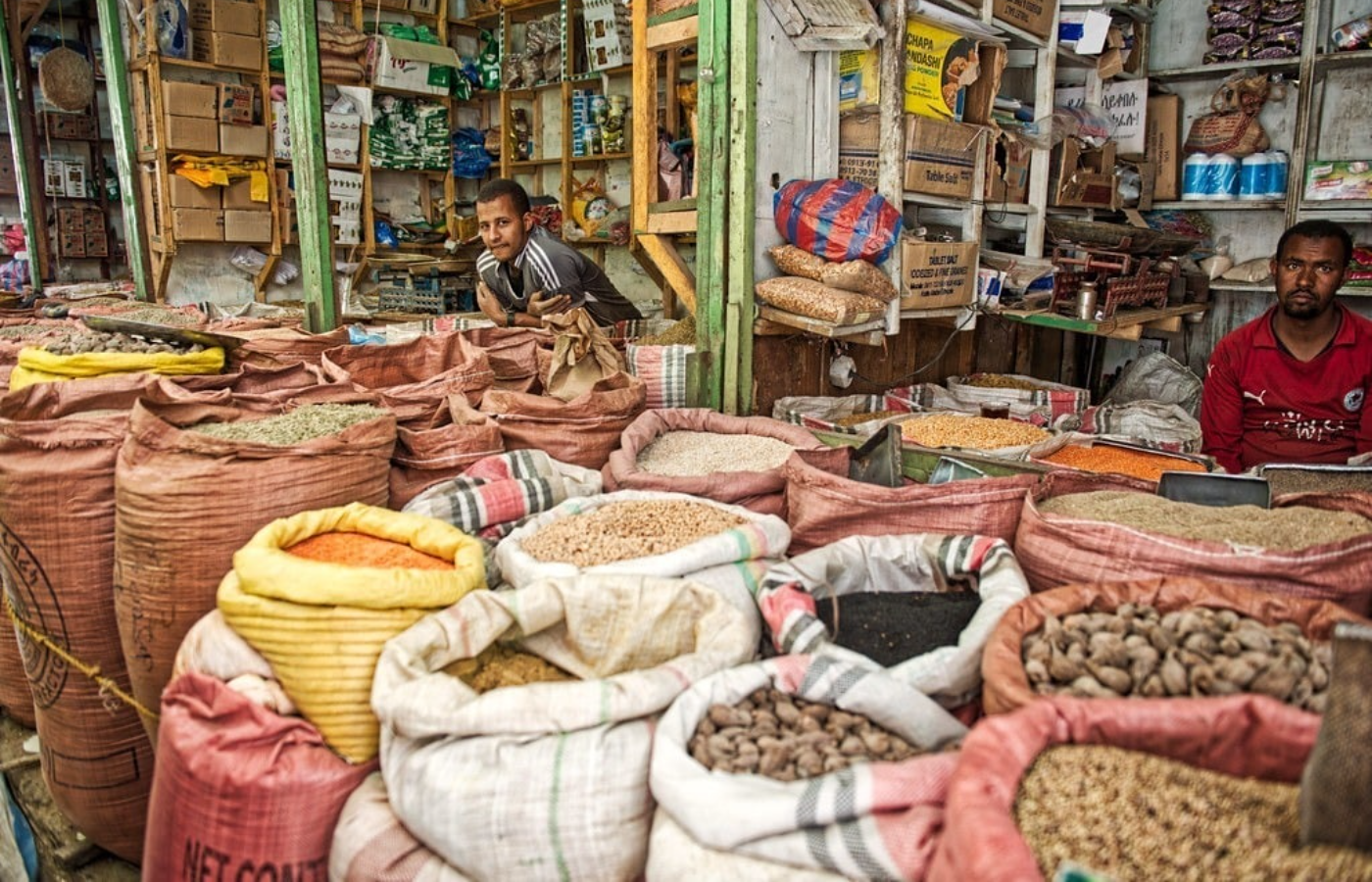
Revenue composition offers further insights that the report leaves largely unexplored. Indirect taxes made up 77 percent of total tax receipts—roughly 118 billion birr—while direct taxes contributed only 23 percent. This imbalance is long-standing, yet its implications are critical. A tax system anchored on consumption and imports may be administratively efficient, but it is socially regressive and economically fragile. It transfers fiscal burden to ordinary consumers and ties public revenue to trade flows and exchange rate volatility. In a context of fragile household purchasing power and persistent birr depreciation, this structure amplifies inequality and fiscal vulnerability. A richer analysis would question the sustainability of a revenue model so heavily reliant on consumption-based taxes.
On the expenditure side, the update highlights a nominal 40 percent increase in government spending, reaching 198 billion birr, but leaves interpretation thin. Once inflation is accounted for, the real increase is closer to 19 percent. Within this spending, current expenditure dominated at 50 percent of total outlays, while capital expenditure accounted for only 22 percent.
This pattern is familiar: operational continuity often overshadows long-term development investment. The report cites “procurement delays” and “low project readiness” as causes of weak capital execution, which stood at just 18 percent of the annual target, but this explanation seems ritualistic. The deeper issue is structural: chronic weaknesses in project design, fragmented oversight, and foreign exchange shortages continue to erode public investment efficiency. When less than one-fifth of capital budgets are executed early in the fiscal year, it signals institutional malaise rather than mere scheduling hiccups.
A more striking omission concerns the category labelled “economic services,” which recorded a 769 percent surge in current spending and an execution rate of 181 percent. The update notes this spike without interpretation. Given Ethiopia’s post-conflict reconstruction demands and agricultural support programs, these figures may reflect rehabilitation or security-related outlays. Yet without disaggregation, the reporting raises questions about transparency and classification accuracy. Numbers of this magnitude require explanation, or they risk becoming noise.
The narrowing fiscal deficit—around 21 billion birr including grants, 33 billion birr excluding—suggests improvement. Yet the interpretation warrants nuance. The apparent restraint in domestic borrowing, including a negative 61 billion birr due to repayments to the banking system, is framed as prudence. In reality, it reflects tighter constraints under Ethiopia’s IMF-supported debt restructuring.
Domestic borrowing choices are no longer solely policy preferences; they are embedded in a stabilization framework negotiated with external creditors. Similarly, the 30 billion birr concessional inflow from the World Bank’s Country Partnership Framework is less a triumph of strategy than a reflection of external dependency. Recognizing this does not compromise neutrality; it enriches it with political economy realism.
Total financing reached only 6.9 percent of the annual target, with net external borrowing showing a negative 160 percent execution rate. Rather than signaling fiscal discipline, this reflects constrained access to new credit and front-loaded concessional disbursements. The 161 percent execution rate for grants suggests forecasting weaknesses rather than fiscal strength. Overperformance on donor inflows indicates either underestimated aid or unplanned emergency disbursements—both of which complicate fiscal predictability.
The Association’s neutrality remains one of its greatest virtues. It avoids political commentary, relies on verifiable data, and maintains methodological consistency. But neutrality should not be equated with silence. The update references “real” growth without disclosing its deflator.
It reports changes in spending composition without discussing policy intent. It notes capital execution rates without probing institutional causes. A brief methodological note on data sources, accounting basis, and inflation adjustment would greatly improve interpretive clarity. In fiscal analysis, transparency about methodology is as important as the numbers themselves.
Regional transfers offer another untold story. Intergovernmental transfers remained stable at roughly 54 billion birr, about 27 percent of total expenditure. Yet the report says nothing about regional disparities, execution capacity, or absorption constraints. In a decentralized system, understanding how funds translate into local outcomes matters as much as aggregate stability. Ethiopia’s fiscal federalism cannot be measured solely by transfer size; it must be evaluated by how equitably and effectively those transfers are deployed.
To its credit, the Ethiopian Economics Association has institutionalized something unprecedented a decade ago: a culture of regular, data-driven fiscal reporting. That alone is a public good. But the next frontier lies not in frequency or formatting, but in interpretation. A credible fiscal update must go beyond recording what the state collects and spends to examining why, under what constraints, and with what developmental effect. The tables are meticulous; what they need is narrative curiosity. When “economic services” spending multiplies sevenfold, or grants exceed their plan in the first quarter, readers deserve context, not just confirmation.
Ethiopia’s fiscal position is evolving within a narrowing policy space. Inflation has moderated but remains double-digit. Concessional financing dominates the balance sheet, and capital spending struggles to find traction. The government appears to be collecting more, borrowing cautiously, and operating within a tightening stabilization framework. These are significant developments.
Yet behind them linger familiar questions of fiscal quality, equity, and autonomy. The Quarterly Macroeconomic Update provides an indispensable empirical anchor in a noisy policy arena. What would make it transformative is connecting those statistics to the institutional and socio-economic realities that produce them. The ledgers are now open and accurate. The economic story that animates them is still waiting to be told.
Mikiyas Mulugeta G. Yohannes (PhD) is an Independent consultant & Analyst. He can be reached at mikiusc2017@gmail.com.




