

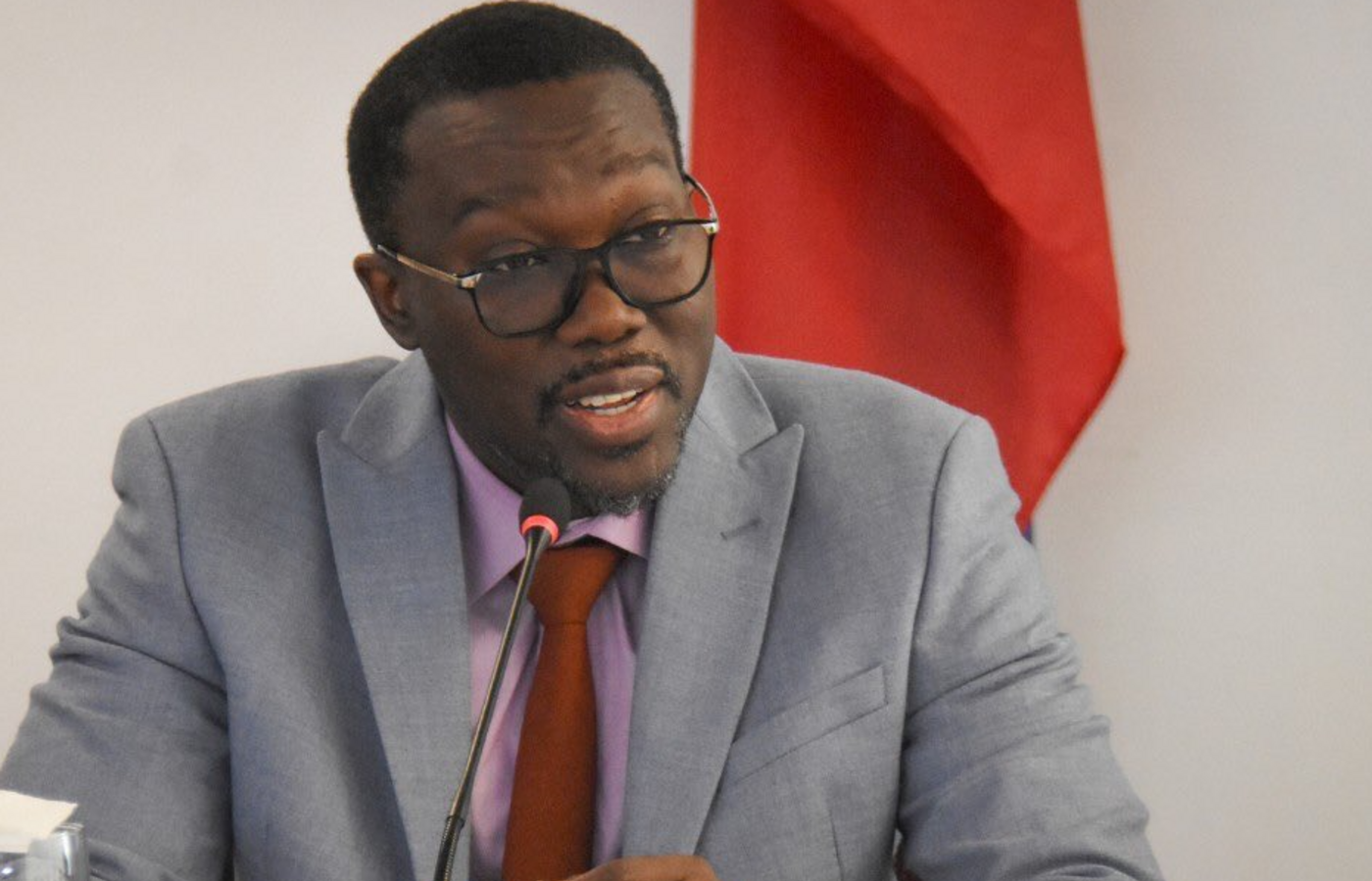
The World Bank and the Government of Ethiopia have invested more than 200 million US dollars in the trade corridor linking Ethiopia to Djibouti, transforming Modjo Dry Port into a faster gateway for the country’s land-based trade, Ndiamé Diop, the bank’s vice-president for Eastern and Southern Africa, said Friday.
Diop made the remarks at the launch of the World Bank report “Integrating Africa: From Threads to Hubs” in Addis Ababa, where he cited Modjo as an example of how reducing trade barriers can strengthen regional commerce.
He did not specify the period over which the more than 200 million US dollars was invested or provide a breakdown by year or project phase.
World Bank project documents show that the Ethiopia Trade Logistics Project was approved in 2017 with an initial 150 million US dollar financing package. Of that amount, 120 million US dollars was allocated to Modjo infrastructure, 15 million US dollars to information-technology systems and 15 million US dollars to regulatory and institutional support.
The project later received an additional 90 million US dollars in financing in 2023, with World Bank documents citing cost overruns in Modjo’s civil works. A subsequent World Bank account describes the expansion as backed by a 230 million US dollar loan.
The investment has supported the corridor handling about 95 percent of Ethiopia’s land-based trade. Beyond physical infrastructure, the project focused on improving regulations for private-sector participation, digitising port operations and enabling agencies along the corridor to share information.
As a result, Modjo’s capacity has doubled, while average container dwell time has fallen from 60 days to eight days, Diop said.
“That is what reducing trade friction can do, and we’d like to scale that in Africa,” he said.
The World Bank has previously described its Ethiopia Trade Logistics Project as financing infrastructure at Modjo Dry Port alongside institutional, capacity-building and information-technology improvements aimed at facilitating trade.
Diop presented the Modjo investment as part of a wider push to transform African trade corridors from routes for moving commodities towards integrated production hubs.
Africa continues to send about 85 percent of its exports to markets outside the continent, while more than half of its exports remain primary commodities, Diop said. Intra-African trade, by contrast, is more concentrated in manufactured and processed goods, although it accounts for only about 15 percent of total African trade.
“When the world sells raw materials, this part sells higher-value products. We need to do much more of that,” he said.
Diop said regional markets could provide African businesses with the scale needed to attract investment, improve productivity and build industries before competing in global markets.
“Regional markets are where our countries will build their competitiveness before moving to global markets,” he said.
He also pointed to cross-border payment systems, harmonised customs procedures, interconnected transport networks and regional electricity markets as critical infrastructure for deeper economic integration.
Under the World Bank’s Mission 300 initiative, the institution is working to connect African power networks and harmonise regulations to facilitate cross-border electricity trade, Diop said.
In the Horn of Africa, the bank is applying a similar regional approach to livestock through its DRIVE project, which covers Ethiopia, Kenya, Somalia and Djibouti. The project aims to develop shared trade corridors, harmonise quality standards and mobilise climate finance to create regional livestock value chains.
Diop said trade ministers from the Horn of Africa are expected to meet in Addis Ababa next week to discuss strengthening regional production networks.
He said the ultimate objective was to move Africa’s trade infrastructure beyond the traditional model of transporting raw materials for export.
“We must achieve moving from threads to hubs, from extracting wealth to creating growth and jobs on the continent,” Diop said.




