United Bank for Africa (UBA), one of Nigeria's largest pan-African banking groups, has been prevented from pursuing its planned entry into Ethiopia by a regulatory restriction in its home country, even as Ethiopian authorities move to permit qualifying foreign banks to acquire up to 100 percent of existing domestic lenders.
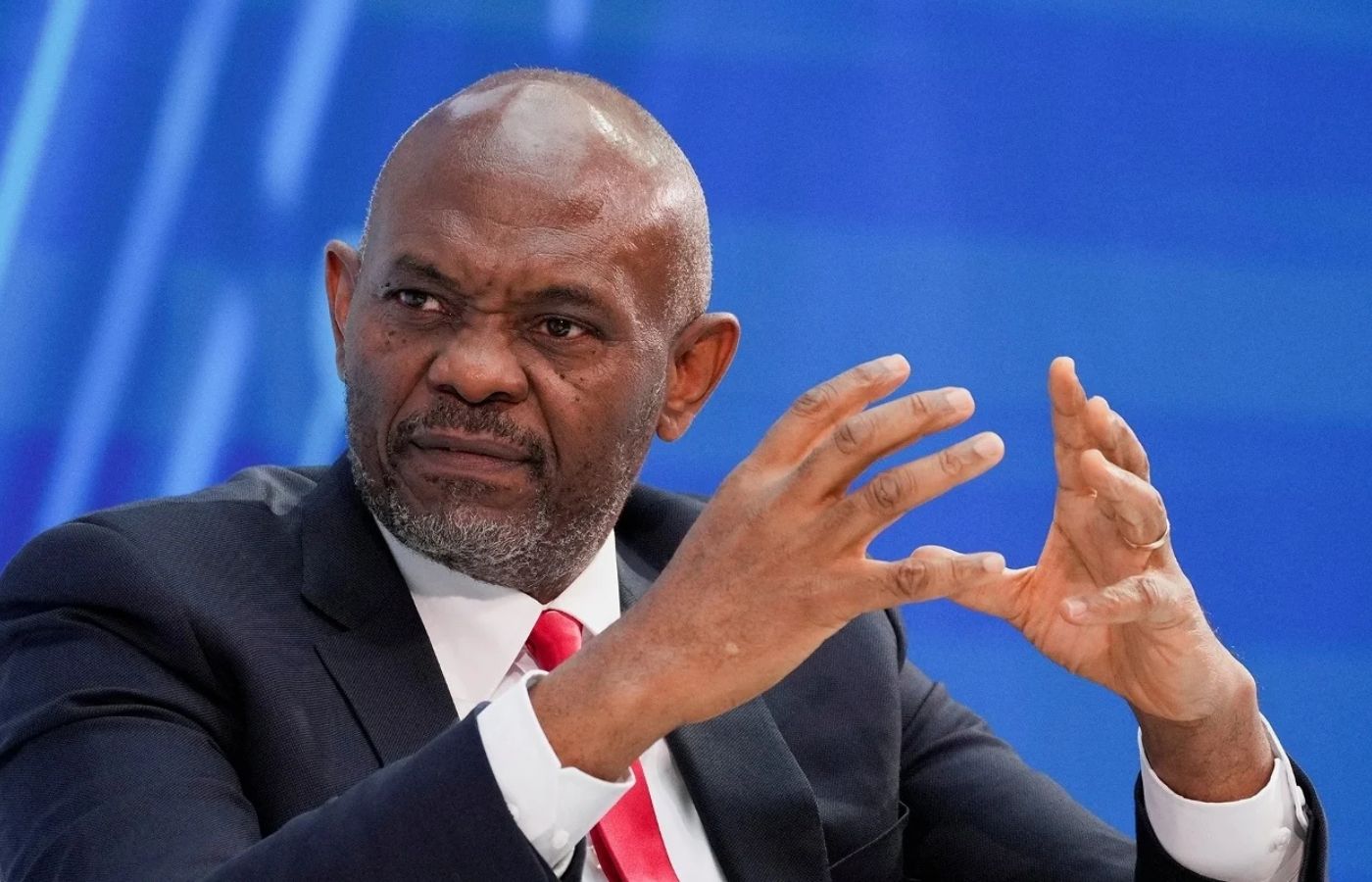
UBA Chairman Tony Elumelu disclosed that the bank had intended to become one of the first international lenders to establish operations in Ethiopia following the country's decision to open its banking industry to foreign competition. However, a Central Bank of Nigeria (CBN) restriction limiting aggregate investments in foreign subsidiaries to 10 percent of shareholders' funds prevented the group from proceeding.
Elumelu made the disclosure on Saturday, 21 November 2026, during the launch of a book by Nigerian lawyer Wole Olanipekun. His remarks were reported by Nigerian financial publication Businessfront on 23 November.
The restriction also affected UBA's plans to enter Angola, according to Elumelu, whose banking group operates across more than 20 African countries and maintains an international presence in Europe and the United States.
The development comes as Ethiopia prepares a regulatory framework that would allow financially sound foreign banks to acquire domestic lenders outright under exceptional circumstances, providing an alternative to establishing new banking subsidiaries.
The National Bank of Ethiopia (NBE) has published a draft directive allowing foreign banks with at least 10 billion US dollars in consolidated assets to acquire up to 100 percent of an Ethiopian bank, subject to additional financial, operational and supervisory requirements. The threshold concerns the prospective buyer's assets, not the purchase price or minimum investment in Ethiopia.
The restriction affecting UBA is contained in Section 19(8)(c) of Nigeria's Banks and Other Financial Institutions Act of 2020. It limits a Nigerian bank's aggregate investment in foreign subsidiaries to 10 percent of its shareholders' funds unimpaired by losses, unless the CBN approves a different threshold.
The ceiling applies to investments across a banking group's foreign subsidiaries rather than separately to each country in which it seeks to establish operations.
For a lender with an extensive international network, existing investments in overseas subsidiaries therefore count towards the same regulatory limit as proposed investments in new markets.
The CBN has strengthened enforcement of the provision as Nigerian banks undergo recapitalisation. In September, the regulator explained that the restriction was an existing legal requirement rather than a newly introduced prohibition on international expansion.
The rule has also affected other Nigerian lenders. Access Holdings has been examining options for reducing its exposure to foreign subsidiaries, including potential stake sales and changes to its international operations.
According to its nine-month 2026 investor presentation, Access Holdings' investments in subsidiaries stood at 446.6 billion naira as of 30 September, equivalent to 19.29 percent of shareholders' funds, above the statutory threshold.
Elumelu said UBA complied with the restriction despite its plans to enter Ethiopia and Angola. He did not disclose the amount of capital the bank had earmarked for either market, whether it had requested an exemption from the CBN or whether it had initiated formal licensing procedures in Ethiopia.
UBA's disclosure coincides with Ethiopia's latest effort to define the conditions under which international lenders can acquire controlling interests in existing domestic banks.
Under the 2025 Banking Business Proclamation, foreign investors are generally restricted to a combined 49 percent ownership of an Ethiopian bank, while a single foreign strategic investor may hold up to 40 percent.
The proclamation nevertheless provides an exception allowing the NBE to authorise partial or full acquisitions by qualifying foreign banks for strategic investment purposes or to resolve distressed banks.
The central bank's newly published draft directive, titled Acquisition of Significant Ownership or Controlling Interest in a Bank and Equity Investment by Foreign Nationals and Foreign-Owned Ethiopian Organizations, establishes detailed eligibility requirements for such transactions.
Under the new directive, a foreign bank seeking to acquire more than 40 percent of an Ethiopian bank through the strategic-investment exception must have consolidated assets of at least 10 billion US dollars, as shown in its latest audited financial statements.
It must also have operated continuously for at least 10 years, conduct banking operations in at least three jurisdictions including its home country, and have recorded positive consolidated net income in each of the preceding three financial years.
Additional requirements include a capital adequacy ratio at least three percentage points above the minimum prescribed by its home regulator and, where applicable, a liquidity coverage ratio of at least 110 percent.
The prospective buyer must also demonstrate financial capacity equivalent to at least three times the total assets of the Ethiopian bank it intends to acquire.
The draft separately provides for acquisitions of distressed banks. Under Article 11.3, the NBE could authorise a foreign lender to take control of a financially troubled institution where the transaction offers a credible means of restoring its viability, protecting depositors and maintaining essential banking services.
The 10 billion US dollar strategic-acquisition threshold is not expressly imposed on this separate route.
Both arrangements would remain subject to the central bank's approval. The draft has been released for public consultation and has not yet taken effect.
The Ethiopian and Nigerian restrictions govern different aspects of cross-border banking investment.
Nigeria's 10 percent ceiling determines how much of a Nigerian bank's capital may be invested in foreign subsidiaries without a different threshold being approved by the CBN.
Ethiopia's proposed 10 billion US dollar requirement, by contrast, establishes a minimum asset size for foreign banks seeking exceptional acquisitions above the ordinary 40 percent strategic-investor ownership limit.
The Ethiopian threshold does not require a foreign bank to invest 10 billion US dollars in the country. Nor does it apply automatically to every foreign lender seeking a branch, subsidiary or minority shareholding.
For an acquisition, the NBE's draft also requires documentation of the prospective investor's financial position, ownership structure, source of funds and regulatory standing. A foreign strategic investor must provide a written no-objection letter from its home-country supervisory authority.
Consequently, a Nigerian banking group considering the acquisition of an Ethiopian lender would have to satisfy both the Ethiopian eligibility and approval requirements and the applicable Nigerian rules governing overseas investment.
Ethiopia's banking industry remained closed to foreign commercial banks for approximately five decades following the nationalisation of financial institutions in the 1970s.
Private domestic banking resumed in the 1990s, but foreign ownership remained restricted until the adoption of the new Banking Business Proclamation in March 2025.
The legislation permits international banks to establish wholly or partially owned subsidiaries, open branches or representative offices, and invest in domestic banking institutions, subject to NBE approval.
Kenya's KCB Group is among the regional lenders that have publicly expressed interest in acquiring an Ethiopian bank.
In March 2026, KCB Group Finance Director Lawrence Kimathi disclosed that the lender had narrowed its search to a preferred acquisition target in Ethiopia. He indicated that securing control of the target institution would be important to the group's investment decision.
KCB has not publicly identified the target, and no completed acquisition has been announced.
In October, NBE banking supervision officials disclosed that two unidentified foreign financial institutions had submitted applications to establish wholly owned banking subsidiaries in Ethiopia. The officials also reported interest from other international lenders exploring equity partnerships with existing domestic banks.
Those applications concern the establishment of new subsidiaries, a different entry route from acquiring an existing Ethiopian bank.
The identities of the applicants have not been disclosed, and there is no public confirmation that UBA was among them.
The developments place UBA's expansion plans within a regulatory process involving both the country receiving the investment and the country supervising the prospective investor.
Ethiopia has established legal routes for foreign-bank participation and is developing additional rules for controlling acquisitions. Nigeria, meanwhile, maintains a statutory ceiling on the proportion of domestic banking capital that can be committed to overseas subsidiaries without regulatory permission.
Although UBA has cited the Nigerian restriction as the reason it could not proceed, the bank has not disclosed whether it considered acquiring an existing Ethiopian lender rather than establishing a subsidiary.
There is also no public evidence that the NBE rejected an application from UBA or that the group failed to meet Ethiopia's proposed financial eligibility requirements.
The Nigerian legislation allows the CBN to approve a different foreign-investment threshold. Elumelu has not announced whether UBA intends to pursue such approval or reconsider its Ethiopian expansion plans.